


The proportion of higher-education faculty who are women in Taiwan has steadily increased in the past few years, but is still slightly lower than the global average, the Ministry of Education said yesterday, adding that it would continue its promotion of gender initiatives in higher education.
Female faculty rates were 37.1 percent in the 2024-2025 academic year, ministry data showed, while rates in Organisation for Economic Co-operation and Development countries, as well as the rest of the EU, are generally between 40 and 45 percent.
Women made up 25.7 percent of professors, 38.6 percent of associate professors and 40.8 percent of assistant professors, the data showed.
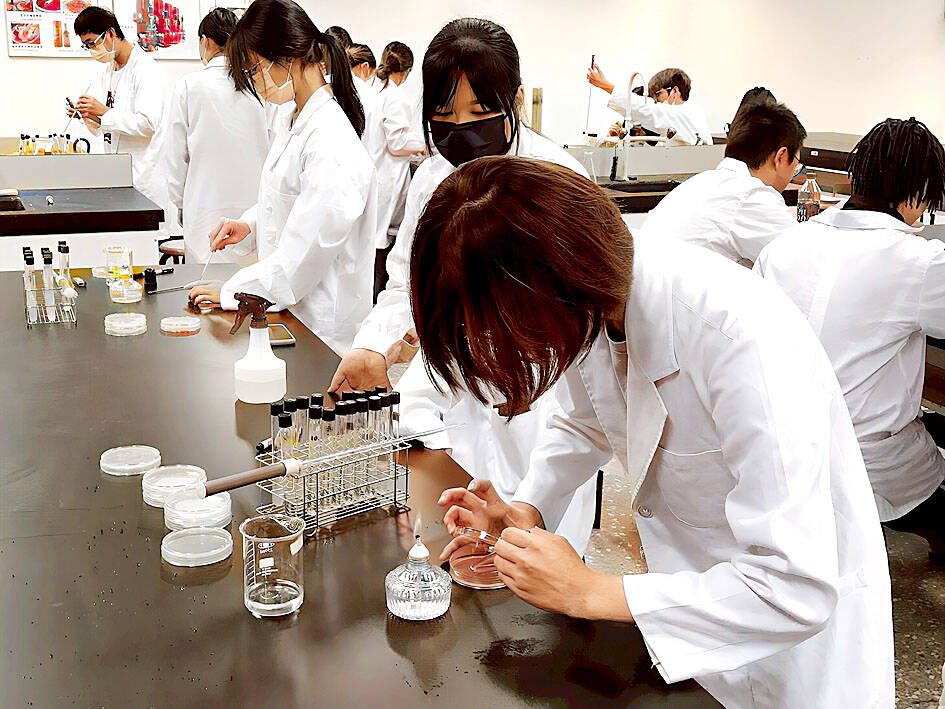
Photo courtesy of the New Taipei City Education Department
While the proportion has increased in some higher-ranking positions, the overall personnel distribution shows that most female faculty are still assistant professors and lecturers, indicating a structural discrepancy between gender ratios and academic ranks, the ministry said.
On the other hand, the gender composition among college students has become aligned with the international trend — a near-equal male-to-female ratio, with female students even in the majority in some fields.
From 2021 to last year, the ministry helped higher-education institutions integrate gender mainstreaming into administration, curriculum design and resource management through institutional development, professional training and cross-institutional support networks, Department of Student Affairs and Special Education Division head Lin Pei-yu (林沛雨) said.
The efforts have fostered an evidence-based, institution-oriented governance model for gender equality, Lin said.
In the institutional aspect, the ministry commissioned National Taiwan University’s Center for Population and Gender Studies to establish the National Gender Mainstreaming Center for Higher Education, she said.
By introducing a “partner school” model, the center helped universities set up implementation mechanisms, as well as to develop curricula and institutional review tools customized to higher education, she said.
Through using the tools — which include gender-related data, analyses, impact assessments and budgeting — gender sensitivity in campus policymaking was boosted, she said.
As the number of participating institutions grew annually, gender mainstreaming has moved from a pilot program to a standardized and routine governance process within universities, Lin said.
For example, Chung Shan Medical University leveraged its medical and healthcare expertise to systematically integrate gender perspectives into curriculum reviews and institutional decisionmaking processes, she said.
Through cross-departmental collaboration, Chung Shan Medical improved the practical application of gender sensitivity in teaching and administration, she added.
Meanwhile, National Changhua University of Education focused on administrative governance, Lin said, adding that its efforts included systematically reviewing the gender composition of university committees and management posts, and addressing internal gender gap issues by incorporating budgeting tools.
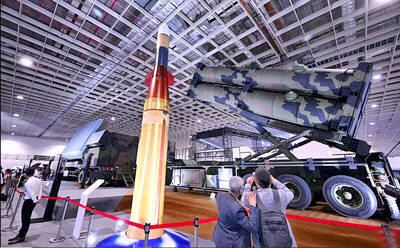
Taiwan is to commence mass production of the Tien Kung (天弓, “Sky Bow”) III, IV and V missiles by the second quarter of this year if the legislature approves the government’s NT$1.25 trillion (US$39.78 billion) special defense budget, an official said yesterday. Commenting on condition of anonymity, a defense official with knowledge of the matter said that the advanced systems are expected to provide crucial capabilities against ballistic and cruise missiles for the proposed “T-Dome,” an advanced, multi-layered air defense network. The Tien Kung III is an air defense missile with a maximum interception altitude of 35km. The Tien Kung IV and V
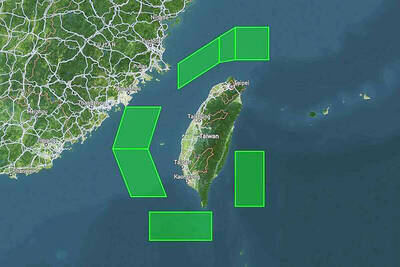
The disruption of 941 flights in and out of Taiwan due to China’s large-scale military exercises was no accident, but rather the result of a “quasi-blockade” used to simulate creating the air and sea routes needed for an amphibious landing, a military expert said. The disruptions occurred on Tuesday and lasted about 10 hours as China conducted live-fire drills in the Taiwan Strait. The Civil Aviation Administration (CAA) said the exercises affected 857 international flights and 84 domestic flights, affecting more than 100,000 travelers. Su Tzu-yun (蘇紫雲), a research fellow at the government-sponsored Institute for National Defense and Security Research, said the air
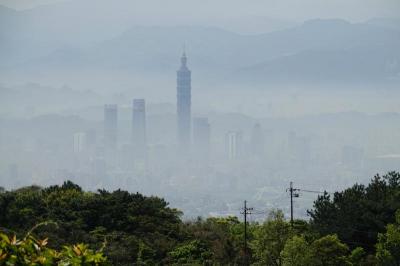
A strong continental cold air mass is to bring pollutants to Taiwan from tomorrow, the Ministry of Environment said today, as it issued an “orange” air quality alert for most of the country. All of Taiwan except for Hualien and Taitung counties is to be under an “orange” air quality alert tomorrow, indicating air quality that is unhealthy for sensitive groups. In China, areas from Shandong to Shanghai have been enveloped in haze since Saturday, the ministry said in a news release. Yesterday, hourly concentrations of PM2.5 in these areas ranged from 65 to 160 micrograms per cubic meter (mg/m³), and pollutants were
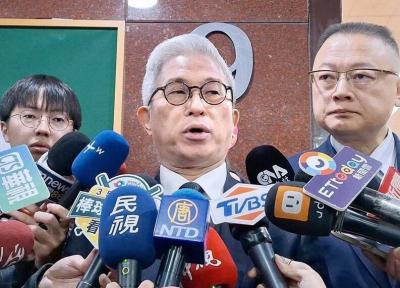
Taiwan’s armed forces have established response protocols for a wide range of sudden contingencies, including the “Wan Chun Plan” to protect the head of state, the Ministry of Defense (MND) said today. After US President Donald Trump on Saturday launched a series of airstrikes in Venezuela and kidnapped Venezuelan President Nicolas Maduro, concerns have been raised as to whether China would launch a similar “decapitation strike” on Taiwan. The armed forces regularly coordinate with relevant agencies and practice drills to ensure preparedness for a wide range of scenarios, Vice Minister of National Defense Hsu Szu-chien (徐斯儉) told reporters before a


 RSS
RSS