


The National Security Bureau (NSB) said that between Monday and Friday last week, the Chinese Communist Party (CCP) paired military drills against Taiwan with information operations and cyberattacks, spreading more than 19,000 "controversial" messages and launching millions of hacking intrusions.
In a report submitted to the Legislative Yuan, the bureau said the online activity involved 799 abnormal accounts and focused on amplifying skepticism about the US, Taiwan’s military and President William Lai (賴清德), referring to concerns about Taiwan’s ability to defend itself.
Cyberintrusions targeting government networks increased during the exercises, reaching about 2.08 million attacks on the first day of the drills and increasing to about 2.09 million on the second day, the agency said.
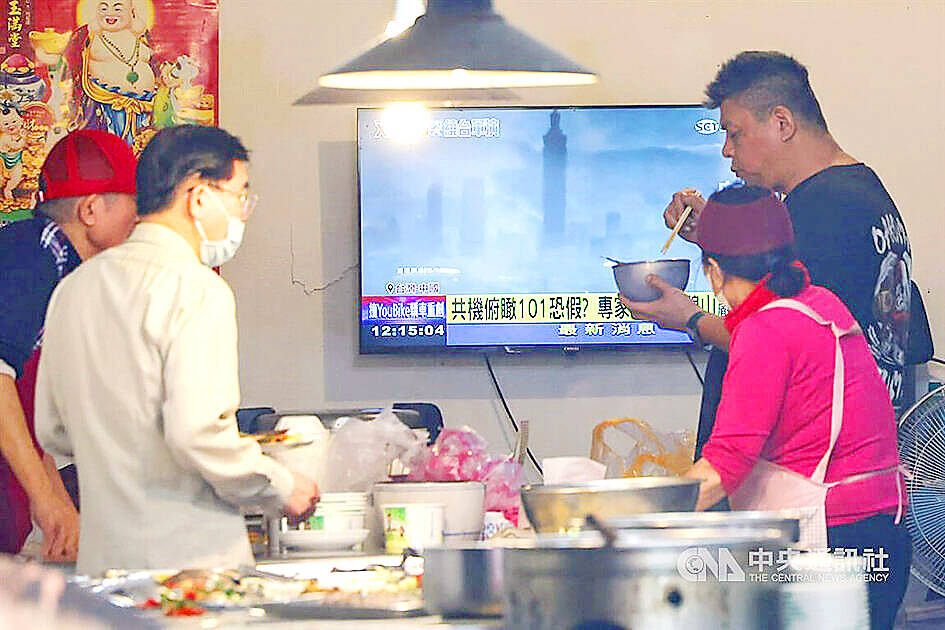
Photo: CNA
The legislature’s Foreign Affairs and National Defense Committee has invited the bureau, the Ministry of National Defense, the Ministry of Foreign Affairs and the Coast Guard Administration to brief lawmakers tomorrow.
Its written report on the drills and related security threats had already been delivered to legislators ahead of the committee session.
In its report, the NSB said the CCP launched the drills to counter support for Taiwan from international democratic allies, divert attention from domestic problems and portray military strength as unaffected by anti-corruption efforts.
China is facing weak economic momentum, citing declining investment, reduced foreign investment, high youth unemployment and rising labor protests over unpaid wages, it said.
The CCP used targeted drills against Taiwan to redirect public dissatisfaction toward nationalist sentiment framed as resistance to external interference, the agency said.
The NSB said Chinese President Xi Jinping (習近平) expanded an anti-corruption crackdown after the Chinese National People’s Congress sessions, targeting the Fujian clique within the military and leading to investigations and punishments of senior officers that affected major annual exercises.
The bureau said the CCP sought to project military strength by highlighting nuclear deterrence at the Sept. 3 military parade, promoting new vessels such as the Fujian aircraft carrier and Sichuan amphibious assault vessel, and deploying carrier groups including the Liaoning aircraft carrier and landing helicopter dock Hainan on long-range missions.
The NSB said newly appointed Eastern Theater Command Commander Yang Zhibin (楊志斌) later oversaw targeted drills against Taiwan to show that the Chinese People’s Liberation Army (PLA) was not affected by the anti-corruption campaign.
The NSB said the drills featured compound threats including military and "gray zone" coercion, cognitive warfare and cyberattacks, with "controversial" content concentrated on platforms such as TikTok, Facebook, Threads and X.
The NSB said cybersecurity agencies in the Indo-Pacific region, NATO and the EU have repeatedly identified the CCP as a major source of global cyber threats, with PLA cyberwarfare groups APT24 and BlackTech the most active during the drills.
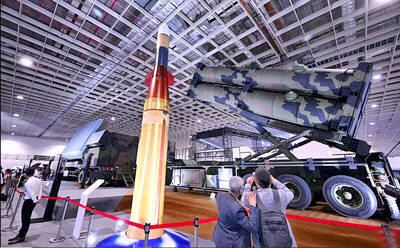
Taiwan is to commence mass production of the Tien Kung (天弓, “Sky Bow”) III, IV and V missiles by the second quarter of this year if the legislature approves the government’s NT$1.25 trillion (US$39.78 billion) special defense budget, an official said yesterday. Commenting on condition of anonymity, a defense official with knowledge of the matter said that the advanced systems are expected to provide crucial capabilities against ballistic and cruise missiles for the proposed “T-Dome,” an advanced, multi-layered air defense network. The Tien Kung III is an air defense missile with a maximum interception altitude of 35km. The Tien Kung IV and V
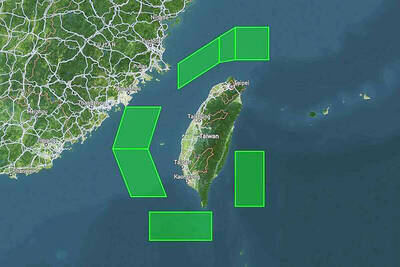
The disruption of 941 flights in and out of Taiwan due to China’s large-scale military exercises was no accident, but rather the result of a “quasi-blockade” used to simulate creating the air and sea routes needed for an amphibious landing, a military expert said. The disruptions occurred on Tuesday and lasted about 10 hours as China conducted live-fire drills in the Taiwan Strait. The Civil Aviation Administration (CAA) said the exercises affected 857 international flights and 84 domestic flights, affecting more than 100,000 travelers. Su Tzu-yun (蘇紫雲), a research fellow at the government-sponsored Institute for National Defense and Security Research, said the air
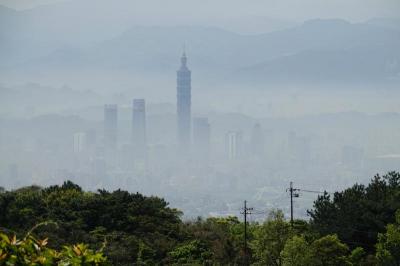
A strong continental cold air mass is to bring pollutants to Taiwan from tomorrow, the Ministry of Environment said today, as it issued an “orange” air quality alert for most of the country. All of Taiwan except for Hualien and Taitung counties is to be under an “orange” air quality alert tomorrow, indicating air quality that is unhealthy for sensitive groups. In China, areas from Shandong to Shanghai have been enveloped in haze since Saturday, the ministry said in a news release. Yesterday, hourly concentrations of PM2.5 in these areas ranged from 65 to 160 micrograms per cubic meter (mg/m³), and pollutants were
Taiwan’s armed forces have established response protocols for a wide range of sudden contingencies, including the “Wan Chun Plan” to protect the head of state, the Ministry of Defense (MND) said today. After US President Donald Trump on Saturday launched a series of airstrikes in Venezuela and kidnapped Venezuelan President Nicolas Maduro, concerns have been raised as to whether China would launch a similar “decapitation strike” on Taiwan. The armed forces regularly coordinate with relevant agencies and practice drills to ensure preparedness for a wide range of scenarios, Vice Minister of National Defense Hsu Szu-chien (徐斯儉) told reporters before a


 RSS
RSS