


The navy yesterday was mum over whether it locked its fire control radar onto a Chinese People's Liberation Army (PLA) warship participating in a drill in waters off Taiwan's southwestern shores, but did not deny employing such a maneuver.
The incident, involving Taiwan's Pan Chao frigate and the Chinese navy's Urumqi, a Type 052D destroyer, was reported by "Taiwan ADIZ," a civilian social media page that monitors Chinese military movements around Taiwan, which claimed to show a radio exchange between the two vessels.
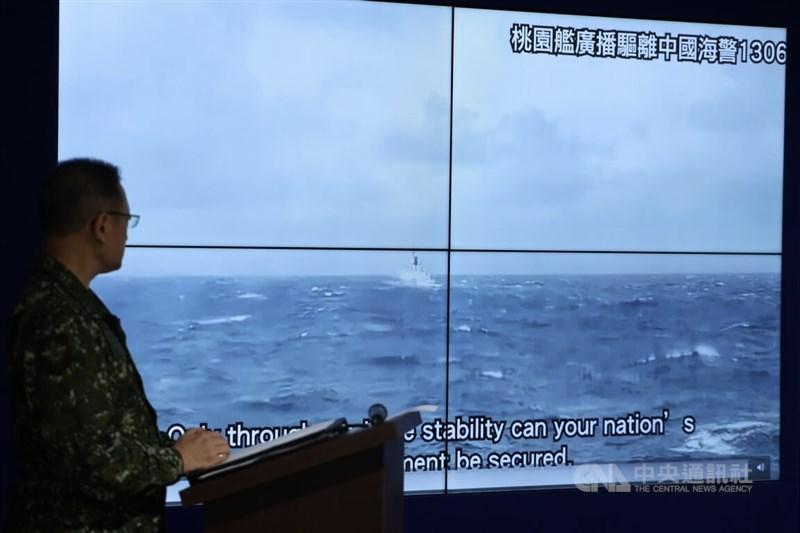
Photo: CNA
According to the page, the incident took place at 3:05am yesterday, just before the Urumqi entered Taiwan's southwestern contiguous zone, which extends 24 nautical miles (44.4km) from its shores.
In the audio recording, which could not be independently verified by CNA, a voice purporting to represent the Chinese vessel accused the Pan Chao of having "repeatedly locked its fire control radar onto our ship," a move regarded as one step away from firing a weapon.
"Your provocative intent is extremely clear and poses a serious threat to safety. You must immediately cease your provocative actions; otherwise, I will regard them as hostile acts, and you will bear full responsibility for all consequences," the voice said in the audio clip.
Asked about the issue at a news conference, Republic of China Navy Chief of Staff Chiu Chun-jung (邱俊榮) said only that the Pan Chao adopted necessary defense measures against the intruder in line with established protocols.
"After a Chinese warship enters the area within 24 nautical miles, we will designate a corresponding vessel to issue a defensive warning," Chiu said.
"The Pan Chao adopted the necessary measure — issuing a warning — which fell within said scope, with the aim being to repel [the PLA vessel]," he said.
"The navy has different protocols for varying contingencies, and in this case, we adopted the established protocol for a PLA military exercise," Chiu said.
The protocol entails a "communication process" in which a warning is issued, followed by a "defensive measure," he said.
The navy "would not escalate tensions or create disputes," Chiu added.
Beijing could eventually see a full amphibious invasion of Taiwan as the only "prudent" way to bring about unification, the US Department of Defense said in a newly released annual report to Congress. The Pentagon's "Annual Report to Congress: Military and Security Developments Involving the People's Republic of China 2025," was in many ways similar to last year’s report but reorganized the analysis of the options China has to take over Taiwan. Generally, according to the report, Chinese leaders view the People's Liberation Army's (PLA) capabilities for a Taiwan campaign as improving, but they remain uncertain about its readiness to successfully seize

Taiwan is getting a day off on Christmas for the first time in 25 years. The change comes after opposition parties passed a law earlier this year to add or restore five public holidays, including Constitution Day, which falls on today, Dec. 25. The day marks the 1947 adoption of the constitution of the Republic of China, as the government in Taipei is formally known. Back then the Chinese Nationalist Party (KMT) governed China from Nanjing. When the KMT, now an opposition party in Taiwan, passed the legislation on holidays, it said that they would help “commemorate the history of national development.” That
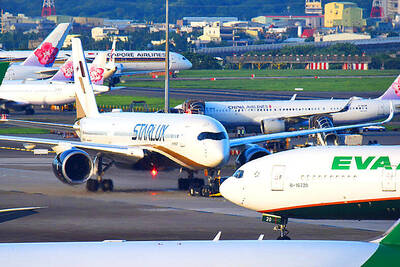
Trips for more than 100,000 international and domestic air travelers could be disrupted as China launches a military exercise around Taiwan today, Taiwan’s Civil Aviation Administration (CAA) said yesterday. The exercise could affect nearly 900 flights scheduled to enter the Taipei Flight Information Region (FIR) during the exercise window, it added. A notice issued by the Chinese Civil Aviation Administration showed there would be seven temporary zones around the Taiwan Strait which would be used for live-fire exercises, lasting from 8am to 6pm today. All aircraft are prohibited from entering during exercise, it says. Taipei FIR has 14 international air routes and
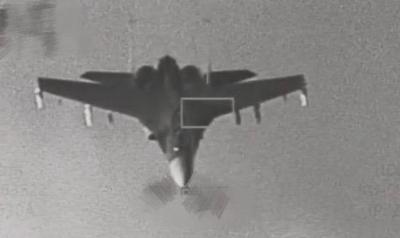
The Ministry of National Defense (MND) today released images of the military tracking China’s People's Liberation Army (PLA) movements during the latest round of Chinese drills around Taiwan. The PLA began "Justice Mission 2025" drills today, carrying out live-fire drills, simulated strikes on land and maritime targets, and exercises to blockade the nation's main ports. The exercises are to continue tomorrow, with the PLA announcing sea and air space restrictions for five zones around Taiwan for 10 hours starting from 8:30am. The ministry today released images showing a Chinese J-16 fighter jet tracked by a F-16V Block 20 jet and the


 RSS
RSS