


The Foundation of Medical Professionals Alliance in Taiwan (FMPAT) yesterday urged the government to include tau positron emission tomography (tau PET) imaging in the clinical guidelines for diagnosing dementia.
Citing data from a 2023 National Health Research Institutes epidemiology report on dementia, the foundation said the prevalence of dementia among people aged 65 years and older was 7.99 percent, which aligns with a 2011 survey by the Taiwan Alzheimer’s Disease Association that estimated the prevalence to be 8.04 percent.
FMPAT executive director Lin Shih-chia (林世嘉) said there could be more than 470,000 people with dementia in Taiwan by 2031 and more than 880,000 by 2061.

Photo courtesy of the foundation
The diagnosis of dementia in Taiwan relies heavily on clinical symptoms, questionnaires and image subtraction, but the procedure often takes six months to one year, which could delay the “golden period” for dementia treatment, she said.
The foundation said that with the rapidly increasing elderly population, the diagnosis and treatment of dementia must be improved by introducing advanced techniques to enhance accuracy, so it invited doctors to share medical study findings about tau PET.
Tau PET is an imaging technique that uses a radioactive tracer to detect and measure abnormal accumulation of tau protein tangles in the brain.
Kaohsiung Chang Gung Memorial Hospital honorary deputy superintendent Chen Shun-sheng (陳順勝), a neurologist, cited a June study as saying that the positivity of tau PET scans could be a better biomarker for staging dementia pathology than a positive amyloid beta PET scan alone, adding that it could be used to more accurately predict the risk of developing dementia and help decide on the intervention needed.
A positive tau PET scan occurred at a non-negligible rate among cognitively unimpaired people, while the combination of amyloid beta PET positivity and tau PET positivity was associated with a high risk of clinical progression in preclinical and symptomatic stages of Alzheimer’s disease.
Meanwhile, Aprinoia Therapeutics founder and chairman Jang Ming-Kuei (張明奎) said a study by the company’s medical research team, which was published in the Alzheimer’s & Dementia journal in August, analyzed tau PET scan images of 1,277 participants with cognitive complaints and evaluated the diagnostic performance of disease-specific spatial patterns.
They found that disease-specific spatial patterns of 18F-florzolotau PET imaging demonstrated high diagnostic accuracy in differentiating tauopathies, with 96 percent for Alzheimer’s disease, 94.4 percent for frontotemporal lobe degeneration, 93.7 percent for progressive supranuclear palsy and 97.5 percent for corticobasal degeneration, he cited the study as saying.
Kaoshiung Chang Gung Memorial Hospital Division of Neurology deputy director Chang Chiung-chih (張瓊之) said clinical symptoms of different types of dementia and other medical conditions often overlap, making early and accurate diagnosis difficult.
Tau PET scans enable doctors to see the location and amount of tau protein tangles in the brain, which could help them distinguish between neurodegenerative disorders, she said.
As Taiwan is entering an era of precision medicine, it should also consider including tau PET imaging in the clinical guidelines for diagnosing dementia, so that doctors could more accurately diagnose the neurodegenerative disorders earlier, before they progress to an irreversible stage.

The military has spotted two Chinese warships operating in waters near Penghu County in the Taiwan Strait and sent its own naval and air forces to monitor the vessels, the Ministry of National Defense (MND) said. Beijing sends warships and warplanes into the waters and skies around Taiwan on an almost daily basis, drawing condemnation from Taipei. While the ministry offers daily updates on the locations of Chinese military aircraft, it only rarely gives details of where Chinese warships are operating, generally only when it detects aircraft carriers, as happened last week. A Chinese destroyer and a frigate entered waters to the southwest
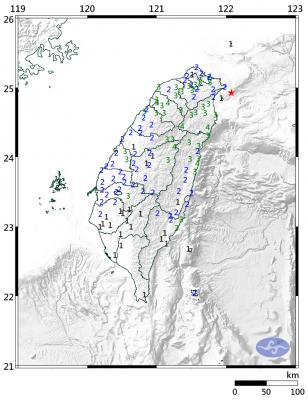
A magnitude 6.1 earthquake struck off the coast of Yilan County at 8:39pm tonight, the Central Weather Administration (CWA) said, with no immediate reports of damage or injuries. The epicenter was 38.7km east-northeast of Yilan County Hall at a focal depth of 98.3km, the CWA’s Seismological Center said. The quake’s maximum intensity, which gauges the actual physical effect of a seismic event, was a level 4 on Taiwan’s 7-tier intensity scale, the center said. That intensity level was recorded in Yilan County’s Nanao Township (南澳), Hsinchu County’s Guansi Township (關西), Nantou County’s Hehuanshan (合歡山) and Hualien County’s Yanliao (鹽寮). An intensity of 3 was

Japanese Prime Minister Sanae Takaichi’s comment last year on Tokyo’s potential reaction to a Taiwan-China conflict has forced Beijing to rewrite its invasion plans, a retired Japanese general said. Takaichi told the Diet on Nov. 7 last year that a Chinese naval blockade or military attack on Taiwan could constitute a “survival-threatening situation” for Japan, potentially allowing Tokyo to exercise its right to collective self-defense. Former Japan Ground Self-Defense Force general Kiyofumi Ogawa said in a recent speech that the remark has been interpreted as meaning Japan could intervene in the early stages of a Taiwan Strait conflict, undermining China’s previous assumptions

Instead of focusing solely on the threat of a full-scale military invasion, the US and its allies must prepare for a potential Chinese “quarantine” of Taiwan enforced through customs inspections, Stanford University Hoover fellow Eyck Freymann said in a Foreign Affairs article published on Wednesday. China could use various “gray zone” tactics in “reconfiguring the regional and ultimately the global economic order without a war,” said Freymann, who is also a nonresident research fellow at the US Naval War College. China might seize control of Taiwan’s links to the outside world by requiring all flights and ships entering or leaving Taiwan


 RSS
RSS