


The second phase of government-funded COVID-19 and influenza vaccinations is to begin on Saturday, the Centers for Disease Control (CDC) said yesterday, adding that there have been 18 cases of severe enterovirus infection this year, including 15 newborns, the highest number in six years.
CDC Epidemic Intelligence Center Deputy Director Lee Chia-lin (李佳琳) said surveillance data showed that flu viruses were the most common respiratory viral pathogen in the past four weeks, with influenza A(H3N2) the dominant strain.
There were 110,422 hospital visits for flu-like illnesses last week, down 15.6 percent from the previous week, Lee said.
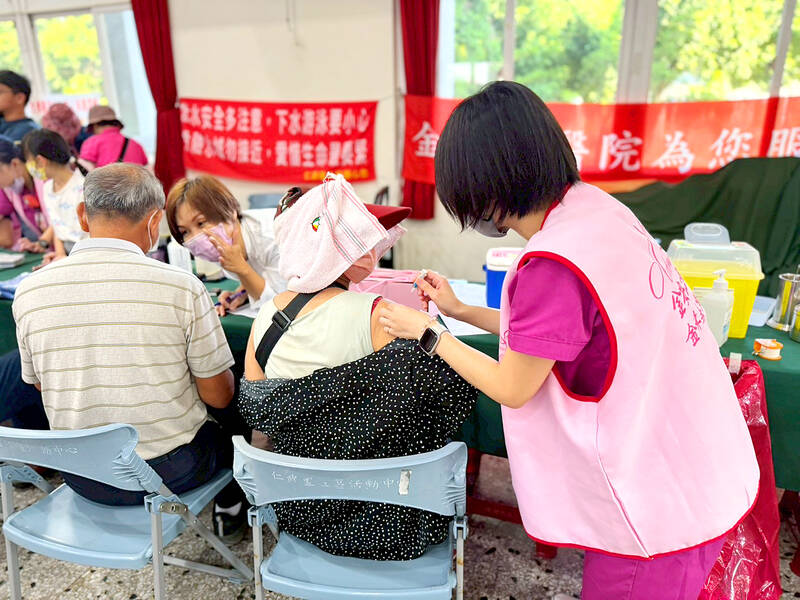
Photo: Hung Chen-hung, Taipei Times
Weekly numbers have fallen for three consecutive weeks, but remain at a high level, meaning the flu is still in its epidemic period, she said.
Thirty-eight cases of severe flu complications and 13 flu-related deaths were confirmed last week, with 95 percent of the severe cases and 85 percent of the deaths among people who were not vaccinated this flu season, she said.
CDC physician Lin Yung-ching (林詠青) said one of the youngest deaths confirmed last week was a nine-year-old boy who did not have underlying health conditions.
He began experiencing limb soreness and a fever in late September, followed by chills, vomiting, coughing and a runny nose, Lin said.
The boy tested positive for influenza A at a clinic, but on the same day, he developed severe symptoms, including altered consciousness, limb weakness, difficulty breathing and convulsions, so he was rushed to a hospital, where he was diagnosed with brain edema and necrotizing encephalopathy, Lin said.
The boy was admitted to an intensive care unit, but he died about a month after being hospitalized, he said.
CDC Director-General Philip Lo (羅一鈞) said that although hospital visits for flu-like illnesses have been declining, the CDC’s assessment is that the epidemic might continue until the middle of next month, so the expanded criteria for doctors to prescribe influenza antiviral medicines, which was due to end on Friday, would be extended to Nov. 15.
Another wave of flu infections might occur in mid to late December, and the numbers of mild and severe cases are expected to be higher than the current wave, so people should still get vaccinated, Lo said.
CDC Deputy Director-General Tseng Shu-hui (曾淑慧) said that more than 3.96 million doses of government-funded flu vaccines had been administered since Oct. 1.
The second phase of flu and COVID-19 vaccinations funded by the government is to begin on Saturday, allowing people aged 50 to 64 without high-risk chronic conditions to get them, Lo said.
The number of vaccines administered in the first phase this year was exceptionally high, potentially the highest on record, but there would be about 2.2 million doses available in the second phase, and the CDC might purchase more if needed, he said.
Aside from contracted hospitals and clinics, vaccination sites in the second phase would also include 120 stations at Carrefour, PX Mart and Mega PX Mart branches across the nation, the CDC said.
Lee said there were 8,478 hospital visits for enterovirus infection last week, which is below the epidemic threshold, but a new severe case — a four-day-old — was reported last week.
The newborn girl was confirmed to have coxsackievirus A16, which is the dominant strain circulating in local communities, Lin said.
The child developed encephalitis during hospitalization, but recovered after nearly three weeks of treatment, Lin added.
There have been 18 cases of severe enterovirus infection, including eight deaths, so far this year, marking the highest for the period in six years, Lee said, adding that 15 were newborns.
People should remain vigilant and pay attention to signs of severe illness, especially in young children, she added.

The Ministry of Finance this afternoon announced the winning numbers for the March-April uniform invoice lottery. The winning number for the NT$10 million (US$318,060) special prize is 19531471, and the winning number for the NT$2 million grand prize is 85941329. Three numbers were drawn for the NT$200,000 first prize: 07225810, 20231230 and 83518781. Those with receipts matching the last seven digits of any of the first-prize numbers will win the NT$40,000 second prize, while those matching the last six digits will win the NT$10,000 third prize. Those whose receipts match the last five digits of the first-prize numbers can claim the NT$4,000 fourth prize,

SIX SUBSIDIES: The monthly allowance for older farmers is to increase to NT$10,000, and NT$5,000 is to be given to homemakers under the national pension system, Lai said The government is to implement major welfare policies for disadvantaged groups, including raising the monthly allowance for older farmers to NT$10,000 and providing homemakers with NT$5,000 per month, President William Lai (賴清德) said yesterday. Lai made the remarks during a visit to Wangling Temple in Chiayi County, saying that the planned increases were being introduced amid economic growth and an increase in tax revenue. Touting a policy, in which the government plans to provide a monthly allowance of NT$5,000 for every child under the age of 18 in a bid to address Taiwan’s low birthrate, Lai said that if received for the
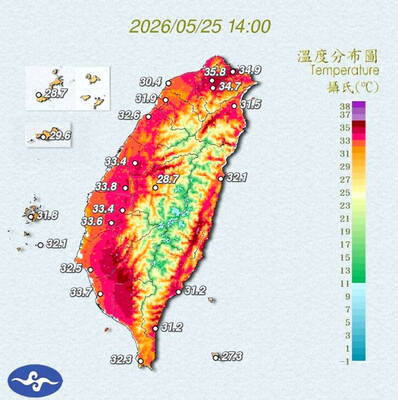
STAY COOL: The HPA recommended that people stay hydrated, use air-conditioning or fans while indoors, wear loose-fitting clothes and walk in the shade while outdoors Employers must implement measures such as installing cooling equipment, and providing drinking water and rest breaks for outdoor workers starting from Monday next week, the Taipei Department of Labor said on Sunday. Employers who fail to comply could face fines of NT$30,000 to NT$300,000 under the Occupational Safety and Health Act (職業安全衛生法), the department said. Businesses in Taipei employing fewer than 100 workers, as well as registered self-employed workers with labor insurance coverage, could receive on-site assessments and guidance from occupational safety consultants to help them apply for central government subsidies to implement or improve heat-protection measures, it said. Under the Ministry of
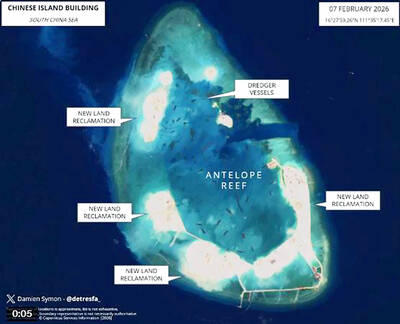
ISOLATION: The outposts would serve as support and backup bases, forcing US forces to either face China head-on or reroute, increasing travel time and operational costs China’s outposts in the South China Sea could be used to delay and constrain foreign forces during a conflict in the Taiwan Strait, giving Beijing a critical window to carry out amphibious landing and blockade operations, a report said. The Chinese Communist Party’s (CCP) forward operating bases on islands and reclaimed features in the South China Sea could delay foreign forces long enough for the Chinese People’s Liberation Army (PLA) to secure a key 48-to-72-hour window in the Taiwan Strait, a report commissioned by the Mainland Affairs Council found. The report, conducted by the Institute for National Defense and Security Research, examined


 RSS
RSS