


As Taiwan grapples with high summer temperatures, the Ministry of Environment has launched a new platform called Cool Map to help people locate more than 1,700 shaded or air-conditioned “cool zones” across Taipei, New Taipei City and Tainan.
A pilot version of the map is available at https://taiwancoolmap.moenv.gov.tw. It lists public parks, libraries, museums and private businesses such as banks and cafes that have agreed to offer relief from the heat.
Using location services, the map displays nearby cool spots — outdoor shaded areas and indoor cooling facilities — within a 500m radius.

Photo: CNA
It also indicates whether the site has air-conditioning, seating, drinking water, restrooms and accessibility features, and shows opening hours for private businesses.
Climate Change Administration Deputy Director-General Hsu Hsu-cheng (徐旭誠) said that the agency plans to continue updating the Cool Map and adding more locations.
The hope is that more cities would participate, Hsu said.
The government aims to expand the map to cover Taiwan’s six special municipalities and the rest of Taiwan, forming a nationwide heat relief network, he said.
While some found the tool useful, others were less impressed.
A woman in her 30s who asked not to be named questioned whether the map was necessary.
“There are air-conditioned places everywhere in the city. It is not hard to find one,” she said. “This map feels unnecessary for most people.”
Morris Chao (趙珩), a 20-year-old university student, said he would likely use the platform.
“Google Maps is cluttered and hard to navigate when you’re looking for a cool spot,” Chao said. “This platform makes it easier to find exactly what I want.”
While the Cool Map represents a promising step in Taiwan’s climate adaptation strategy, it is only available in Chinese.
Asked about the possibility of an English-language version, the ministry said that a bilingual interface was not initially considered, but it would do so.
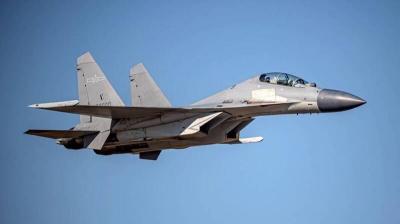
Eight Chinese naval vessels and 24 military aircraft were detected crossing the median line of the Taiwan Strait between 6am yesterday and 6am today, the Ministry of National Defense said this morning. The aircraft entered Taiwan’s northern, central, southwestern and eastern air defense identification zones, the ministry said. The armed forces responded with mission aircraft, naval vessels and shore-based missile systems to closely monitor the situation, it added. Eight naval vessels, one official ship and 36 aircraft sorties were spotted in total, the ministry said.
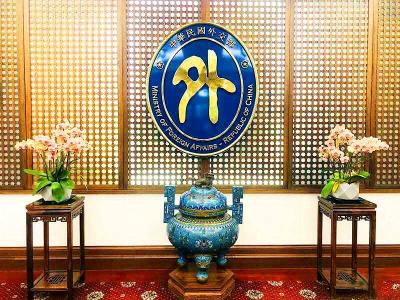
The Ministry of Foreign Affairs (MOFA) today said that if South Korea does not reply appropriately to its request to correct Taiwan’s name on its e-Arrival card system before March 31, it would take corresponding measures to alter how South Korea is labeled on the online Taiwan Arrival Card system. South Korea’s e-Arrival card system lists Taiwan as “China (Taiwan)” in the “point of departure” and “next destination” fields. The ministry said that it changed the nationality for South Koreans on Taiwan’s Alien Resident Certificates from “Korea” to “South Korea” on March 1, in a gesture of goodwill and based on the

Taiwanese officials were shown the first of 66 F-16V fighter jets purchased by Taiwan from the United States, the Ministry of National Defense said yesterday, adding the aircraft has completed an initial flight test and is expected to be delivered later this year. A delegation led by Deputy Minister of National Defense Hsu Szu-chien (徐斯儉) visited Lockheed Martin’s F-16 C/D Block 70 (also known as F-16V) assembly line in South Carolina on March 16 to view the aircraft. The jet will undergo a final acceptance flight in the US before being delivered to Taiwan, the
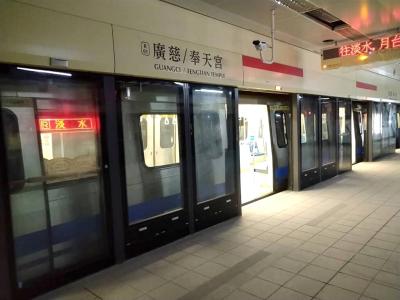
The New Taipei Metro's Sanyin Line and the eastern extension of the Taipei Metro's Tamsui-Xinyi Line (Red Line) are scheduled to begin operations in June, the National Development Council said today. The Red Line, which terminates at Xiangshan Station, would be connected by the 1.4km extension to a new eastern terminal, Guangci/Fengtian Temple Station, while the Sanyin Line would link New Taipei City's Tucheng and Yingge stations via Sanxia District (三峽). The council gave the updates at a council meeting reviewing progress on public construction projects for this year. Taiwan's annual public infrastructure budget would remain at NT$800 billion (US$25.08 billion), with NT$97.3


 RSS
RSS