


The Ministry of National Defense (MND) yesterday pledged to study the recommendations of a human rights commission following the prosecution of a man who refused to show up for reserve duty after becoming a Jehovah’s Witness.
The ministry’s comments came in response to a report the National Human Rights Commission (NHRC) published on Thursday on the issue of people being prosecuted for refusing such call-ups on religious grounds.
The commission said its investigation had been prompted by a man, identified by the pseudonym “A,” who was baptized as a Jehovah’s Witness sometime after completing his mandatory military service.
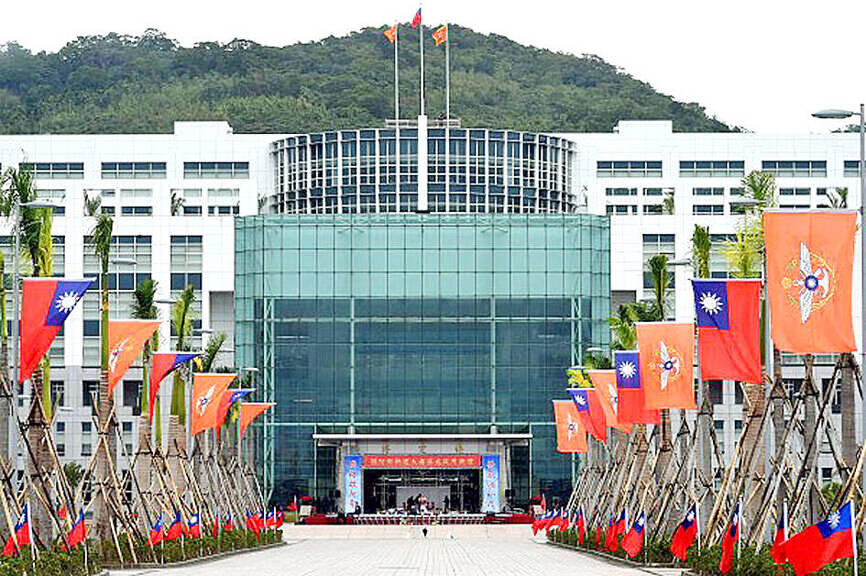
Photo courtesy of the Ministry of National Defense
In keeping with that denomination’s opposition to military service, “A” failed to show up when he was called for reserve duty — an act for which he was later prosecuted.
In his trial, “A” was initially sentenced to two months in prison, but the penalty was ultimately suspended for two years on appeal, according to the report.
“A,” nevertheless, argued that Taiwan’s conscription regulations violate the Constitution and the International Covenant on Civil and Political Rights (ICCPR), which the legislature ratified in 2009.
He filed a complaint to the NHRC in February 2023, prompting the commission to launch an investigation last year that culminated in the report published on Thursday.
In its recommendations, the commission said that while Taiwan has an alternative service option for military conscripts, it lacks such a program for people serving in reserve duty.
To protect the religious freedom of reserve soldiers, the ministry should create a “non-military” reserve duty option for conscientious objectors, as well as a program for reviewing the validity of such claims, the commission said.
A ministry spokesperson yesterday said that the ministry “respects” freedom of religious beliefs and personal conscience, and handles the recruitment of reserve soldiers in accordance with the law.
“Considering that national security is the common responsibility of all citizens, the MND will carefully consider relevant suggestions on balancing national security and personal rights and interests,” the ministry said.
In Taiwan, men are typically called up for reserve duty for 5 to 7 days every year, or 14 days every two years, in the 12 years after completing their mandatory military service.

Kenting National Park service technician Yang Jien-fon (楊政峰) won a silver award in World Grand Prix Photography Awards Spring Season for his photograph of two male rat snakes intertwined in combat. Yang’s colleagues at Kenting National Park said he is a master of nature photography who has been held back by his job in civil service. The awards accept entries in all four seasons across six categories: architectural and urban photography, black-and-white and fine art photography, commercial and fashion photography, documentary and people photography, nature and experimental photography, and mobile photography. Awards are ranked according to scores and divided into platinum, gold and

More than half of the bamboo vipers captured in Tainan in the past few years were found in the city’s Sinhua District (新化), while other districts had smaller catches or none at all. Every year, Tainan captures about 6,000 snakes which have made their way into people’s homes. Of the six major venomous snakes in Taiwan, the cobra, the many-banded krait, the brown-spotted pit viper and the bamboo viper are the most frequently captured. The high concentration of bamboo vipers captured in Sinhua District is puzzling. Tainan Agriculture Bureau Forestry and Nature Conservation Division head Chu Chien-ming (朱健明) earlier this week said that the
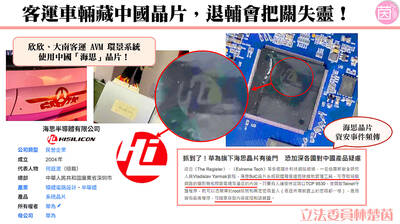
BREACH OF CONTRACT: The bus operators would seek compensation and have demanded that the manufacturer replace the chips with ones that meet regulations Two bus operators found to be using buses with China-made chips are to demand that the original manufacturers replace the systems and provide compensation for breach of contract, the Veterans Affairs Council said yesterday. Democratic Progressive Party Legislator Michelle Lin (林楚茵) yesterday said that Da Nan Bus Co and Shin-Shin Bus Co Ltd have fielded a total of 82 buses that are using Chinese chips. The bus models were made by Tron-E, while the systems provider was CYE Electronics, Lin said. Lin alleged that the buses were using chips manufactured by Huawei subsidiary HiSilicon Co, which presents a national security risk if the

The National Immigration Agency has banned two Chinese from returning to Taiwan, after they published social media content it described as disrespectful to national sovereignty. The agency imposed a two-month ban on a Chinese man surnamed Liang (梁) and a permanent ban on a woman surnamed Yang (楊), an influencer with 23 million followers, in October last year and last week respectively. Minister of the Interior Liu Shyh-fang (劉世芳) yesterday said on the sidelines of a legislative meeting that Chinese visitors to Taiwan are required to comply with the rules and regulations governing their entry permits. The government has handled the ban and


 RSS
RSS