


Kaohsiung was the most obese among Taiwan’s six special municipalities last year, with overweight people accounting for 41.3 percent of its population, the Sports Administration said in an annual ranking published on Friday.
New Taipei City’s obesity rate was 40 percent, Taoyuan’s was 39.8 percent, Tainan’s 39.7 percent, Taichung’s 38.4 percent and Taipei’s obesity rate was 37.6 percent, it said.
Taichung’s latest ranking as the second-least obese special municipality is a notable change for a city that had been the nation’s most obese special municipality for the past six consecutive years, the agency said.
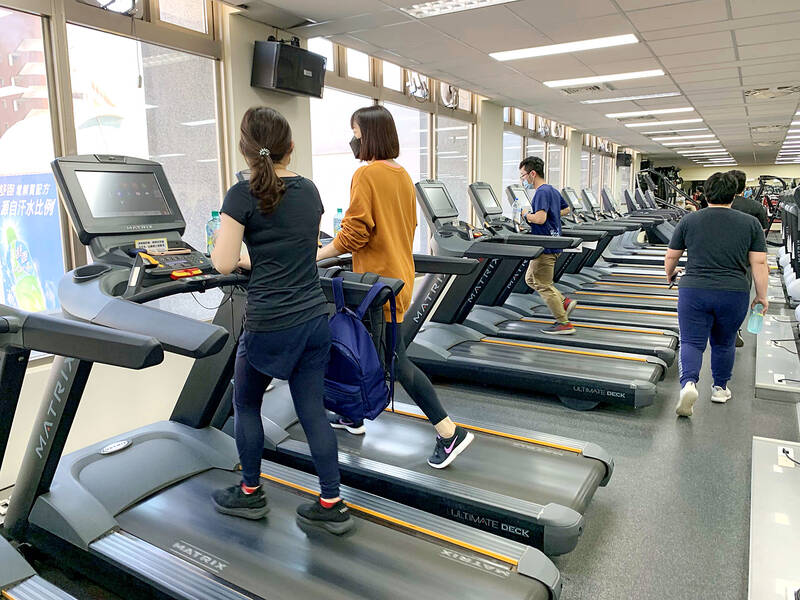
Photo: Tsai Shu-yuan, Taipei Times
The obesity rate in Taichung last year was down from the previous year’s 42.9 percent, in line with a general decline in obesity across the country, it said.
Yunlin’s obesity rate was 43.1 percent, the highest of the 22 administrative regions in Taiwan, it said.
Yilan’s 36.6 percent marked it as the nation’s slimmest, the agency said.
Taichung has been conducting a campaign against obesity by providing 960 overweight residents with gym membership and online dietary consultations, Taichung Health Bureau Director-General Tseng Tzu-chan (曾梓展) said.
The demographics targeted in these monthly drives included office workers, parents and various age groups, he said, adding that the bureau defines a body mass index (BMI) higher than 24 as overweight.
The bureau plans to reward Taichung Pass holders who walked 10,000 steps or more a day with bonus points that could be used to reduce public transportation fares, and subsidies for signing up to approved exercise programs, he said.
Regular exercise is good for physical health, especially cardiovascular, respiratory and skeletal-muscular health, as well as mental health, he said, adding that working out is also linked to general happiness and a drop in anxiety levels.
Exercise and a healthy diet are the best preventive measures against obesity, the bureau said.
Taiwanese are urged to keep their BMI between 18.5 and 24, and to exercise in 30-minute increments three to five times a week, the bureau said, adding that the exercise should be rigorous enough to increase heartbeat to 130 per minute.
Working out during free moments on weekdays and with friends at the weekends could effectively increase the amount of physical activity necessary to live healthily, it said.


Kenting National Park service technician Yang Jien-fon (楊政峰) won a silver award in World Grand Prix Photography Awards Spring Season for his photograph of two male rat snakes intertwined in combat. Yang’s colleagues at Kenting National Park said he is a master of nature photography who has been held back by his job in civil service. The awards accept entries in all four seasons across six categories: architectural and urban photography, black-and-white and fine art photography, commercial and fashion photography, documentary and people photography, nature and experimental photography, and mobile photography. Awards are ranked according to scores and divided into platinum, gold and
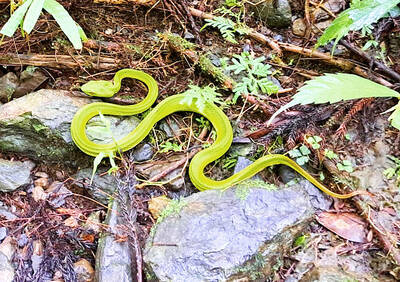
More than half of the bamboo vipers captured in Tainan in the past few years were found in the city’s Sinhua District (新化), while other districts had smaller catches or none at all. Every year, Tainan captures about 6,000 snakes which have made their way into people’s homes. Of the six major venomous snakes in Taiwan, the cobra, the many-banded krait, the brown-spotted pit viper and the bamboo viper are the most frequently captured. The high concentration of bamboo vipers captured in Sinhua District is puzzling. Tainan Agriculture Bureau Forestry and Nature Conservation Division head Chu Chien-ming (朱健明) earlier this week said that the
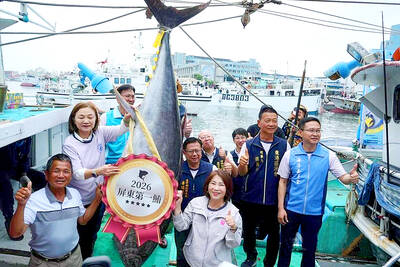
The first bluefin tuna of the season, brought to shore in Pingtung County and weighing 190kg, was yesterday auctioned for NT$10,600 (US$333.5) per kilogram, setting a record high for the local market. The auction was held at the fish market in Donggang Fishing Harbor, where the Siaoliouciou Island-registered fishing vessel Fu Yu Ching No. 2 delivered the “Pingtung First Tuna” it had caught for bidding. Bidding was intense, and the tuna was ultimately jointly purchased by a local restaurant and a local company for NT$10,600 per kilogram — NT$300 ,more than last year — for a total of NT$2.014 million. The 67-year-old skipper
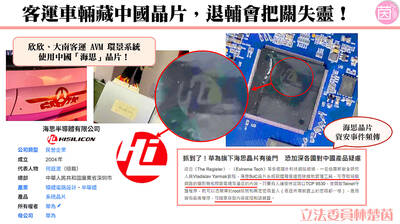
BREACH OF CONTRACT: The bus operators would seek compensation and have demanded that the manufacturer replace the chips with ones that meet regulations Two bus operators found to be using buses with China-made chips are to demand that the original manufacturers replace the systems and provide compensation for breach of contract, the Veterans Affairs Council said yesterday. Democratic Progressive Party Legislator Michelle Lin (林楚茵) yesterday said that Da Nan Bus Co and Shin-Shin Bus Co Ltd have fielded a total of 82 buses that are using Chinese chips. The bus models were made by Tron-E, while the systems provider was CYE Electronics, Lin said. Lin alleged that the buses were using chips manufactured by Huawei subsidiary HiSilicon Co, which presents a national security risk if the


 RSS
RSS