


An official of the RE100 renewable energy initiative on Thursday called on the government to remove subsidies for fossil fuels to further boost the development of the renewable energy market.
Climate Group director of energy Sam Kimmins welcomed Hon Hai Technology Group (Foxconn) to the RE100 family, which has committed to using 100 percent renewable electricity across its global operations by 2040.
Foxconn said it formally became a member of RE100 on Thursday.
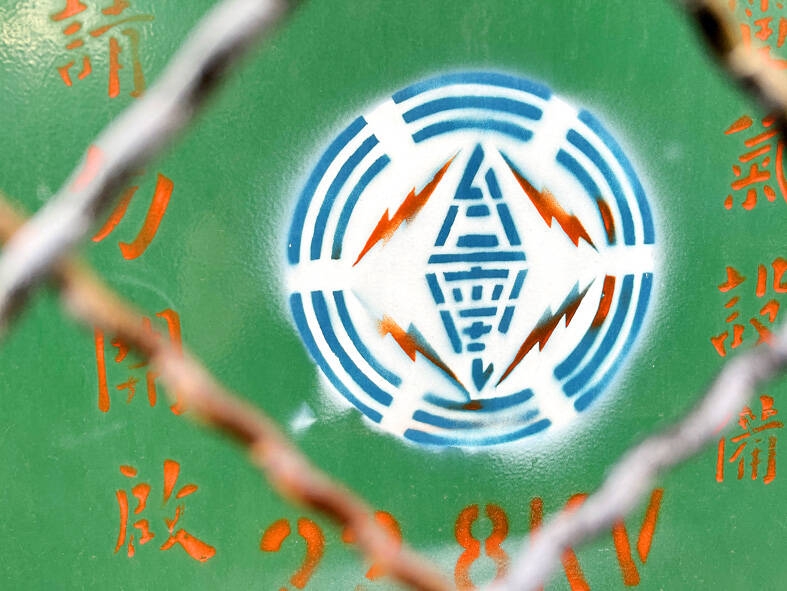
Photo: Taipei Times
RE100 is a global corporate renewable energy initiative that calls for businesses to commit to 100 percent renewable electricity. It has 34 company members headquartered in Taiwan, including Taiwan Semiconductor Manufacturing Co and Hon Hai.
The 34 members represent more than 10 percent of Taiwan’s electricity demand, Kimmins said.
The country’s total electricity consumption last year was about 277 terawatt-hours, the Energy Administration said.
Kimmins said that about 98 percent of Taiwan’s energy is imported, representing not only an enormous cost, but also an energy security risk.
“The great thing about renewables is you produce them here in Taiwan,” he said.
As an export economy, Taiwan is heavily reliant on exports and its customers, such as Google, Amazon and Apple, are increasingly asking for products to be made using 100 percent renewable electricity or carbon-free measures, the RE100 director said.
However, while demand is high, there are barriers to mass access for companies in Taiwan. The relatively high price of renewable electricity is one major hurdle.
Kimmins said one reason the price remains high might be because the tipping point for a decrease has not yet been reached.
“The Global Wind Energy Council [GWEC] has a model predicting that once a market achieves around 3 to 4 gigawatts of [installed] offshore wind power, not only do you have a steady decrease in price, you [also] have a sudden step down in price,” he said.
Taiwan’s offshore wind market has not yet achieved the scale, but is on track to reach 3 gigawatts by the end of this year and up to 5.6 gigawatts next year, he said.
“So you’re soon hitting the tipping point predicted by GWEC,” he added.
Another factor that has kept the renewable energy price relatively high is that subsidies for fossil fuels keep the non-renewable electricity price “artificially low,” the director said.
Removing subsidies for fossil fuels would create a level playing field for renewable electricity, Kimmins added.

FUKUOKA SITUATION: Japanese media reported that the pathogen is expected to be identified by the summer, while the CDC downplayed the idea that it was hMPV A “mysterious cold-like illness” reported in Japan’s Fukuoka Prefecture does not seem to be a new disease, but Japanese authorities have been asked about the situation, the Centers for Disease Control (CDC) said yesterday. The Fukuoka Prefectural Medical Association on Wednesday told a news conference that a “mystery cold” that has become a hot topic on social media is “highly likely to be caused by some kind of viral infection,” Japan’s KBC News reported. “Many people are experiencing symptoms starting with a sore throat, followed by a runny nose, phlegm and a severe cough,” KBC News reported, citing association officials. Health authorities are

Nvidia Corp CEO Jensen Huang (黃仁勳) arrived in Taiwan yesterday ahead of upcoming AI and technology events, saying he plans to meet with clients and Taiwan Semiconductor Manufacturing Co Chairman C.C. Wei (魏哲家) during his visit. After landing at Taipei Songshan Airport, Huang posed for photos with fans and handed out Yakult drinks to reporters and supporters waiting at the scene, saying he has “a lot to do” during the trip. Asked about reports that Nvidia’s planned headquarters site in Taipei’s Beitou Shilin Technology Park could break ground on May 27, Huang said that if the company holds an event, he would
Carrefour Taiwan is to begin using a new name from the start of July, but it cannot divulge the name until then, the chairman of the supermarket chain's parent company said today. President Chain Store Co chairman Lo Chih-hsien (羅智先) was asked by reporters after a shareholders' meeting to confirm whether the company has settled on a new name for the supermarket brand. In March, the government-registered name of two Carrefour Taiwan branches was quietly changed to "Le Chia Kang" (樂家康) in Chinese, raising speculation that has been selected as the name. Lo said that because of local regulations and contractual obligations, the
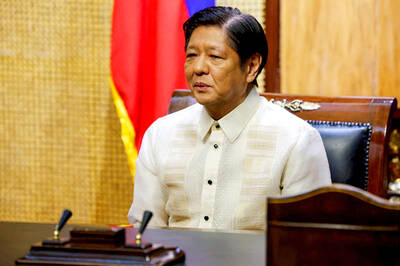
The Philippines would likely be involved in any conflict over Taiwan due to its proximity to the democracy claimed by China, President Ferdinand Marcos Jr said, reiterating a stance that risks angering Beijing. “In the Philippines, we do not have a choice because Taiwan is so close to the Philippines and we have almost 200,000 Filipino nationals living and working in Taiwan,” Marcos said in an interview with Japanese media in Manila on Monday. The Philippine leader’s comments come ahead of a state visit to Japan next week, where he is to meet with Japanese Prime Minister Sanae Takaichi to discuss security


 RSS
RSS