


The Tourism Administration has intensified marketing campaigns in Japan after the East Asian country was ranked the top source of international visitors to Taiwan in the first quarter of this year.
Of the 2,049,917 people who visited Taiwan from January to March, 348,913 were from Japan, administration data showed.
Hong Kong and Macao placed second with 320,988 visitors, followed by South Korea with 316,958, the data showed.
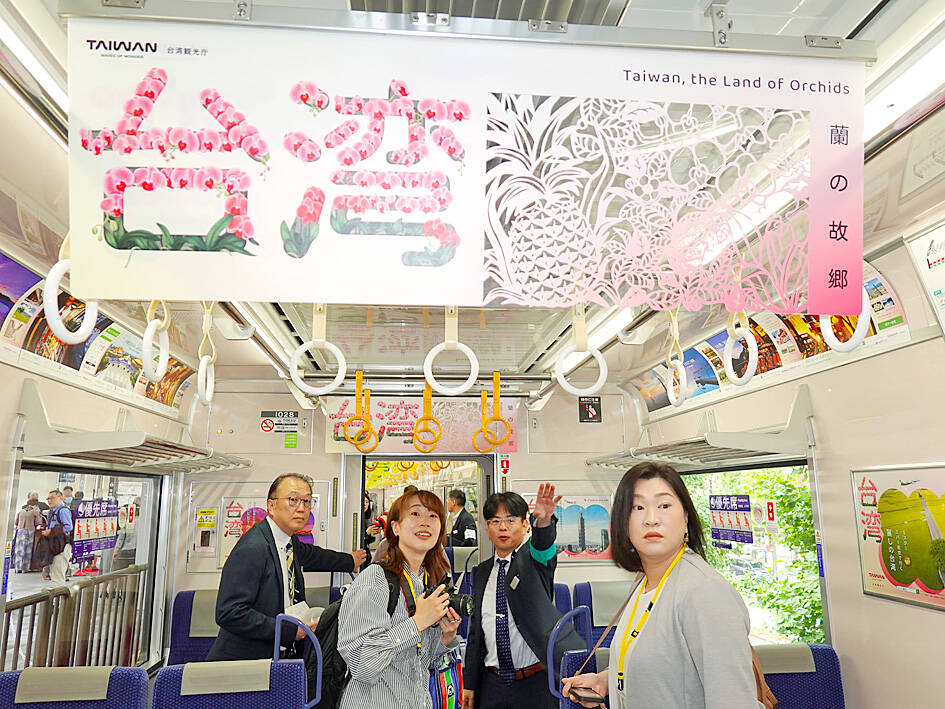
Photo: CNA
The number of Japanese visitors increased 155.92 percent from the same period last year, the administration said.
Regarding tourism advertising in Japan, the administration participated in marketing events in Tokyo and Nagoya in April and May respectively, and formed a delegation to organize marketing events in Fukuoka, Osaka and Kobe before summer began, targeting potential tourists in the Kansai region.
Kansai International Airport and Fukuoka Airport were each accessed by more than 20 million passengers last year, and ranked third and fourth respectively in terms of airport usage in Japan.
The passport holding rate of Osaka residents was ranked third in Japan.
A survey conducted by Nippon Travel Agency and Expedia, which was released last month, showed that Taiwan ranked second most popular overseas travel destination among Asian countries for this summer vacation.
That shows Taiwan’s secure and safe travel environment is deeply rooted in the hearts of Japanese, the administration said.
The tourism agency said it held a Taiwan Tourism Promotion Conference in Fukuoka on Friday last week.
There Japanese travel industry operators were introduced to Taiwan’s scenic spots and other tourism resources, Taiwanese chefs prepared xiaolongbao (小籠包, steamed buns) for the guests, and the Tiger Theater Troupe put on a Chinese yo-yo performance, the administration said.
More than 100 Japanese business operators attended the conference, it said.
On Saturday and Sunday, the administration arranged roadshow activities in front of Hakata Station in Fukuoka, and around Osaka’s Umeda subway station and a subway station in Kobe, it said.
It also put together the Taiwan Pavilion at the Kanto Tourism Expo in Osaka it said.
Visitors to the pavilion could buy Taiwanese pineapple cakes, dry noodles and other delicacies, it added.

In a historic first, Taiwanese officials participated in this year’s Riga Strategic Communications Dialogue in Latvia from Wednesday to Friday last week, which debuted a breakout session focused on Taiwan The event organizer, the NATO Strategic Communications Center of Excellence, displayed Taiwan’s national flag and the officials’ formal titles on their Web site. Taiwanese attendees included National Security Council (NSC) Deputy Secretary-General Lin Fei-fan (林飛帆) and deputy head of the Taipei Representative Office in the UK, Chiang Ya-chi (江雅綺). In addition to the session discussing Taiwan titled “Taiwan: Navigating Strategic Communication in a Tense Environment,” the dialogue also included sessions
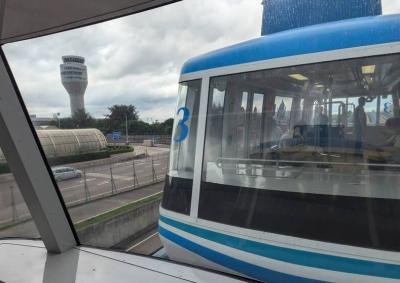
Taiwan Taoyuan International Airport is to suspend its automated Skytrain service connecting Terminal 1 and Terminal 2 starting on July 1 to facilitate connection works for the upcoming Terminal 3, the airport operator said today. Passengers and staff who need to travel between the two terminals after the suspension can instead use the Taoyuan MRT or the airport's 24-hour shuttle bus service, Taoyuan International Airport Corp said. The Taoyuan MRT Airport Line directly links the two terminals, while the shuttle buses are to operate around the clock, the company added. The Skytrain provides free transportation between the airport’s two terminals for travelers and
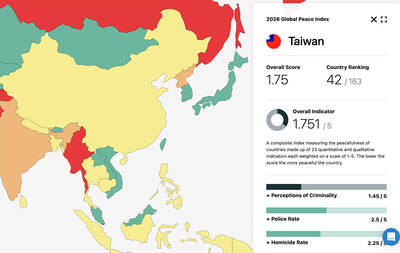
Taiwan ranked 42nd in terms of peacefulness among 163 countries, down five places from last year, according to this year’s Global Peace Index. With an overall score of 1.751, Taiwan dropped from 37th last year, the report published by the global Institute for Economics and Peace showed. The overall score measures a country’s level of peacefulness using 23 quantitative and qualitative indicators across three domains — ongoing domestic and international conflict, societal safety and security, and militarization. While Taiwan ranked 42nd worldwide, it was listed in ninth place among the 19 Asian-Pacific countries in the report, after New Zealand, Singapore, Japan, Malaysia,
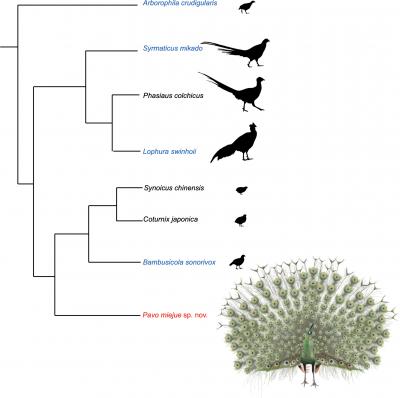
Through analyzing fossil evidence, a research team at National Taiwan University (NTU) discovered the largest endemic bird to have lived in Taiwan, naming it Pavo miejue, or extinct peafowl (滅絕孔雀). The Mikado pheasant, which is printed on the back of the NT$1,000 bank note, was previously believed to be the biggest endemic bird to Taiwan. The research team’s findings suggest that Pavo miejue lived during the Pleistocene epoch tens of thousands of years ago. It is the first endemic extinct bird species discovered and formally named in Taiwan. The study was coauthored by NTU Institute of Ecology and Evolutionary Biology professor Tsai Cheng-hsiu (蔡政修),


 RSS
RSS