


US Deputy Secretary of State Kurt Campbell “underscored the importance of maintaining peace and stability across the Taiwan Strait, in the South China Sea and on the Korean Peninsula,” during a call with Chinese Vice Minister of Foreign Affairs Ma Zhaoxu (馬朝旭) on Tuesday, US Department of State spokesman Matthew Miller said.
The call was part of “ongoing efforts” of the US and China “to maintain open lines of communication ... and responsibly manage competition in the relationship.” he added
In other news, a report published by the Heritage Foundation on Wednesday, titled The American Case for Taiwan, said that deterring China from invading Taiwan is “critical” to the security and economic prosperity of the US.

Photo: Thomas Peter, REUTERS
“Taiwan plays such an indispensable role in the US and global economies that war over the island could result in a global depression,” said Michael Cunningham, a research fellow at the foundation’s Asian Studies Center.
The US government should help its people understand the impact of a possible Taiwan contingency, otherwise it “will struggle to justify sending American treasure, let alone soldiers, halfway across the globe to defend Taiwan,” the report said.
Taiwan is a key issue in the competition for regional dominance between the US and China, it said, adding that “preventing a Chinese takeover of the island is essential to countering the security threats posed by an ascendant China.”
It would be difficult for the US to remain neutral in the event of a cross-strait conflict as tens of thousands of US citizens live in Taiwan, and treaty allies, such as the Philippines and Japan, might be entangled in such a conflict, the report said.
If Beijing takes control of Taipei, it might continue to pursue dominance on a wider stage, it said.
Taiwan also plays a critical role in the economy of the US and the globe, being a “major investor” in the US and having some of “the world’s most vital commercial sea lanes,” whose disruption would bring “an economic catastrophe,” it said in the report.
China would also be heavily stricken by a cross-strait conflict — unemployment would skyrocket if Taiwanese businesses, which “reportedly employ 10 million people in China,” were forced to stop operating, it said, adding that social unrest much-feared by Beijing would be much more likely.
The report outlines the principles the US should follow to help Taiwan deter China’s aggression, including preserving the “status quo,” which requires a delicate balance between supporting Taiwan and avoiding the provocation of China.
To strengthen Taiwan’s deterrence, it should be made clear to Beijing that the US and its allies “are ready and able to deny any attempt to seize Taiwan,” it said.
The US should ensure there are sufficient military assets and weapons in the region and to “remain committed to arming Taiwan,” it added.
The report also called for the development and adoption of new capabilities, such as uncrewed systems, and the improvement of intelligence gathering on Chinese forces while cooperating with Taipei “to safeguard Taiwan’s energy security and communications networks against potential Chinese sabotage.”

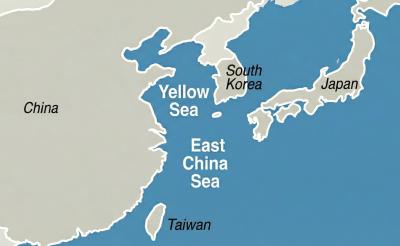
China has reserved offshore airspace in the Yellow Sea and East China Sea from March 27 to May 6, issuing alerts usually used to warn of military exercises, although no such exercises have been announced, the Wall Street Journal (WSJ) reported yesterday. Reserving such a large area for 40 days without explanation is an “unusual step,” as military exercises normally only last a few days, the paper said. These alerts, known as Notice to Air Missions (Notams), “are intended to inform pilots and aviation authorities of temporary airspace hazards or restrictions,” the article said. The airspace reserved in the alert is
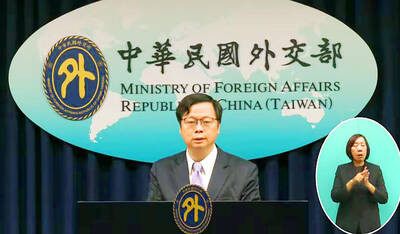
NAMING SPAT: The foreign ministry called on Denmark to propose an acceptable solution to the erroneous nationality used for Taiwanese on residence permits Taiwan has revoked some privileges for Danish diplomatic staff over a Danish permit that lists “Taiwan” as “China,” Eric Huang (黃鈞耀), head of the Ministry of Foreign Affairs’ Department of European Affairs, told a news conference in Taipei yesterday. Reporters asked Huang whether the Danish government had responded to the ministry’s request that it correct the nationality on Danish residence permits of Taiwanese, which has been listed as “China” since 2024. Taiwan’s representative office in Denmark continues to communicate with the Danish government, and the ministry has revoked some privileges previously granted to Danish representatives in Taiwan and would continue to review
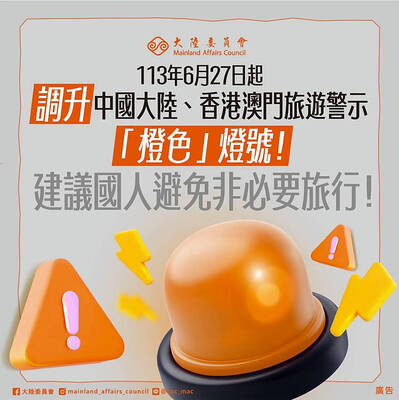
More than 6,000 Taiwanese students have participated in exchange programs in China over the past two years, despite the Mainland Affairs Council’s (MAC) “orange light” travel advisory, government records showed. The MAC’s publicly available registry showed that Taiwanese college and university students who went on exchange programs across the Strait numbered 3,592 and 2,966 people respectively. The National Immigration Agency data revealed that 2,296 and 2,551 Chinese students visited Taiwan for study in the same two years. A review of the Web sites of publicly-run universities and colleges showed that Taiwanese higher education institutions continued to recruit students for Chinese educational programs without
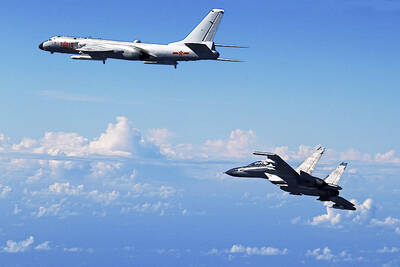
China has reserved offshore airspace over the Yellow Sea and East China Sea from March 27 to May 6, issuing alerts that are usually used to warn of military exercises, although no such exercises have been announced, the Wall Street Journal (WSJ) reported on Sunday. Reserving such a large area for 40 days without explanation is an “unusual step,” as military exercises normally only last a few days, the paper said. The alerts, known as notice to air missions (NOTAMs), “are intended to inform pilots and aviation authorities of temporary airspace hazards or restrictions,” the article said. The airspace reserved in the alert


 RSS
RSS