


Heavy rain is expected to continue in central and southern Taiwan this week due to the influence of a southwest wind, the Central Weather Bureau (CWB) said yesterday.
Although Typhoon Khanun has moved away from Taiwan after coming close to its north and northeast coasts on Thursday last week, it brought torrential rainfall on Friday and Saturday, and devastated Nantou County’s Renai Township (仁愛).
Mudflows were reported in multiple locations in the mountain town in Central Taiwan, disrupting road traffic and mobile phone services, while residents in several villages faced an imminent water and food shortage.

Photo courtesy of Nantou Fire Bureau
Two helicopters from the National Rescue Command Center were dispatched yesterday to deliver water, canned food and instant noodles to residents of seven villages in Renai, Nantou County Government said.
One helicopter also carried a resident who needed to undergo dialysis to the hospital, while another helicopter transported 43 visitors and staff members stranded in Aowanda National Forest Recreation Area to a temporary shelter at a junior-high school in Nantou.
The nation this week is still subject to the influence of a southwest wind, which would bring heavy rain to its central and southern regions, bureau forecaster Liao Ching-hsiang (廖經翔) said.
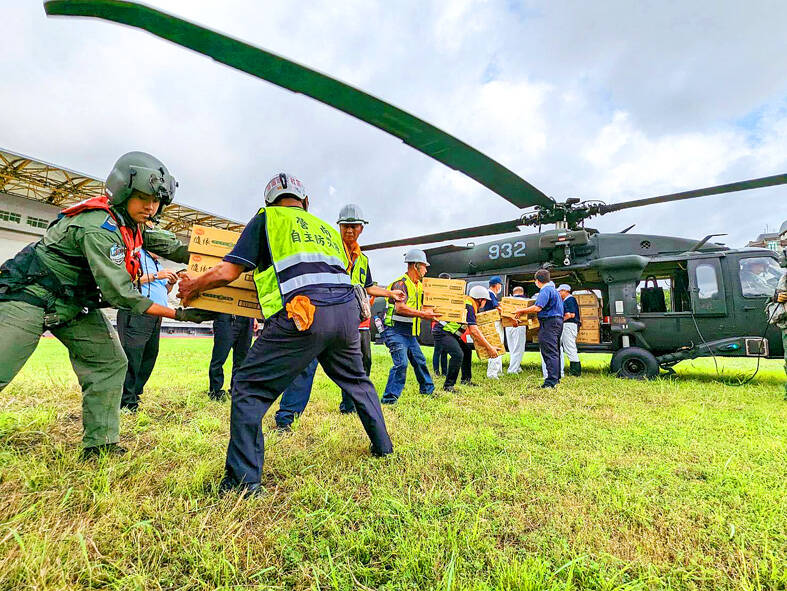
Photo: Liu Pin-chuan, Taipei Times
While the rainfall has become less intense, residents in central and southern Taiwan still face a potential danger due to the rainfall accumulated in the past three days, Liao said.
As of 5:30pm yesterday, Pingtung County’s Taiwu Township (泰武) had the highest accumulated rainfall of 1079.5mm, followed by 814.5mm in Nantou County’s Renai Township, the CWB said.
“So far, the rain brought by the southwest wind has not shown any sign of easing,” he said.
Tomorrow, the precipitation in central and southern Taiwan would further expand from the mountainous area to plains, while chances of isolated thundershowers are high all day in northern Taiwan, he said.
Two tropical depressions might soon be upgraded into tropical storms, and the one that would be named Lan was located southeast of Japan yesterday with a lower chance of affecting Taiwan, the bureau said.
The other tropical depression, which would be named Dora, could be upgraded into a tropical storm after crossing over to the west of the international date line, it said.
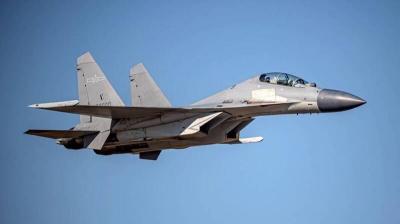
Eight Chinese naval vessels and 24 military aircraft were detected crossing the median line of the Taiwan Strait between 6am yesterday and 6am today, the Ministry of National Defense said this morning. The aircraft entered Taiwan’s northern, central, southwestern and eastern air defense identification zones, the ministry said. The armed forces responded with mission aircraft, naval vessels and shore-based missile systems to closely monitor the situation, it added. Eight naval vessels, one official ship and 36 aircraft sorties were spotted in total, the ministry said.
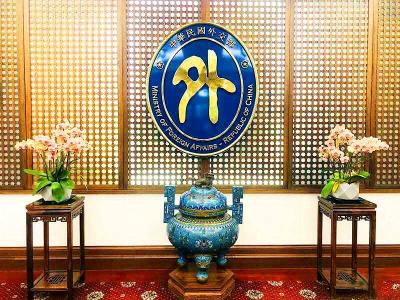
The Ministry of Foreign Affairs (MOFA) today said that if South Korea does not reply appropriately to its request to correct Taiwan’s name on its e-Arrival card system before March 31, it would take corresponding measures to alter how South Korea is labeled on the online Taiwan Arrival Card system. South Korea’s e-Arrival card system lists Taiwan as “China (Taiwan)” in the “point of departure” and “next destination” fields. The ministry said that it changed the nationality for South Koreans on Taiwan’s Alien Resident Certificates from “Korea” to “South Korea” on March 1, in a gesture of goodwill and based on the

Taiwanese officials were shown the first of 66 F-16V fighter jets purchased by Taiwan from the United States, the Ministry of National Defense said yesterday, adding the aircraft has completed an initial flight test and is expected to be delivered later this year. A delegation led by Deputy Minister of National Defense Hsu Szu-chien (徐斯儉) visited Lockheed Martin’s F-16 C/D Block 70 (also known as F-16V) assembly line in South Carolina on March 16 to view the aircraft. The jet will undergo a final acceptance flight in the US before being delivered to Taiwan, the
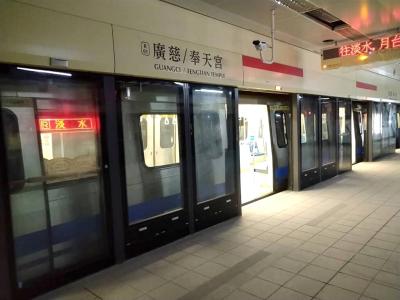
The New Taipei Metro's Sanyin Line and the eastern extension of the Taipei Metro's Tamsui-Xinyi Line (Red Line) are scheduled to begin operations in June, the National Development Council said today. The Red Line, which terminates at Xiangshan Station, would be connected by the 1.4km extension to a new eastern terminal, Guangci/Fengtian Temple Station, while the Sanyin Line would link New Taipei City's Tucheng and Yingge stations via Sanxia District (三峽). The council gave the updates at a council meeting reviewing progress on public construction projects for this year. Taiwan's annual public infrastructure budget would remain at NT$800 billion (US$25.08 billion), with NT$97.3


 RSS
RSS