


The Ministry of Education on Wednesday said that it has revised 301 entries in its online Chinese dictionary following criticism that they contained outdated or sexist language.
Lawmakers, including New Power Party Legislator Claire Wang (王婉諭), have repeatedly called on the ministry to revise two online dictionaries — the Revised Mandarin Chinese Dictionary for adults and the Concise Mandarin Chinese Dictionary for children — to address sexually discriminatory language.
The ministry said that its National Academy for Educational Research, which maintains the dictionaries, has made gradual changes to both directories.
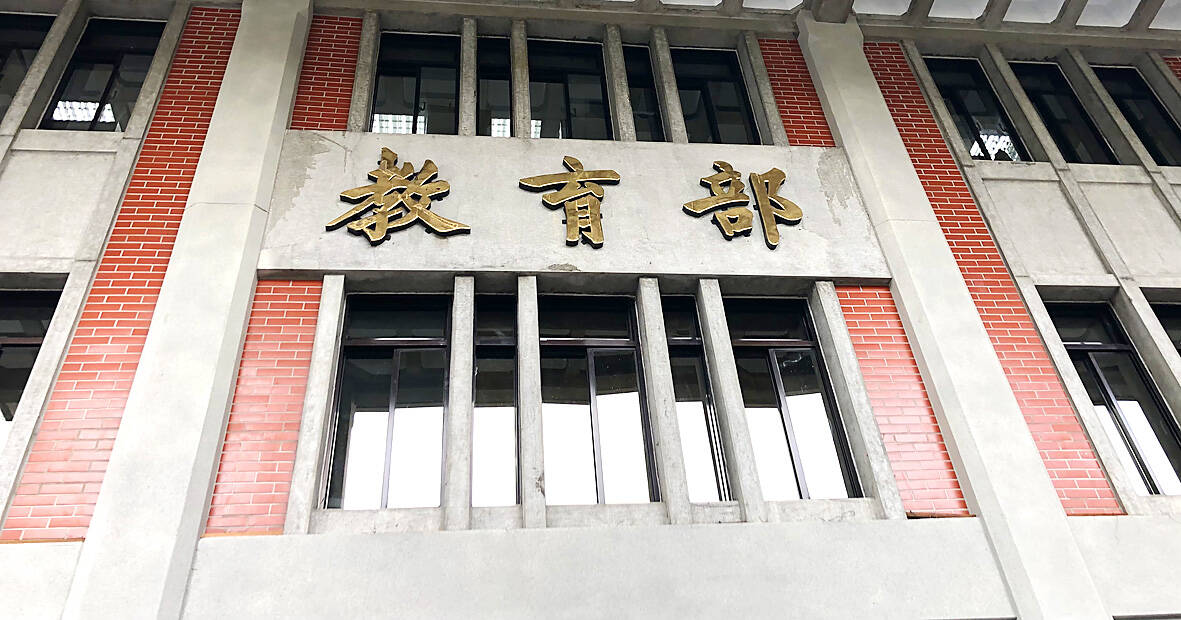
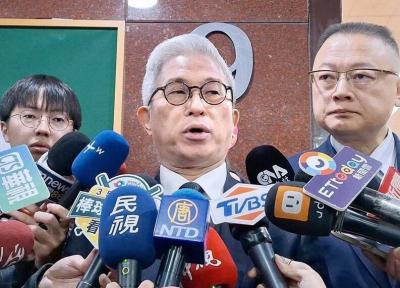
Photo: Rachel Lin, Taipei Times
In the concise dictionary, it had previously revised the entry for a traditional term for maternal grandparents — literally “outside grandparents,” based on the old notion that a wife marries “into” a family — to note that they are now only called “grandparents,” the ministry said.
The latest update to the definitions of 301 words involves the revised dictionary, it said, adding that the amendments followed a gender equality-based review.
One of the changes is the entry for the word “hymen,” which now uses more “medical” and “neutral” language to define it as: “a circular soft tissue (rather than “thin membrane”) on a female’s (rather than “woman’s”) external vaginal opening,” the ministry said.
Meanwhile, the idiom shui xing yang hua (水性楊花), which means “fickle” but which connotes sexual promiscuity, kept the explanation stating that it is “mainly used in reference to women” but tagged it as a “pejorative term.”
Ye cha po (夜叉婆), originally defined as a “fierce woman or wife,” was revised to say that it was “formerly used to describe a fierce woman, or to jokingly refer to one’s wife.”
In many cases, the changes involved expanding definitions that had previously only referred to people of one gender.
For example, the entry for se (色, “lust”) was revised to not specifically refer to “a man’s” strong sexual desire, while the definition of feng man (豐滿, “voluptuous”) dropped the word “woman” from “a description of a woman’s curvy physique.”
Similarly, the entry for yu (慾, “desire”) supplemented one of the original definitions — “the desire for sexual intimacy between people of opposite sexes” — by adding “or the same sex.”
The definition of “comfort women” was changed to refer to women who were forced “or tricked” into sexual slavery by the Japanese Imperial Army in occupied territories before or during World War II.
The change was made as “a supplementary explanation based on historical facts,” the academy said.
Lin Ching-lung (林慶隆), director of the academy’s Research Center for Translation, Compilation and Language Education, said that the revisions, expected to be the latest in a line of many, were the product of more than 30 meetings with gender equality experts and lexicographers.
However, Lin added that the changes were made to the Revised Mandarin Chinese Dictionary, which is primarily a historical dictionary and thus needs to preserve how words were used in the past.
As a result, many of the changes made this time were in the form of notes or addendum, he said.
In the case of the Concise Mandarin Chinese Dictionary, which is intended for use by junior-high and elementary school students, the academy often makes a decision whether to retain or remove words that are no longer in common use, he added.
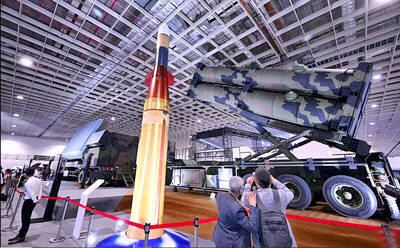
Taiwan is to commence mass production of the Tien Kung (天弓, “Sky Bow”) III, IV and V missiles by the second quarter of this year if the legislature approves the government’s NT$1.25 trillion (US$39.78 billion) special defense budget, an official said yesterday. Commenting on condition of anonymity, a defense official with knowledge of the matter said that the advanced systems are expected to provide crucial capabilities against ballistic and cruise missiles for the proposed “T-Dome,” an advanced, multi-layered air defense network. The Tien Kung III is an air defense missile with a maximum interception altitude of 35km. The Tien Kung IV and V
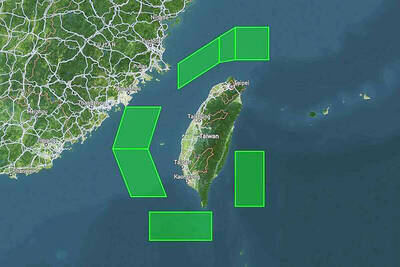
The disruption of 941 flights in and out of Taiwan due to China’s large-scale military exercises was no accident, but rather the result of a “quasi-blockade” used to simulate creating the air and sea routes needed for an amphibious landing, a military expert said. The disruptions occurred on Tuesday and lasted about 10 hours as China conducted live-fire drills in the Taiwan Strait. The Civil Aviation Administration (CAA) said the exercises affected 857 international flights and 84 domestic flights, affecting more than 100,000 travelers. Su Tzu-yun (蘇紫雲), a research fellow at the government-sponsored Institute for National Defense and Security Research, said the air
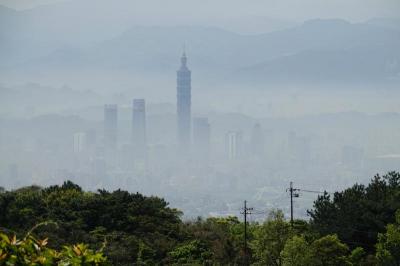
A strong continental cold air mass is to bring pollutants to Taiwan from tomorrow, the Ministry of Environment said today, as it issued an “orange” air quality alert for most of the country. All of Taiwan except for Hualien and Taitung counties is to be under an “orange” air quality alert tomorrow, indicating air quality that is unhealthy for sensitive groups. In China, areas from Shandong to Shanghai have been enveloped in haze since Saturday, the ministry said in a news release. Yesterday, hourly concentrations of PM2.5 in these areas ranged from 65 to 160 micrograms per cubic meter (mg/m³), and pollutants were
Taiwan’s armed forces have established response protocols for a wide range of sudden contingencies, including the “Wan Chun Plan” to protect the head of state, the Ministry of Defense (MND) said today. After US President Donald Trump on Saturday launched a series of airstrikes in Venezuela and kidnapped Venezuelan President Nicolas Maduro, concerns have been raised as to whether China would launch a similar “decapitation strike” on Taiwan. The armed forces regularly coordinate with relevant agencies and practice drills to ensure preparedness for a wide range of scenarios, Vice Minister of National Defense Hsu Szu-chien (徐斯儉) told reporters before a


 RSS
RSS