


US Senator Marco Rubio on Tuesday asked US President Joe Biden why Taiwan’s video at the Summit for Democracy was censored and why the nation was underrepresented.
Taiwan was represented by Minister Without Portfolio Audrey Tang (唐鳳) and Representative to the US Hsiao Bi-khim (蕭美琴) at the summit last week.
However, Tang’s presentation at a panel discussion on “countering digital authoritarianism and affirming democratic values” was on Friday interrupted after it showed a map showing Taiwan in a different color than China.
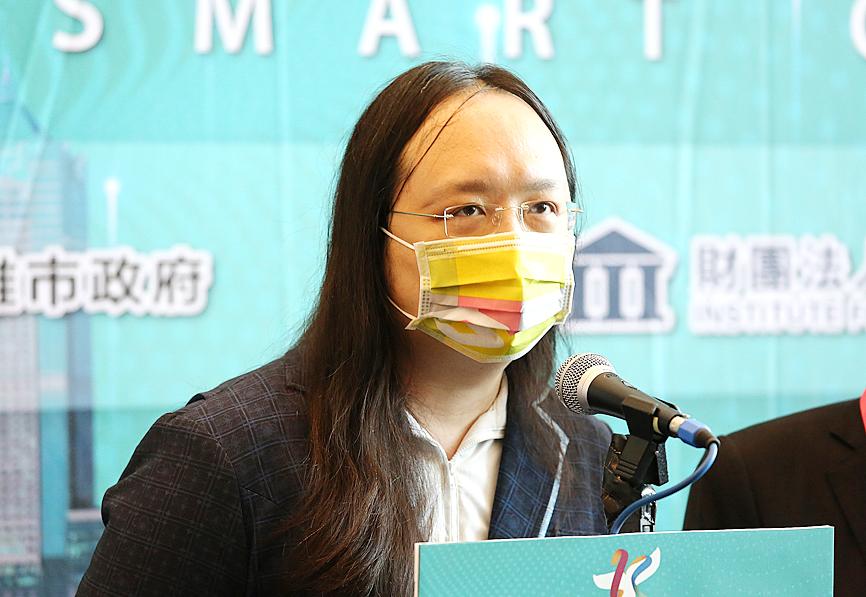
Photo: Lee Hui-chou, Taipei Times
Washington was concerned about breaking its “one China” policy and complained to Taipei, which was angry that Tang’s presentation had been cut, Reuters reported on Sunday.
“I am deeply disappointed by how your administration handled Taiwan’s participation,” Rubio wrote in the open letter to Biden, asking why President Tsai Ing-wen (蔡英文) was not invited to the summit.
“While both of these officials [Tang and Hsiao] are highly accomplished and impressive in their own right, neither of them was elected to the position that they currently occupy, and most importantly, the other nations at the summit were represented by their heads of state,” he wrote.
“Unlike United Nations organizations in which the United States cannot unilaterally decide whether Taiwan is allowed to participate, you had carte blanche to determine which countries participated in the summit, and at what level,” he added.
“Decades of a failed engagement policy should have taught us by now that making concessions to Beijing is a one-sided and fruitless endeavor. And yet it continues,” Rubio wrote.
“The Chinese Communist Party (CCP) never reciprocates such concessions,” he added.
“According to widely available press reports, White House officials cut off the transmission of Minister Tang’s video while she was presenting because Tang had a map that displayed China and Taiwan in different colors. If true, this is yet another concession to the CCP,” he said.
Rubio urged the White House to correct the mistake and prove at next year’s edition of the event that “democracy will not be calibrated in the futile pursuit of the approval of our authoritarian rivals.”
In Taipei, the Ministry of Foreign Affairs yesterday said it has no further comment on the matter.
The interruption was due to technical problems on the US side, and Tang’s full presentation was available on the US Department of State’s Web site, the ministry said on Monday.
Taiwan and the US had communicated about her presentation before the summit, and the problem was immediately tackled and her video made available online, Tang said yesterday on the sidelines of an event in Kaohsiung.
Tang said she had provided her manuscript in English and Chinese to US officials before the meeting, and that her voice could be heard reading the Chinese version in the uploaded file.
Additional reporting by CNA
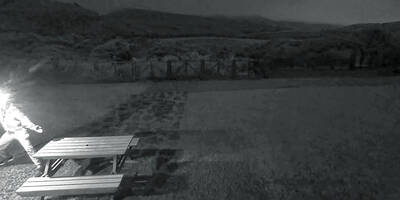
Yangmingshan National Park authorities yesterday urged visitors to respect public spaces and obey the law after a couple was caught on a camera livestream having sex at the park’s Qingtiangang (擎天崗) earlier in the day. The Shilin Police Precinct in Taipei said it has identified a suspect and his vehicle registration number, and would summon him for questioning. The case would be handled in accordance with public indecency charges, it added. The couple entered the park at about 11pm on Thursday and began fooling around by 1am yesterday, the police said, adding that the two were unaware of the park’s all-day live
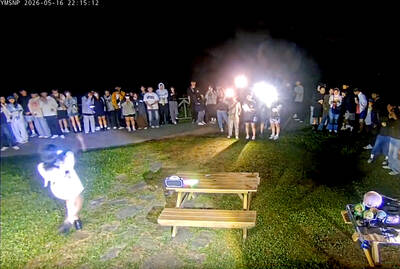
Yangmingshan National Park’s Qingtiangang (擎天崗) nature area has gone viral after a park livestream camera observed a couple in the throes of intimate congress, which was broadcast live on YouTube, drawing large late-night crowds and sparking a backlash over noise, bright lights and disruption to wildlife habitat. The area’s livestream footage appeared to show a couple engaging in sexual activity on a picnic table in the park on Friday last week, with the uncensored footage streamed publicly online. The footage quickly spread across social media, prompting a tide of visitors to travel to the site to “check in” and recreate the
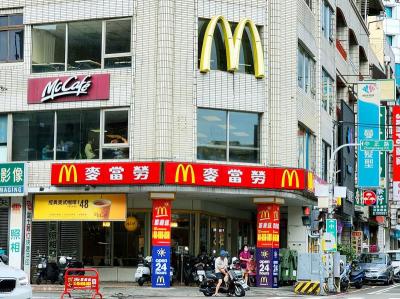
Fast food chain McDonald's is to raise prices by up to NT$5 on some products at its restaurants across Taiwan, starting on Wednesday next week, the company announced today. The prices of all extra value meals and sharing boxes are to increase by NT$5, while breakfast combos and creamy corn soup would go up by NT$3, the company said in a statement. The price of the main items of those meals, if ordered individually, would remain the same. Meanwhile, the price of a medium-sized lemon iced tea and hot cappuccino would rise by NT$3, extra dipping sauces for chicken nuggets would go up

Minister of Digital Affairs Lin Yi-ching (林宜敬) yesterday cited regulatory issues and national security concerns as an expert said that Taiwan is among the few Asian regions without Starlink. Lin made the remarks on Facebook after funP Innovation Group chief executive officer Nathan Chiu (邱繼弘) on Friday said Taiwan and four other countries in Asia — China, North Korea, Afghanistan and Syria — have no access to Starlink. Starlink has become available in 166 countries worldwide, including Ukraine, Malaysia, the Philippines and Vietnam, in the six years since it became commercial, he said. While China and North Korea block Starlink, Syria is not


 RSS
RSS