


The Ministry of Foreign Affairs yesterday announced a Taiwan-Europe Connectivity Scholarship program to attract more European students to study Mandarin in the nation and advance bilateral relations.
The program aims to fortify Taiwan-Europe ties and encourage local universities to build up English-teaching environments, Department of European Affairs Deputy Director-General Kendra Chen (陳詠韶) told a news briefing in Taipei.
The program echoes the EU’s Europe-Asia Connectivity Strategy and the UK’s Global Britain vision, she said, expressing the hope that academic partnership would foster collaboration in other areas.

Photo: Lu Yi-hsuan, Taipei Times
The umbrella program includes three projects targeting the Czech Republic, Hungary and the UK, Chen said.
In the project targeting the Czech Republic, seven local universities would provide 50 scholarships per year to students from 14 Czech universities, she said, adding that 11 Czech students have enrolled in National Chengchi University and National Sun Yat-sen University.
The project, resulting from Czech Senate President Milos Vystrcil’s visit to Taiwan in August last year, was first announced by the ministry in September last year.
In the project targeting Hungary, 11 local universities would provide 30 scholarships per year to students from nine Hungarian universities, Chen said.
In the project targeting the UK, 18 local universities would provide 100 scholarships per year to students from 42 British universities, she said, adding that six British students have enrolled in National Taiwan University.
The 18 local universities are also required to make plans regarding how the British students might assist English teaching or increase interactions with Taiwanese students on campuses, as part of the government’s efforts to make Taiwan fully bilingual by 2030, Chen said.
The Ministry of Education and the British Office Taipei in October last year signed a letter of intent to further bilateral cooperation in English-language education.
The foreign ministry offers subsidies to local universities based on their scholarship quotas, while they should provide a monthly stipend of at least NT$15,000 to each recipient, Chen said.
The recipients are required to take at least one Mandarin-learning course, she added.
The foreign students were isolated for 14 days upon entering Taiwan, followed by seven days of self-health management, in accordance with the Central Epidemic Command Center’ regulations, she said.
The ministry plans to extend the program to other European countries, especially those that have established representative offices in Taiwan, Chen said.
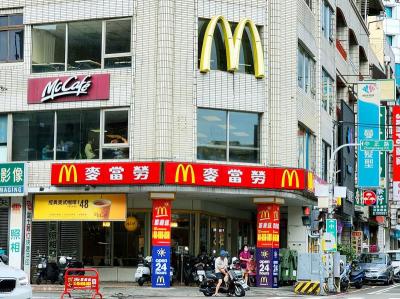
Fast food chain McDonald's is to raise prices by up to NT$5 on some products at its restaurants across Taiwan, starting on Wednesday next week, the company announced today. The prices of all extra value meals and sharing boxes are to increase by NT$5, while breakfast combos and creamy corn soup would go up by NT$3, the company said in a statement. The price of the main items of those meals, if ordered individually, would remain the same. Meanwhile, the price of a medium-sized lemon iced tea and hot cappuccino would rise by NT$3, extra dipping sauces for chicken nuggets would go up

FUKUOKA SITUATION: Japanese media reported that the pathogen is expected to be identified by the summer, while the CDC downplayed the idea that it was hMPV A “mysterious cold-like illness” reported in Japan’s Fukuoka Prefecture does not seem to be a new disease, but Japanese authorities have been asked about the situation, the Centers for Disease Control (CDC) said yesterday. The Fukuoka Prefectural Medical Association on Wednesday told a news conference that a “mystery cold” that has become a hot topic on social media is “highly likely to be caused by some kind of viral infection,” Japan’s KBC News reported. “Many people are experiencing symptoms starting with a sore throat, followed by a runny nose, phlegm and a severe cough,” KBC News reported, citing association officials. Health authorities are

Nvidia Corp CEO Jensen Huang (黃仁勳) arrived in Taiwan yesterday ahead of upcoming AI and technology events, saying he plans to meet with clients and Taiwan Semiconductor Manufacturing Co Chairman C.C. Wei (魏哲家) during his visit. After landing at Taipei Songshan Airport, Huang posed for photos with fans and handed out Yakult drinks to reporters and supporters waiting at the scene, saying he has “a lot to do” during the trip. Asked about reports that Nvidia’s planned headquarters site in Taipei’s Beitou Shilin Technology Park could break ground on May 27, Huang said that if the company holds an event, he would

Carrefour Taiwan is to begin using a new name from the start of July, but it cannot divulge the name until then, the chairman of the supermarket chain's parent company said today. President Chain Store Co chairman Lo Chih-hsien (羅智先) was asked by reporters after a shareholders' meeting to confirm whether the company has settled on a new name for the supermarket brand. In March, the government-registered name of two Carrefour Taiwan branches was quietly changed to "Le Chia Kang" (樂家康) in Chinese, raising speculation that has been selected as the name. Lo said that because of local regulations and contractual obligations, the


 RSS
RSS