


A Taiwanese research team has developed a COVID-19 test kit that can deliver results in about 15 minutes with 80 to 90 percent accuracy, the group said yesterday.
The rapid test is likely to be ready for the market by the end of the year, the team of researchers from the National Defense Medical Center and the National Health Research Institutes said during an introduction of the technology at a promotional event for the upcoming Taiwan Innotech Expo.
Lai Szu-chia (賴思佳), an associate researcher at the center’s Institute of Preventative Medicine, said that the two greatest challenges in developing the test were isolating viral strains and setting up a viral antigen bank, which took four months and three months respectively.
That work was necessary to maximize the sensitivity and specificity of the test kit, the two main factors that determine its performance, she said.
A highly sensitive test should capture all true positive results, while a highly specific test should rule out all true negative results, she added.
In their work on the rapid test kit, the team received technical assistance from the Centers for Disease Control and nearly NT$10 million (US$341,180) in funding from the institutes, Lai said.
After the test kit technology was completed, it was sent to five companies — Trison Technology, Taiwan Advance Bio-pharmaceutical, Taiwan Carbon Nano Technology, Enimmune and Cold Spring Biotech — for trial production and clinical testing, she said.
One of the manufacturers has already requested emergency use authorization from the Food and Drug Administration and hopes to have the test on the market by the end of the year, she added.
Their test kit is different from the commonly used polymerase chain reaction tests, which are highly accurate, but also have longer processing times and are labor-intensive, Lai said.
Their rapid test kit uses a nasal swab and can deliver results with 80 to 90 percent accuracy in as little as 15 minutes, making it a good option to testing at airports, schools and nursing homes, she said.
The test kits would also ease the burden on frontline medical personnel, she added.
The Taiwan Innotech Expo, an annual exhibition of innovative technologies hosted by the government, is to be held from Thursday next week to Sept. 29 at the Taipei World Trade Center.

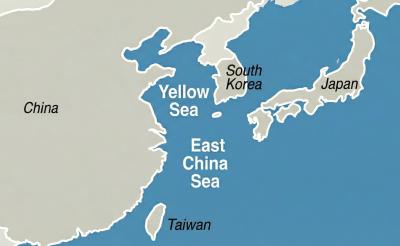
China has reserved offshore airspace in the Yellow Sea and East China Sea from March 27 to May 6, issuing alerts usually used to warn of military exercises, although no such exercises have been announced, the Wall Street Journal (WSJ) reported yesterday. Reserving such a large area for 40 days without explanation is an “unusual step,” as military exercises normally only last a few days, the paper said. These alerts, known as Notice to Air Missions (Notams), “are intended to inform pilots and aviation authorities of temporary airspace hazards or restrictions,” the article said. The airspace reserved in the alert is
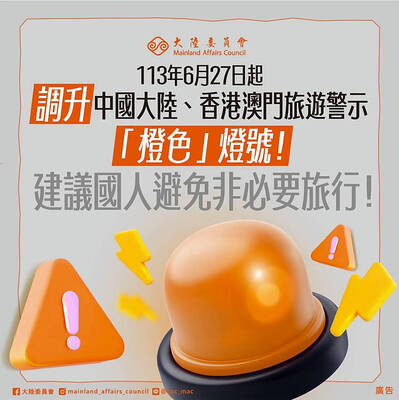
More than 6,000 Taiwanese students have participated in exchange programs in China over the past two years, despite the Mainland Affairs Council’s (MAC) “orange light” travel advisory, government records showed. The MAC’s publicly available registry showed that Taiwanese college and university students who went on exchange programs across the Strait numbered 3,592 and 2,966 people respectively. The National Immigration Agency data revealed that 2,296 and 2,551 Chinese students visited Taiwan for study in the same two years. A review of the Web sites of publicly-run universities and colleges showed that Taiwanese higher education institutions continued to recruit students for Chinese educational programs without
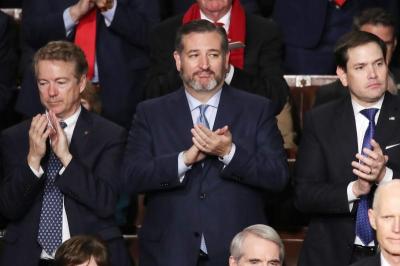
A bipartisan group of US senators has introduced a bill to enhance cooperation with Taiwan on drone development and to reduce reliance on supply chains linked to China. The proposed Blue Skies for Taiwan Act of 2026 was introduced by Republican US senators Ted Cruz and John Curtis, and Democratic US senators Jeff Merkley and Andy Kim. The legislation seeks to ease constraints on Taiwan-US cooperation in uncrewed aerial systems (UAS), including dependence on China-sourced components, limited access to capital and regulatory barriers under US export controls, a news release issued by Cruz on Wednesday said. The bill would establish a "Blue UAS
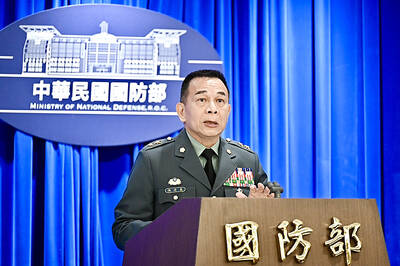
The Republic of China Army Command yesterday relieved Kinmen Defense Battalion commander after authorities indicted the officer on charges connected to using methamphetamine. The Kinmen District Prosecutors’ Office on Wednesday detained Colonel He (何) after the Coast Guard linked him to drug shipments and proceeded to charge him yesterday for using and possessing crystal meth. The man was released on a NT$50,000 bail and banned from leaving Kinmen, the office said. Army Chief of Staff Lieutenant General Chen Chien-yi (陳建義) told a news conference yesterday that He has been removed and another officer is taking over the unit as the acting commander. The military


 RSS
RSS