


Taiwan needs a new constitution, as the current one was adopted in Nanjing in 1946, when the Republic of China (ROC) represented all of China, while the Control Yuan and Examination Yuan should be abolished, legal experts and academics said yesterday during a public hearing at the Legislative Yuan in Taipei.
Chang Kun-sheng (張錕盛), a law professor and secretary-general of the Taiwan Administrative Law Association, said that it is time to draft a new constitution.
The ROC Constitution was adopted during a National Constituent Assembly meeting in Nanjing shortly after World War II and before the Chinese Civil War had fully erupted, Chang said.
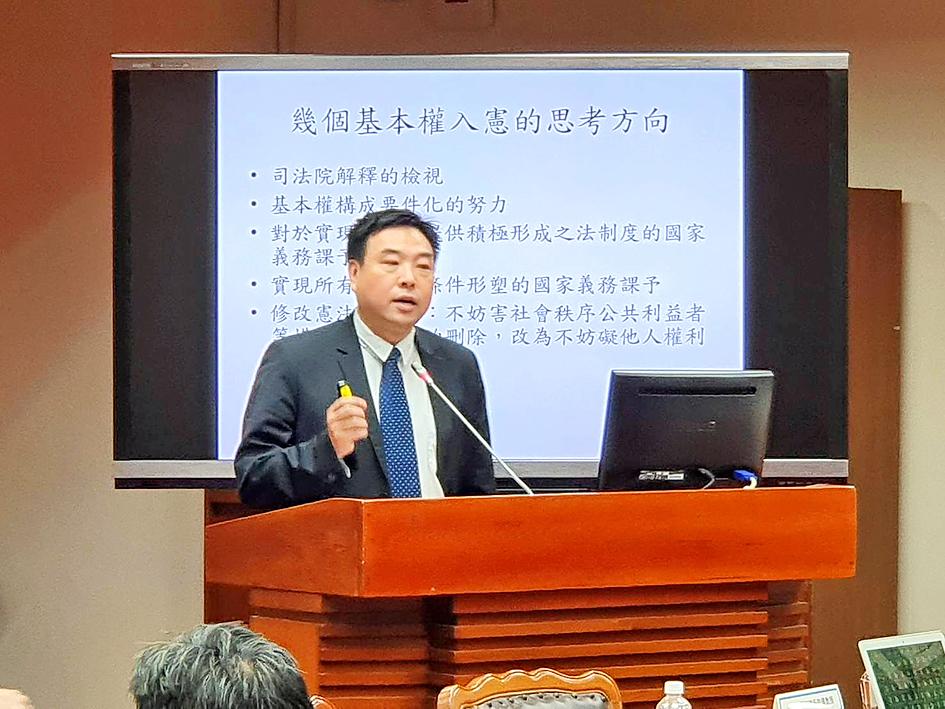
Photo: Hsieh Chun-lin, Taipei Times
Taiwan only had 18 representatives at that assembly, out of 2,050 delegates representing all Chinese provinces and regions, political parties, trades, the elite of society and overseas Chinese groups, he said.
Of the 2,050 delegates, only 1,701 attended the meeting, records from the assembly showed.
“As Taiwan was only apportioned 18 representatives for that meeting, we really have to question this 1946 ROC Constitution, whether it has any legally binding power over the people of Taiwan,” Chang said.
The ROC Constitution has no legitimacy for Taiwanese, Chang said.
However, it is currently accepted, in the hopes that it will be amended through a peaceful constitutional reform process involving legislators and will then be approved through a public referendum, he said.
Yesterday’s public hearing was convened by Democratic Progressive Party (DPP) caucus secretary-general Chung Chia-pin (鍾佳濱).
Legal experts and academics participated in the hearing, which was also attended by other DPP members and Taiwan People’s Party (TPP) Legislator Jang Chyi-lu (張其祿).
Most of those attending agreed on recommendations to abolish the Control Yuan and Examination Yuan, lower the age of adulthood to 18, and reduce the threshold for constitutional amendments to a two-thirds legislative majority that would then need to be approved by a public referendum.
Three-quarters of legislators are currently required to vote in favor of a constitutional amendment, before it is approved by a public referendum, he said.
The current threshold is so high that is has had impeded efforts to amend the Constitution over the past two decades, Chung said.

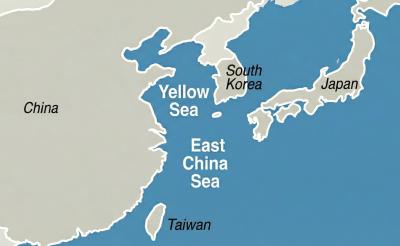
China has reserved offshore airspace in the Yellow Sea and East China Sea from March 27 to May 6, issuing alerts usually used to warn of military exercises, although no such exercises have been announced, the Wall Street Journal (WSJ) reported yesterday. Reserving such a large area for 40 days without explanation is an “unusual step,” as military exercises normally only last a few days, the paper said. These alerts, known as Notice to Air Missions (Notams), “are intended to inform pilots and aviation authorities of temporary airspace hazards or restrictions,” the article said. The airspace reserved in the alert is
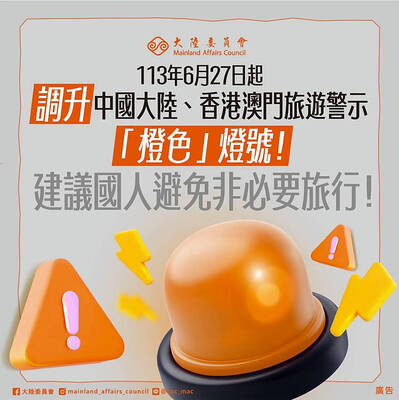
More than 6,000 Taiwanese students have participated in exchange programs in China over the past two years, despite the Mainland Affairs Council’s (MAC) “orange light” travel advisory, government records showed. The MAC’s publicly available registry showed that Taiwanese college and university students who went on exchange programs across the Strait numbered 3,592 and 2,966 people respectively. The National Immigration Agency data revealed that 2,296 and 2,551 Chinese students visited Taiwan for study in the same two years. A review of the Web sites of publicly-run universities and colleges showed that Taiwanese higher education institutions continued to recruit students for Chinese educational programs without
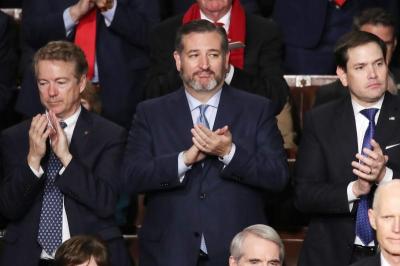
A bipartisan group of US senators has introduced a bill to enhance cooperation with Taiwan on drone development and to reduce reliance on supply chains linked to China. The proposed Blue Skies for Taiwan Act of 2026 was introduced by Republican US senators Ted Cruz and John Curtis, and Democratic US senators Jeff Merkley and Andy Kim. The legislation seeks to ease constraints on Taiwan-US cooperation in uncrewed aerial systems (UAS), including dependence on China-sourced components, limited access to capital and regulatory barriers under US export controls, a news release issued by Cruz on Wednesday said. The bill would establish a "Blue UAS
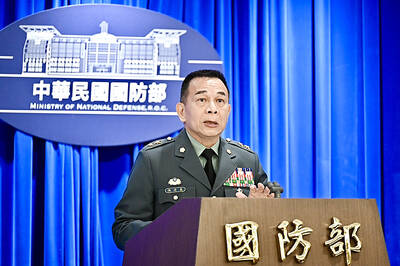
The Republic of China Army Command yesterday relieved Kinmen Defense Battalion commander after authorities indicted the officer on charges connected to using methamphetamine. The Kinmen District Prosecutors’ Office on Wednesday detained Colonel He (何) after the Coast Guard linked him to drug shipments and proceeded to charge him yesterday for using and possessing crystal meth. The man was released on a NT$50,000 bail and banned from leaving Kinmen, the office said. Army Chief of Staff Lieutenant General Chen Chien-yi (陳建義) told a news conference yesterday that He has been removed and another officer is taking over the unit as the acting commander. The military


 RSS
RSS