


Police in Taichung have been criticized after images emerged of a five-year-old boy taking a breath alcohol test after he crashed his bicycle into a car parked in an alley.
The sobriety test is a standard police tool used in all traffic-related incidents, the Wufeng police precinct said on Saturday.
All people involved in a traffic accident, regardless of age, must be checked for alcohol, even if a bicycle is involved, it said.
The National Police Agency said that in accordance with the principle of fairness, officers are required to take statements from all parties involved in an accident, sobriety tests included.
There was no misconduct on the part of the officer, as he acted in accordance with standard police procedure, it said.
The incident came to light when the owner of a white Tesla posted a photograph of the boy taking the breath test on social media on Friday, writing: “The little boy was really brave and faced up to the problem” and: “Luckily, the boy is OK.”
After being criticized for posting the photo, the owner said that his intention was to show how responsible the boy was, as he did not run away, but called his parents and explained what had happened.
While some derided the police for submitting a child to an alcohol test, others criticized the car owner for overreacting to a trivial matter, saying he should have settled the matter with the boy’s parents instead of calling the police.
However, the owner said he contacted the authorities because he needed an official police report to give his insurance company to cover the repairs.
He reached an agreement with the family, who live next door, over repairs to the car, he wrote.
The boy’s mother asked why the breath test was needed and suggested that the police should be more flexible in such situations.
The Wufeng precinct later said it would bring this issue to the attention of higher authorities and would ask if children involved in such incidents can be exempted from tests.
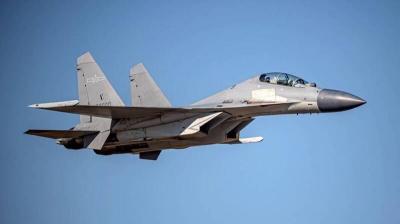
Eight Chinese naval vessels and 24 military aircraft were detected crossing the median line of the Taiwan Strait between 6am yesterday and 6am today, the Ministry of National Defense said this morning. The aircraft entered Taiwan’s northern, central, southwestern and eastern air defense identification zones, the ministry said. The armed forces responded with mission aircraft, naval vessels and shore-based missile systems to closely monitor the situation, it added. Eight naval vessels, one official ship and 36 aircraft sorties were spotted in total, the ministry said.
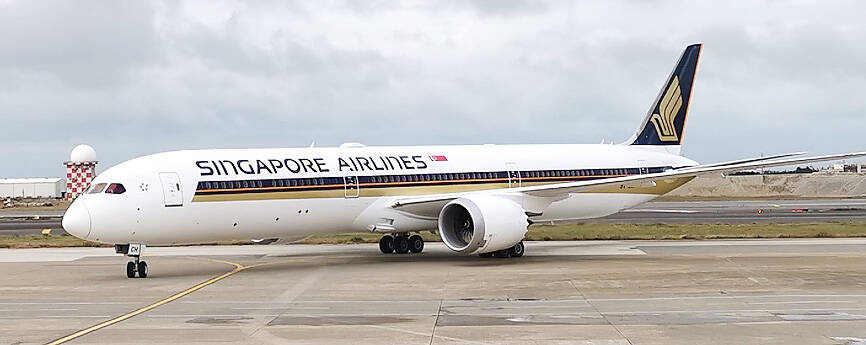
INCREASED CAPACITY: The flights on Mondays, Wednesdays, Fridays and Sundays would leave Singapore in the morning and Taipei in the afternoon Singapore Airlines is adding four supplementary flights to Taipei per week until May to meet increased tourist and business travel demand, the carrier said on Friday. The addition would raise the number of weekly flights it operates to Taipei to 18, Singapore Airlines Taiwan general manager Timothy Ouyang (歐陽漢源) said. The airline has recorded a steady rise in tourist and business travel to and from Taipei, and aims to provide more flexible travel arrangements for passengers, said Ouyang, who assumed the post in July last year. From now until Saturday next week, four additional flights would depart from Singapore on Monday, Wednesday, Friday
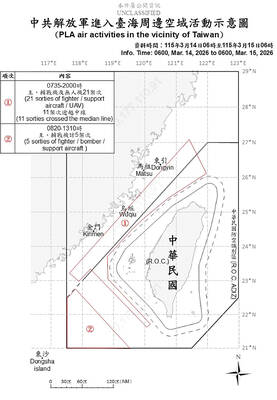
The Ministry of National Defense yesterday reported the return of large-scale Chinese air force activities after their unexplained absence for more than two weeks, which had prompted speculation regarding Beijing’s motives. China usually sends fighter jets, drones and other military aircraft around the nation on a daily basis. Interruptions to such routine are generally caused by bad weather. The Ministry of National Defense said it had detected 26 Chinese military aircraft in the Taiwan Strait over the previous 24 hours. It last reported that many aircraft on Feb. 25, when it spotted 30 aircraft, saying Beijing was carrying out another “joint combat
The Ministry of Foreign Affairs (MOFA) today said that if South Korea does not reply appropriately to its request to correct Taiwan’s name on its e-Arrival card system before March 31, it would take corresponding measures to alter how South Korea is labeled on the online Taiwan Arrival Card system. South Korea’s e-Arrival card system lists Taiwan as “China (Taiwan)” in the “point of departure” and “next destination” fields. The ministry said that it changed the nationality for South Koreans on Taiwan’s Alien Resident Certificates from “Korea” to “South Korea” on March 1, in a gesture of goodwill and based on the


 RSS
RSS