


Minister of the Interior Yeh Jiunn-rong (葉俊榮) yesterday said the government plans to introduce national identity cards with integrated circuits (IC) within one year.
Responding to Chinese Nationalist Party (KMT) Legislator William Tseng’s (曾銘宗) question at the legislature’s Internal Administration Committee meeting, Yeh said it is possible to add an IC to a natural person certificate, but other functions are pending research.
The Ministry of the Interior must carefully evaluate the rights and responsibilities of various government bodies regarding IC cards, Yeh said, adding that the ministry is planning to hold public forums and seek public feedback by telephone.
In response to concerns about information security, the ministry has said that it would not hastily promote the card and would safeguard individuals privacy and respect the principle of individual autonomy.
The ministry wants to implement IC cards to bring Taiwan in line with the worldwide trend of issuing digital identification, Yeh said.
However, while the ministry wishes to conform with trends it hopes to maintain good communication with the public before implementing the new card, he said.
While in theory the cards could incorporate health insurance and passport information, which would be an optimal solution, the ministry has to first consider the habits of the public, as well as information security, Yeh said.
“Taiwan must make progress in several key areas, but a responsible government must carefully research and discuss [proposed changes],” Yeh said, adding that the Executive Yuan must make the final decision on IC cards, as their implementation would involve several government agencies.
The new cards might have spousal and parental information on the IC rather than printed on them, Yeh said, adding its is one of the issues it would put to the public.
No contractors have been selected to develop the IC card system as yet, but the ministry would place strong emphasis on transparency and data protection, Yeh said.
“The selection process will be reasonable and fair, but we have to be sure there is nothing to worry about in terms of information security,” Yeh said.
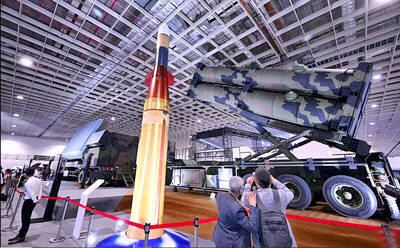
Taiwan is to commence mass production of the Tien Kung (天弓, “Sky Bow”) III, IV and V missiles by the second quarter of this year if the legislature approves the government’s NT$1.25 trillion (US$39.78 billion) special defense budget, an official said yesterday. Commenting on condition of anonymity, a defense official with knowledge of the matter said that the advanced systems are expected to provide crucial capabilities against ballistic and cruise missiles for the proposed “T-Dome,” an advanced, multi-layered air defense network. The Tien Kung III is an air defense missile with a maximum interception altitude of 35km. The Tien Kung IV and V
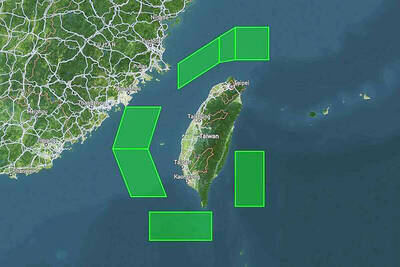
The disruption of 941 flights in and out of Taiwan due to China’s large-scale military exercises was no accident, but rather the result of a “quasi-blockade” used to simulate creating the air and sea routes needed for an amphibious landing, a military expert said. The disruptions occurred on Tuesday and lasted about 10 hours as China conducted live-fire drills in the Taiwan Strait. The Civil Aviation Administration (CAA) said the exercises affected 857 international flights and 84 domestic flights, affecting more than 100,000 travelers. Su Tzu-yun (蘇紫雲), a research fellow at the government-sponsored Institute for National Defense and Security Research, said the air
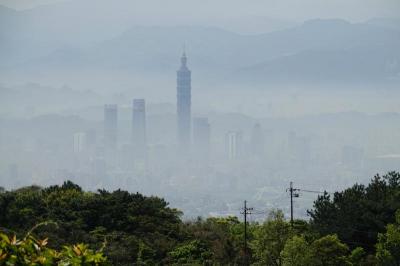
A strong continental cold air mass is to bring pollutants to Taiwan from tomorrow, the Ministry of Environment said today, as it issued an “orange” air quality alert for most of the country. All of Taiwan except for Hualien and Taitung counties is to be under an “orange” air quality alert tomorrow, indicating air quality that is unhealthy for sensitive groups. In China, areas from Shandong to Shanghai have been enveloped in haze since Saturday, the ministry said in a news release. Yesterday, hourly concentrations of PM2.5 in these areas ranged from 65 to 160 micrograms per cubic meter (mg/m³), and pollutants were
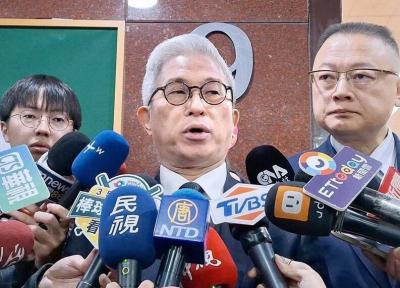
Taiwan’s armed forces have established response protocols for a wide range of sudden contingencies, including the “Wan Chun Plan” to protect the head of state, the Ministry of Defense (MND) said today. After US President Donald Trump on Saturday launched a series of airstrikes in Venezuela and kidnapped Venezuelan President Nicolas Maduro, concerns have been raised as to whether China would launch a similar “decapitation strike” on Taiwan. The armed forces regularly coordinate with relevant agencies and practice drills to ensure preparedness for a wide range of scenarios, Vice Minister of National Defense Hsu Szu-chien (徐斯儉) told reporters before a


 RSS
RSS