


The majority of draft pension reform bills were set aside yesterday for further discussion after party caucuses failed to reach a consensus at the first meeting of the extraordinary legislative session.
The Legislative Yuan held cross-caucus negotiations to review proposals for an act governing civil servants’ retirement and pensions.
Draft articles slashing the 18 percent preferential interest rate for savings accounts, available to civil servants hired before 1995; how a lower limit for public servants’ pensions should be set; whether taking childcare leave should affect public servants’ seniority; and whether civil servants should be allowed to work in the public sector after they retire sparked differences of opinion among legislators.
The lawmakers resolved that a New Power Party (NPP) motion to adjust the allocation rate for civil servants — the proportion of civil servants’ salaries to be used to fund their pensions in accordance with the financial state of the civil pension system — would require a second read.
The proposal says that the proportion of civil servants’ salaries to be paid to the Ministry of Civil Service should be reviewed.
Every three years, the ministry would set an “optimal” value on how much civil servants should pay the government to keep the pension system afloat, it says.
Should the optimal value reach 1.5 times the current level they are required to pay, the allocation rate should be increased by 1 percentage point within three months, it says.
For example, if the ministry determines that the optimal value is 18 percent, or 1.5 times the 12 percent allocation rate public servants are subject to, it should be raised to at least 13 percent, the proposal said.
Meanwhile, attempts to set a minimum on the size of civil servants’ pensions failed.
Chinese Nationalist Party (KMT) Legislator Ko Chih-en (柯志恩), Democratic Progressive Party Legislator Tuan Yi-kang (段宜康) and the Examination Yuan proposed to set the minimum at NT$32,160 — the lowest monthly pay public servants would receive — with Ko proposing a lower limit of NT$40,200 for retired civil servants with disabilities requiring a caregiver.
The NPP proposed setting the minimum at NT$20,200, which government statistics indicated would be the average amount people need to support themselves.
KMT Legislator William Tseng (曾銘宗) apparently misinterpreted Constitutional Interpretation No. 280, saying that NT$32,160 would be “too low” in 10 to 20 years, as the cost of living is expected to increase.
Tseng said that the interpretation was issued in 1992, meaning that the minimum monthly salary for public servants was calculated 25 years ago and is no longer a reliable reference for calculating pensions.
Minister of Civil Service Chou Hung-hsien (周弘憲) said that the value was determined based on what public servants are paid today.
Legislative Speaker Su Jia-chyuan (蘇嘉全) said that the proposal required further discussion.
Su asked KMT lawmakers to consolidate different versions of the bill and tender one draft as a caucus, the same request he made two weeks ago.
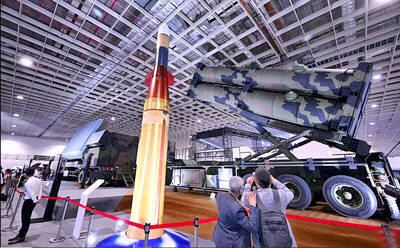
Taiwan is to commence mass production of the Tien Kung (天弓, “Sky Bow”) III, IV and V missiles by the second quarter of this year if the legislature approves the government’s NT$1.25 trillion (US$39.78 billion) special defense budget, an official said yesterday. Commenting on condition of anonymity, a defense official with knowledge of the matter said that the advanced systems are expected to provide crucial capabilities against ballistic and cruise missiles for the proposed “T-Dome,” an advanced, multi-layered air defense network. The Tien Kung III is an air defense missile with a maximum interception altitude of 35km. The Tien Kung IV and V
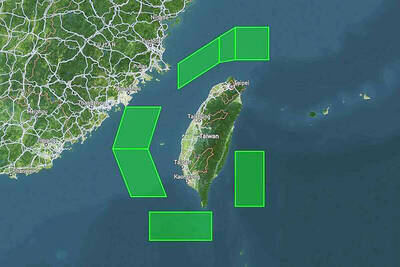
The disruption of 941 flights in and out of Taiwan due to China’s large-scale military exercises was no accident, but rather the result of a “quasi-blockade” used to simulate creating the air and sea routes needed for an amphibious landing, a military expert said. The disruptions occurred on Tuesday and lasted about 10 hours as China conducted live-fire drills in the Taiwan Strait. The Civil Aviation Administration (CAA) said the exercises affected 857 international flights and 84 domestic flights, affecting more than 100,000 travelers. Su Tzu-yun (蘇紫雲), a research fellow at the government-sponsored Institute for National Defense and Security Research, said the air
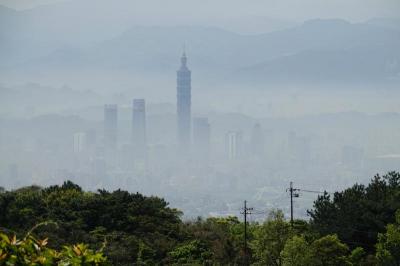
A strong continental cold air mass is to bring pollutants to Taiwan from tomorrow, the Ministry of Environment said today, as it issued an “orange” air quality alert for most of the country. All of Taiwan except for Hualien and Taitung counties is to be under an “orange” air quality alert tomorrow, indicating air quality that is unhealthy for sensitive groups. In China, areas from Shandong to Shanghai have been enveloped in haze since Saturday, the ministry said in a news release. Yesterday, hourly concentrations of PM2.5 in these areas ranged from 65 to 160 micrograms per cubic meter (mg/m³), and pollutants were
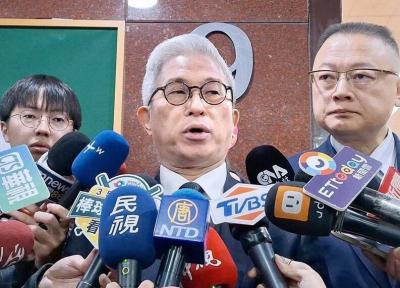
Taiwan’s armed forces have established response protocols for a wide range of sudden contingencies, including the “Wan Chun Plan” to protect the head of state, the Ministry of Defense (MND) said today. After US President Donald Trump on Saturday launched a series of airstrikes in Venezuela and kidnapped Venezuelan President Nicolas Maduro, concerns have been raised as to whether China would launch a similar “decapitation strike” on Taiwan. The armed forces regularly coordinate with relevant agencies and practice drills to ensure preparedness for a wide range of scenarios, Vice Minister of National Defense Hsu Szu-chien (徐斯儉) told reporters before a


 RSS
RSS