


In response to a new policy prohibiting the euthanasia of stray animals at animal shelters, some animal protection groups said that the number of strays is likely to increase as shelters fill to capacity.
An amendment to the Animal Protection Act (動物保護法) that bans animal shelters from putting down unclaimed stray animals took effect on Saturday.
The revisions, passed in January 2015, removed a clause that permitted euthanizing animals held in shelters or municipal or county authority designated kennels if they are unclaimed or not adopted 12 days after a public announcement is issued.
The revision also included a clause stipulating “zero euthanasia” of strays was to implemented in two years time. Only animals diagnosed with a contagious disease or considered to be too ill for treatment can be put down, according to the revisions.
Data from counties and municipalities shows that animal shelters in Taipei, Tainan, Taoyuan and Hsinchu as well as Yilan and Pingtung counties have exceeded theur capacities.
Data also indicate that only about 60 percent of dog owners have registered their pets with a NT$200 chip implant, as required by law.
About 60 percent of pet dogs are neutered, the data show.
Shelters should make the quality of care given to stray animals a priority, Animal Protection Division director Chiang Wen-chuan (江文全) said.
Shelters that are operating at capacity could announce that they are temporarily not accepting new animals, Chiang said, adding that such measures should not continue for more than two weeks at a time.
In Chiayi, Penghu and Yunlin counties animal shelters rely on private kennels to take for half of their stray dogs, he said, adding that these centers strive to save dogs that would otherwise be euthanized.
The new law means that the motivation for these kennels to rescue strays is gone, Chiang said, adding that the government can no longer rely on such facilities for the large-scale adoption of strays.
Chiang said that it is essential that only strays that pose an immediate threat to public health or safety are caught.
Chiang said that many counties and municipalities already have a policy in place requiring identification of a specific animal that poses a risk.
Some areas charge people between NT$1,000 and NT$10,000 to abandon their pets at shelters, he said.
However, Animal Protection Association secretary-general Huang Ching-jung (黃慶榮) said that the policy ending euthanasia should only be enacted after 90 percent of animals in shelters are neutered.
Inappropriate implementation of a no euthanasia policy could result in some people thinking it is acceptable to abandon their pets, he said, adding that as the number of stray animals increases, so too would the number of abused animals.
Retired National Pingtung University of Science and Technology animal sciences professor Hsia Liang-chou (夏良宙) suggested that dogs in shelters with distemper or enteritis should be euthanized to prevent the spread of diseases.
Registration chips should be implemented on a wide scale to keep track of animals, he added.
Additional reporting by CNA
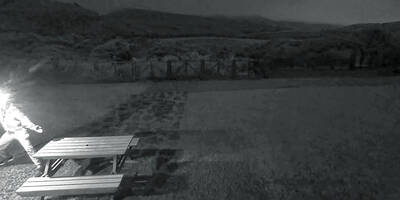
Yangmingshan National Park authorities yesterday urged visitors to respect public spaces and obey the law after a couple was caught on a camera livestream having sex at the park’s Qingtiangang (擎天崗) earlier in the day. The Shilin Police Precinct in Taipei said it has identified a suspect and his vehicle registration number, and would summon him for questioning. The case would be handled in accordance with public indecency charges, it added. The couple entered the park at about 11pm on Thursday and began fooling around by 1am yesterday, the police said, adding that the two were unaware of the park’s all-day live

Yangmingshan National Park’s Qingtiangang (擎天崗) nature area has gone viral after a park livestream camera observed a couple in the throes of intimate congress, which was broadcast live on YouTube, drawing large late-night crowds and sparking a backlash over noise, bright lights and disruption to wildlife habitat. The area’s livestream footage appeared to show a couple engaging in sexual activity on a picnic table in the park on Friday last week, with the uncensored footage streamed publicly online. The footage quickly spread across social media, prompting a tide of visitors to travel to the site to “check in” and recreate the

Fast food chain McDonald's is to raise prices by up to NT$5 on some products at its restaurants across Taiwan, starting on Wednesday next week, the company announced today. The prices of all extra value meals and sharing boxes are to increase by NT$5, while breakfast combos and creamy corn soup would go up by NT$3, the company said in a statement. The price of the main items of those meals, if ordered individually, would remain the same. Meanwhile, the price of a medium-sized lemon iced tea and hot cappuccino would rise by NT$3, extra dipping sauces for chicken nuggets would go up

Minister of Digital Affairs Lin Yi-ching (林宜敬) yesterday cited regulatory issues and national security concerns as an expert said that Taiwan is among the few Asian regions without Starlink. Lin made the remarks on Facebook after funP Innovation Group chief executive officer Nathan Chiu (邱繼弘) on Friday said Taiwan and four other countries in Asia — China, North Korea, Afghanistan and Syria — have no access to Starlink. Starlink has become available in 166 countries worldwide, including Ukraine, Malaysia, the Philippines and Vietnam, in the six years since it became commercial, he said. While China and North Korea block Starlink, Syria is not


 RSS
RSS