


Taipei Mayor Ko Wen-je (柯文哲) yesterday expressed doubt that former Taipei mayor Hau Lung-bin (郝龍斌) knew nothing about the corruption of two former Department of Rapid Transit Systems (DORTS) officials in the MeHAS City development, saying that if Hau had no knowledge of the pair’s offenses, he “might as well be dead.”
Ko made the remarks in an afternoon interview on Super FM, when radio show host Cheng Hung-yi (鄭弘儀) asked his opinion on the case.
The court last month gave former DORTS development branch director Kao Chia-nung (高嘉濃) a 10-year prison sentence and former DORTS section chief Wang Ming-tsang (王銘藏) a four-year sentence for influence peddling over the MeHAS City project.
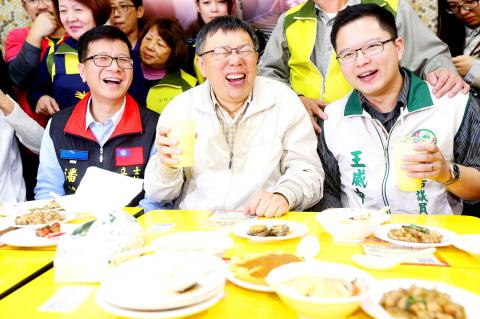
Photo: CNA
The development — carried out between 2007 and 2012 by Radium Life Tech Co (日勝生) in conjunction with DORTS — encompasses 9.3 hectares of homes, offices and stores in New Taipei City’s Sindian District (新店) next to the Xiaobitan MRT station.
The court said Hau was not convicted since he “was deceived into believing” forged numbers embedded by the pair in a property valuation, which cost the Taipei City Government an estimated NT$590 (US$17.52 million).
No bribes were found to have been distributed in the case, but no one from Hau’s administration stepped in to stop the the malpractice either, Ko said.
“What audacity this director and division chief had. Is it possible? You just think about it,” Ko said.
When asked whether he believed Hau had been unaware of the corruption, Ko, responding in Hoklo (commonly known as Taiwanese) ,said: “Give me a break. If that is true, [Hau] might as well be dead.”
The two former officials would be “two wretches nestling on a cold shoulder” if they voluntarily undervalued the city government’s claim in the development project without anyone in Hau’s administration taking bribes or putting pressure on them, Ko added.
Later yesterday in response to media queries on whether he would worry about being deceived by his subordinates given that Taipei City Councilor Wang Shih-chien (王世堅) last week accused his adviser and close aide Hung Chi-kune (洪智坤) of bribe-taking, Ko said he has ordered the city’s Department of Government Ethics to investigate the allegation.
Wang alleged that Hung took an eight-figure bribe from Farglory Group (遠雄集團) in exchange for resolving issues surrounding the controversial Taipei Dome project.
Regarding the possibility of his criticism hurting Hau’s chances of winning the legislative race in Keelung, Ko said his use of the Hoklo expression could have exaggerated his meaning.
He said his remark would not affect Hau’s campaign too much, as he is not running in Taipei.
He refused to apologize to Hau.
“If he does not know how to respect others, he should respect his position as Taipei mayor,” Hau said after hearing of Ko’s remarks.
Ko’s remark was aimed at manipulating the elections and he and his attorney would consider filing a lawsuit against him, Hau added.
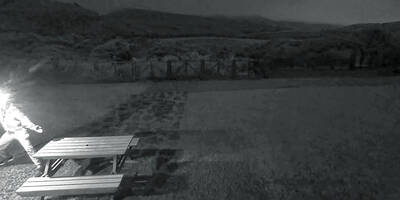
Yangmingshan National Park authorities yesterday urged visitors to respect public spaces and obey the law after a couple was caught on a camera livestream having sex at the park’s Qingtiangang (擎天崗) earlier in the day. The Shilin Police Precinct in Taipei said it has identified a suspect and his vehicle registration number, and would summon him for questioning. The case would be handled in accordance with public indecency charges, it added. The couple entered the park at about 11pm on Thursday and began fooling around by 1am yesterday, the police said, adding that the two were unaware of the park’s all-day live
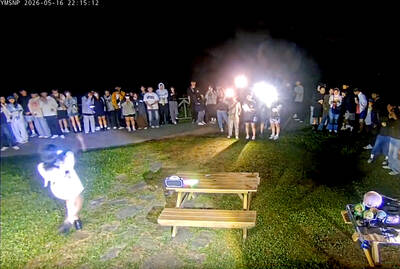
Yangmingshan National Park’s Qingtiangang (擎天崗) nature area has gone viral after a park livestream camera observed a couple in the throes of intimate congress, which was broadcast live on YouTube, drawing large late-night crowds and sparking a backlash over noise, bright lights and disruption to wildlife habitat. The area’s livestream footage appeared to show a couple engaging in sexual activity on a picnic table in the park on Friday last week, with the uncensored footage streamed publicly online. The footage quickly spread across social media, prompting a tide of visitors to travel to the site to “check in” and recreate the
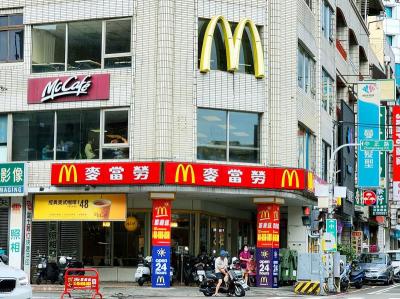
Fast food chain McDonald's is to raise prices by up to NT$5 on some products at its restaurants across Taiwan, starting on Wednesday next week, the company announced today. The prices of all extra value meals and sharing boxes are to increase by NT$5, while breakfast combos and creamy corn soup would go up by NT$3, the company said in a statement. The price of the main items of those meals, if ordered individually, would remain the same. Meanwhile, the price of a medium-sized lemon iced tea and hot cappuccino would rise by NT$3, extra dipping sauces for chicken nuggets would go up

Minister of Digital Affairs Lin Yi-ching (林宜敬) yesterday cited regulatory issues and national security concerns as an expert said that Taiwan is among the few Asian regions without Starlink. Lin made the remarks on Facebook after funP Innovation Group chief executive officer Nathan Chiu (邱繼弘) on Friday said Taiwan and four other countries in Asia — China, North Korea, Afghanistan and Syria — have no access to Starlink. Starlink has become available in 166 countries worldwide, including Ukraine, Malaysia, the Philippines and Vietnam, in the six years since it became commercial, he said. While China and North Korea block Starlink, Syria is not


 RSS
RSS