


On hot summer days, one way to beat the heat in Taiwan is to sip on a cool beverage such as milk tea, grass jelly drinks, crushed mango ice or a mixed fruit juice drink. However, after several recent cases involving difficulties during childbirth, doctors have warned pregnant women not to overindulge on sweetened beverages and juice drinks.
Doctors said the high sugar and calorie content of popular summer beverages can result in excessive weight gain and an increased risk of diabetes and other afflictions.
Hsu Yao-jen (許耀仁), an obstetrician doctor at the Taipei Tzu Chi General Hospital, said that he had recently encountered a number of cases in which pregnant women ate very few meals in an attempt to stave off the heat and control their weight.
“In some cases, pregnant women replaced regular meals with fruit or fruit juices. They ate a lot of watermelon, pineapple and mango. Along with sugarcane juice, they consumed various fruit juices, milk teas and fruits with high fructose content,” he said.
“In addition, they often stayed indoors in air-conditioned rooms to stave off the heat. All these factors led to a sharp rise in their own body weight and that of the fetus,” Hsu said.
Doctors said that while most babies in Taiwan weigh about 3kg to 3,2kg at birth, ultrasound examinations showed that some expecting mothers, only two weeks away from their due date, were found to be carrying “giant babies,” meaning babies weighing 4kg or more.
Hsu said that most pregnant women in Taiwan have a medium to small-sized pelvis.
During a normal childbirth, a woman experiences contractions, which lead to dilation of the cervix, and go into labor with active contractions and dilation to allow passage of the fetus, he said, adding it usually takes one to two hours for the baby to be delivered.
“However, when a fetus is too large, labor often exceeds two hours. Sometimes doctors even need to induce birth through a Caesarian section or aid the delivery by using vacuum suctioning,” he added.
Hsu said that normal body weight gain during pregnancy is about 10kg to 14kg, and pregnant women should avoid gaining too much weight.
Chang Ya-lin (張亞琳), a nutritionist at the Taipei Tzu Chi General Hospital, said eating fresh fruit is better than drinking fruit juices.
“Pineapple, watermelon, orange and mango are fruits commonly used in juices. But people should be careful regarding the calorie content of these fruits,” she said. “An orange has about 60 calories. Five oranges may be used to make one glass of juice, providing 300 calories, which is more than one bowl of rice.”
She said pregnant women should not drink more than one or two glasses of fruit juice a week, and advised them to drink herbal tea without adding sugar, green tea or unsweetened lemonade.

Yangmingshan National Park authorities yesterday urged visitors to respect public spaces and obey the law after a couple was caught on a camera livestream having sex at the park’s Qingtiangang (擎天崗) earlier in the day. The Shilin Police Precinct in Taipei said it has identified a suspect and his vehicle registration number, and would summon him for questioning. The case would be handled in accordance with public indecency charges, it added. The couple entered the park at about 11pm on Thursday and began fooling around by 1am yesterday, the police said, adding that the two were unaware of the park’s all-day live

Yangmingshan National Park’s Qingtiangang (擎天崗) nature area has gone viral after a park livestream camera observed a couple in the throes of intimate congress, which was broadcast live on YouTube, drawing large late-night crowds and sparking a backlash over noise, bright lights and disruption to wildlife habitat. The area’s livestream footage appeared to show a couple engaging in sexual activity on a picnic table in the park on Friday last week, with the uncensored footage streamed publicly online. The footage quickly spread across social media, prompting a tide of visitors to travel to the site to “check in” and recreate the
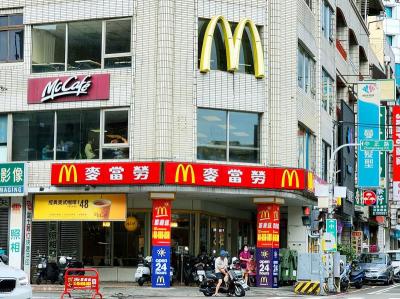
Fast food chain McDonald's is to raise prices by up to NT$5 on some products at its restaurants across Taiwan, starting on Wednesday next week, the company announced today. The prices of all extra value meals and sharing boxes are to increase by NT$5, while breakfast combos and creamy corn soup would go up by NT$3, the company said in a statement. The price of the main items of those meals, if ordered individually, would remain the same. Meanwhile, the price of a medium-sized lemon iced tea and hot cappuccino would rise by NT$3, extra dipping sauces for chicken nuggets would go up

Minister of Digital Affairs Lin Yi-ching (林宜敬) yesterday cited regulatory issues and national security concerns as an expert said that Taiwan is among the few Asian regions without Starlink. Lin made the remarks on Facebook after funP Innovation Group chief executive officer Nathan Chiu (邱繼弘) on Friday said Taiwan and four other countries in Asia — China, North Korea, Afghanistan and Syria — have no access to Starlink. Starlink has become available in 166 countries worldwide, including Ukraine, Malaysia, the Philippines and Vietnam, in the six years since it became commercial, he said. While China and North Korea block Starlink, Syria is not


 RSS
RSS