


Access to polling stations needs to be improved if physically impaired people are to make their voices heard in the presidential election, a group told the Central Election Commission (CEC) yesterday.
"We inspected 53 polling stations across the country during the legislative elections," said Tsui Pin (崔彬), an Eden Social Welfare Foundation official. "Sixteen of them either did not have ramps [for wheelchair access] or had entrances that made it impossible for wheelchairs to enter."
Some polling stations were too cramped and did not have enough space for wheelchairs to maneuver, did not have any staff members designated to assist physically challenged voters, or had entrances that were too narrow, the group said.
"What was more unbelievable was that even though some polling stations are accessible by the handicapped, they were not open for use on election day," Chiang Wei-chun (江偉君), a volunteer for the organization who is herself physically impaired, said.
The group presented CEC Secretary-General Teng Tien-yu (
Teng admitted that problems did exist and said the CEC had already asked polling stations to make improvements.
"We've sent out a letter asking all local election commissions to conduct a comprehensive accessibility inspection on all polling stations on Jan. 14," Teng said after a closed-door meeting with representatives from the group.
"In the letter, we specified that all polling stations located above the ground floor or in basements must be equipped with elevators, while all polling stations with steps or thresholds at the entrance should construct a concrete ramp of at least 90cm in width for wheelchair access," Teng said. "If such criteria cannot be met at any location, then that particular location should not be used as a polling station."
Teng said the CEC had budgeted approximately NT$20 million (US$621,000) for local governments to use to improve polling station access.
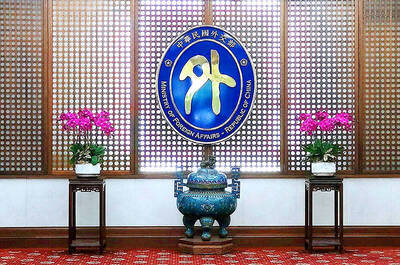
The Ministry of Foreign Affairs (MOFA) yesterday voiced dissatisfaction with the Comprehensive and Progressive Agreement for Trans- Pacific Partnership (CPTPP), whose latest meeting, concluded earlier the same day, appeared not to address the country’s application. In a statement, MOFA said the CPTPP commission had "once again failed to fairly process Taiwan’s application," attributing the inaction to the bloc’s "succumbing to political pressure," without elaborating. Taiwan submitted its CPTPP application under the name "Separate Customs Territory of Taiwan, Penghu, Kinmen and Matsu" on Sept. 22, 2021 -- less than a week after China

ALIGNED THINKING: Taiwan and Japan have a mutual interest in trade, culture and engineering, and can work together for stability, Cho Jung-tai said Taiwan and Japan are two like-minded countries willing to work together to form a “safety barrier” in the Indo-Pacific region, Premier Cho Jung-tai (卓榮泰) yesterday said at the opening ceremony of the 35th Taiwan-Japan Modern Engineering and Technology Symposium in Taipei. Taiwan and Japan are close geographically and closer emotionally, he added. Citing the overflowing of a barrier lake in the Mataian River (馬太鞍溪) in September, Cho said the submersible water level sensors given by Japan during the disaster helped Taiwan monitor the lake’s water levels more accurately. Japan also provided a lot of vaccines early in the outbreak of the COVID-19 pandemic,

Kaohsiung Mayor Chen Chi-mai (陳其邁) on Monday announced light shows and themed traffic lights to welcome fans of South Korean pop group Twice to the port city. The group is to play Kaohsiung on Saturday as part of its “This Is For” world tour. It would be the group’s first performance in Taiwan since its debut 10 years ago. The all-female group consists of five South Koreans, three Japanese and Tainan’s Chou Tzu-yu (周子瑜), the first Taiwan-born and raised member of a South Korean girl group. To promote the group’s arrival, the city has been holding a series of events, including a pop-up
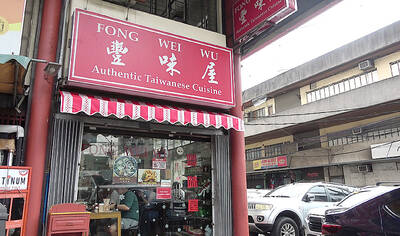
A home-style restaurant opened by a Taiwanese woman in Quezon City in Metro Manila has been featured in the first-ever Michelin Guide honoring exceptional restaurants in the Philippines. The restaurant, Fong Wei Wu (豐味屋), was one of 74 eateries to receive a “Michelin Selected” honor in the guide, while one restaurant received two Michelin stars, eight received one star and 25 were awarded a “Bib Gourmand.” The guide, which was limited to restaurants in Metro Manila and Cebu, was published on Oct. 30. In an interview, Feng Wei Wu’s owner and chef, Linda, said that as a restaurateur in her 60s, receiving an


 RSS
RSS