


Karen Mok (
The awards recognize the highest achievements in dozens of categories of popular, as well as classical, religious, traditional and Aboriginal music, as judged by a panel of judges drawn from all fields in the music business. Despite the inclusion of non-pop acts, the event is the most important award in the Chinese-language pop music world with entrants from Taiwan, China, Hong Kong, Singapore and elsewhere.

Originally scheduled to take place in May, the ceremony was finally held after a three-month delay caused by the SARS epidemic. Last night's event went off without further delays and almost barely a mention of the sickness that forced it to be held in August instead of in spring.
There were few surprises among the winners, with Mok and Chan taking the singer honors and Texas native eVonne winning the Newcomer of the Year Award and SHE taking home the best Best New Singing Group Award. Chan was a double winner last night, taking home the best album award along with his singer of the year award. Chan and Mok, both from Hong Kong, are among the most prolific stars in Mando-pop but faced tough competition from long-time favorites like Jackie Cheung (
The one unexpected moment of the evening came when President Chen Shui-bian (
The Golden Melody Awards is an invitation-only event attended mostly by industry insiders, so for thousands of music fans the main draw of the event is the red carpet entrance that all the attending stars walk down. Under yesterday's beating sun, fans began crowding the walkway outside of Taiwan National University's new gymnasium at about 3pm for the best view.
The awards last year were dominated by Jay Chou, but this year awards were distributed more evenly to different artists and their producers, lyricists and songwriters. He didnt seem too bothered to be passed up at this years event. Arriving at the venue, when asked what he expected at the ceremony, he simply said "it'll be alright."

Taiwan has received more than US$70 million in royalties as of the end of last year from developing the F-16V jet as countries worldwide purchase or upgrade to this popular model, government and military officials said on Saturday. Taiwan funded the development of the F-16V jet and ended up the sole investor as other countries withdrew from the program. Now the F-16V is increasingly popular and countries must pay Taiwan a percentage in royalties when they purchase new F-16V aircraft or upgrade older F-16 models. The next five years are expected to be the peak for these royalties, with Taiwan potentially earning
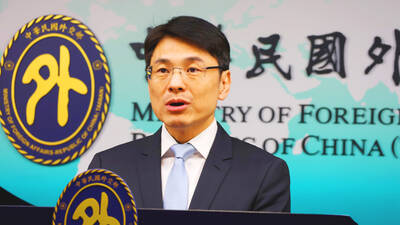
STAY IN YOUR LANE: As the US and Israel attack Iran, the ministry has warned China not to overstep by including Taiwanese citizens in its evacuation orders The Ministry of Foreign Affairs (MOFA) yesterday rebuked a statement by China’s embassy in Israel that it would evacuate Taiwanese holders of Chinese travel documents from Israel amid the latter’s escalating conflict with Iran. Tensions have risen across the Middle East in the wake of US and Israeli airstrikes on Iran beginning Saturday. China subsequently issued an evacuation notice for its citizens. In a news release, the Chinese embassy in Israel said holders of “Taiwan compatriot permits (台胞證)” issued to Taiwanese nationals by Chinese authorities for travel to China — could register for evacuation to Egypt. In Taipei, the ministry yesterday said Taiwan
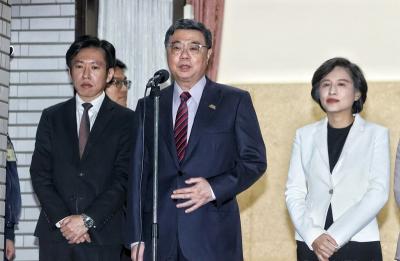
Taiwan is awaiting official notification from the US regarding the status of the Agreement on Reciprocal Trade (ART) after the US Supreme Court ruled US President Donald Trump's global tariffs unconstitutional. Speaking to reporters before a legislative hearing today, Premier Cho Jung-tai (卓榮泰) said that Taiwan's negotiation team remains focused on ensuring that the bilateral trade deal remains intact despite the legal challenge to Trump's tariff policy. "The US has pledged to notify its trade partners once the subsequent administrative and legal processes are finalized, and that certainly includes Taiwan," Cho said when asked about opposition parties’ doubts that the ART was
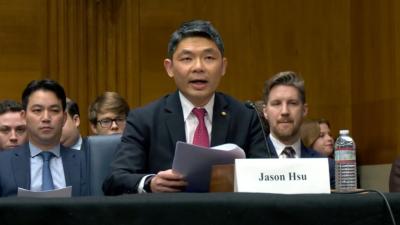
If China chose to invade Taiwan tomorrow, it would only have to sever three undersea fiber-optic cable clusters to cause a data blackout, Jason Hsu (許毓仁), a senior fellow at the Hudson Institute and former Chinese Nationalist Party (KMT) legislator, told a US security panel yesterday. In a Taiwan contingency, cable disruption would be one of the earliest preinvasion actions and the signal that escalation had begun, he said, adding that Taiwan’s current cable repair capabilities are insufficient. The US-China Economic and Security Review Commission (USCC) yesterday held a hearing on US-China Competition Under the Sea, with Hsu speaking on


 RSS
RSS