


Zhu Ting stands tall in China — and not just because she is 1.98m tall. The 25-year-old farmer’s daughter has emerged from a poor village life to become a totem of the country’s sporting ambitions.
As captain and figurehead of China’s women’s volleyball team, the reigning Olympic champions, Zhu is one of the country’s biggest stars.
State television once feted her as “an invincible and dominant superhero.”

Photo: AFP
A nurse fighting the COVID-19 pandemic in March posted a photograph of herself wearing a white protective suit with a picture of the volleyball star drawn on it — also scribbled were the words: “Proud that I was born in the era of Zhu Ting.”
From an early age one thing was clear — she was tall. By 13, she stood more than 1.75m.
“When she was a little girl our family was so poor that we could not afford a photograph of her,” her father, Zhu Anliang, told state media after her heroics in Rio. “Now our lives are better, but when she comes back to the village she is still just an ordinary farm girl from an ordinary farmer’s family.”
All of Zhudalou village has benefited from Zhu’s success, with local officials replacing a dirt path to the entrance with a concrete one, which villagers branded “Zhu Ting road,” according to the Global Times.
After swapping village life for a state-run sports school — where the young Zhu cried for her parents at the outset — she made her debut for China in 2013.
Following the Rio Olympics, she moved to Turkey to play for VakifBank and reportedly signed a US$1.2 million contract, making her one of the highest-paid players in volleyball.
She returned to China to play for Tianjin in October last year, in preparation for helping her country defend their crown at the Tokyo Olympics.
It is a measure of her humble personality that each time praise comes her way, Zhu deflects it away from herself.
“Me being the captain is just an idea to the public, but within the team, I’m not really ‘leading’ my teammates,” Zhu said in an interview published yesterday. “They don’t call me captain, they call me Zhu.”

When Paddy Dwyer arrived in China in 1976, crowds jostled to catch a glimpse of him and his companions — the first Western soccer team to play in the country. China was emerging from the chaos of the Cultural Revolution, and on the brink of market reforms that would take the country from economic stagnation to explosive growth. “All we could see was lines of people running beside our bus, trying to look in the windows, to see their first visual of a white person,” he said. “It was all bicycles,” he said. “There were very few cars to be seen.” Dwyer,

Jannik Sinner continued his quest to become the first man in history to win five Masters 1000 tournaments in a row with a 6-2, 6-3 victory over Danish qualifier Elmer Moller at the Madrid Open on Sunday. The world leader extended his winning streak to 19 matches, a run that began early March in Indian Wells, and he has captured 24 consecutive victories at the Masters 1000 level, dating back to the Paris Masters last October. Searching for a maiden title at this level on clay, Sinner advanced to the round of 16 at the Caja Magica with a 77-minute performance against

Some of Clearlake Capital Group’s largest investors are growing increasingly concerned about how much time the company’s co-founders are spending on sports investments as they have struggled to complete the fundraising for the private equity firm’s latest flagship fund. One of Clearlake’s co-founders, Behdad Eghbali, has been spending what some investors described as a disproportionate amount of time on the firm’s investment in Chelsea Football Club in recent months. Now, co-founder Jose E. Feliciano and his wife, Kwanza Jones, are nearing a record US$3.9 billion deal to acquire the San Diego Padres. That personal investment by Feliciano has set off the latest
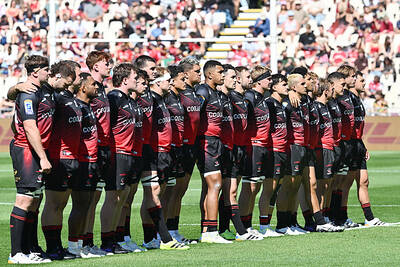
A new NZ$683 million (US$404 million) stadium that was a symbol of Christchurch’s struggle to rebuild after a deadly earthquake struck the New Zealand city is to host its first match tomorrow in front of a sellout crowd. A magnitude 6.2 earthquake killed 185 people in February 2011 and toppled or damaged buildings, including the city’s old Lancaster Park. The stadium, which hosted international rugby and cricket, and was home to the Canterbury Crusaders, was badly damaged and never reopened. It was bulldozed in 2019 and turned into sports fields, leaving the Crusaders without a permanent home. Government funding for a new stadium was


 RSS
RSS