


The Japan-Taiwan Exchange Association’s 2021 road safety guidelines pretty much says it all.
“Taiwan’s drivers are inclined to prioritize vehicles over pedestrians. Be aware that their driving manners are often not as good. Even when it’s a green light, watch carefully for cars at all times when crossing the crosswalk. Be alert of cars that try to quickly turn right in front of pedestrians. Even if you’re on the sidewalk, you must still watch for scooters.”
Japanese student Shun Komatsu referenced these advisories last month in a widely shared post on the News Lens, where he praised everything here besides the traffic.
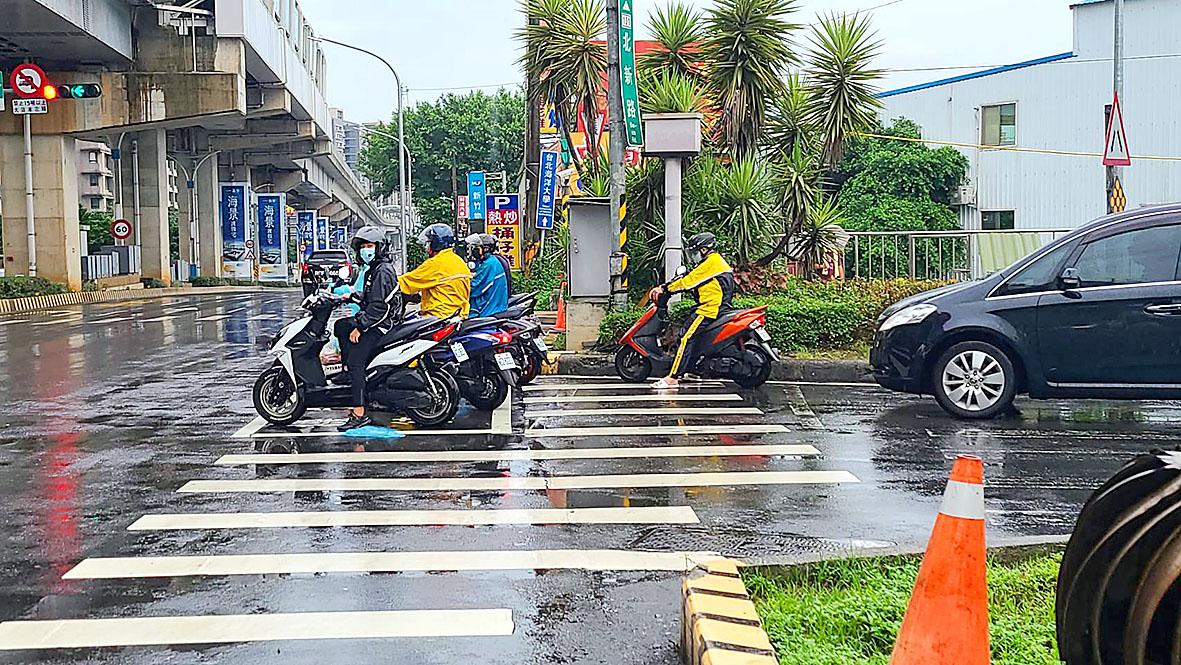
Photo courtesy of Cheng Yu-en
“In my two years here, I’ve been nearly hit several times. Due to the lack of sidewalks, I try to walk on the edge of the streets, but I’m often forced into the center due to illegally parked vehicles. When the cars see me, they honk their horns and speed right past me,” Komatsu wrote.
The post caused an uproar, with the usual “this is an international shame of Taiwan” commentary, but anyone who lives here has at one point felt that, as the name of a popular Facebook page makes explicit, “Taiwan is a living hell for pedestrians (台灣是個行人地獄).”
The page went viral two weeks ago when its founder Ray Yang (楊威榮) posted a diagram suggesting how to improve a pedestrian crossing at an intersection with a sharp turn.
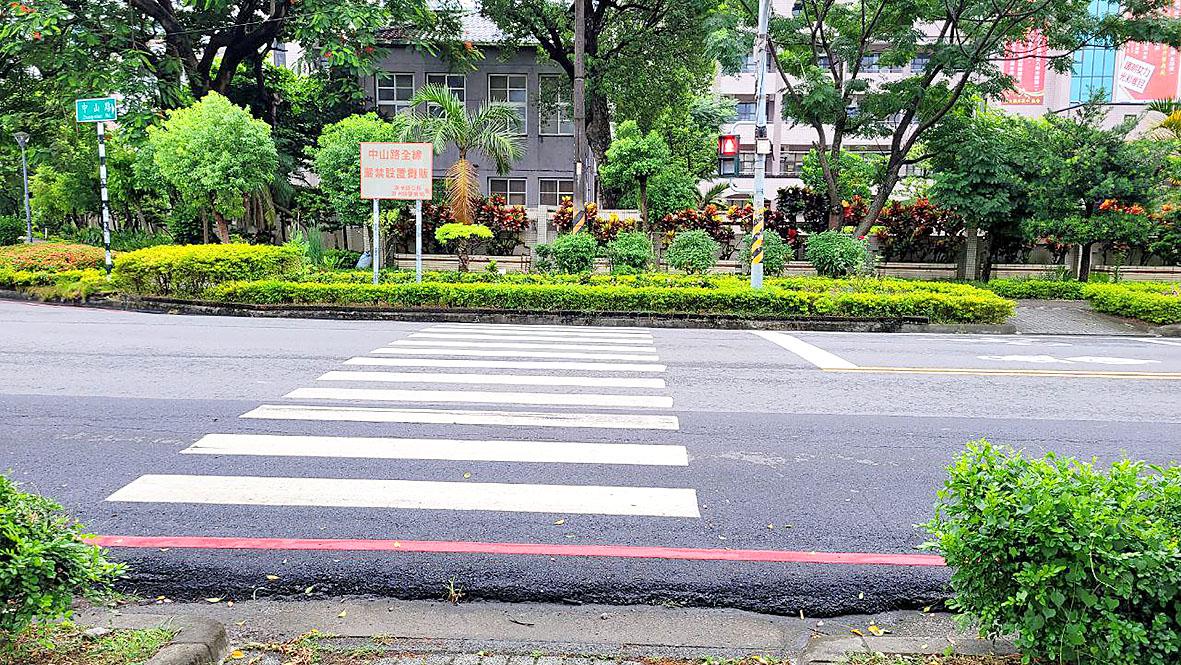
Photo: Chen Yen-ting, Taipei Times
Traffic advocacy groups have been calling for more human-centric urban designs that prioritize pedestrian comfort and safety over driver convenience, but Taiwan Traffic Safety Association (台灣交通安全協會) deputy director Charles Lin (林志學) laments that the government still largely adheres to car-centric planning principles.
“They’re still thinking like a developing country, where roads are usually designed for economically valuable and productive cars and trucks,” Lin says.
According to Ministry of Transportation and Communication figures, over the first five months of the year, 150 pedestrians have died within 30 days of a traffic accident, with 7,128 injured.

Photo courtesy of Hsinchu County Police Department
What’s alarming is the lack of progress. The number of pedestrian deaths per year has remained mostly the same over the past decade, from 429 in 2011 to a high of 458 in 2019 to 410 last year.
The number of injured has climbed, from 13,787 in 2011 to 15,589 last year. And last year’s numbers are slightly lower from that of 2020, presumably due to COVID-19 restrictions. Roughly half of the cases happen at intersections.
Yang often spotlights the Netherlands as an example of good human-centric urban planning, and the nation of about 17 million people saw only 43 pedestrian deaths last year.
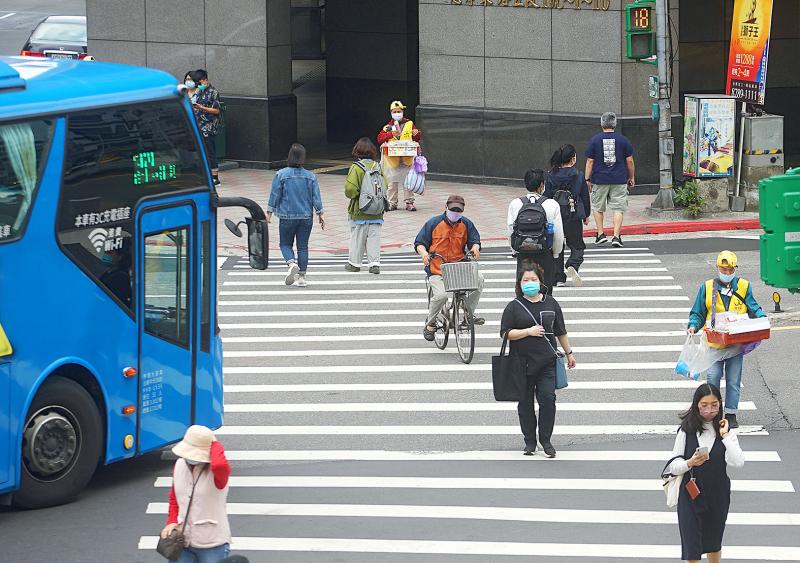
Photo: CNA
The government vowed in January to crack down on vehicles that fail to yield to pedestrians, and passed an amendment to raise the fine from NT$3,600 to NT$6,000 that will soon take effect.
“We need to prioritize infrastructure and education first,” he says. “If all you do is punish people, the roads will be turned into a prison or execution grounds with drivers still unclear what exactly they did wrong.”
DRIVERS RULE
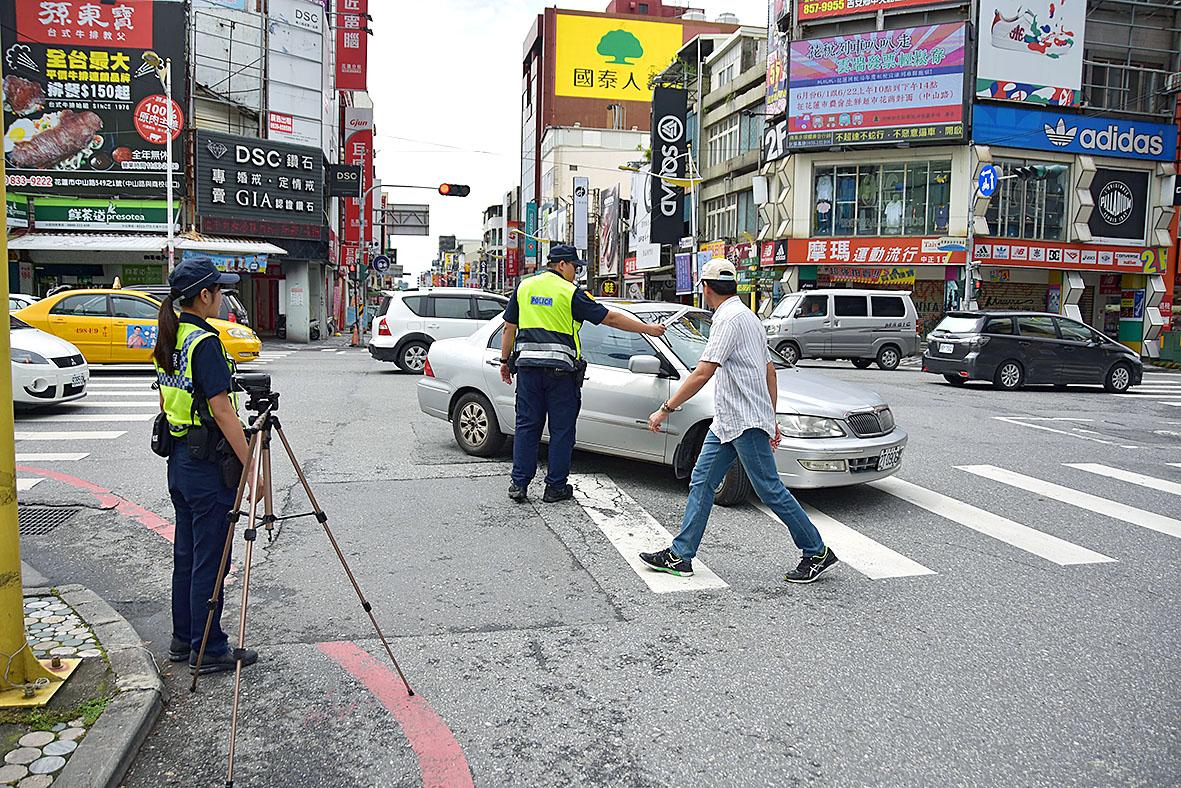
Photo courtesy of Hualien County Police Department
If you think Taipei is bad, a Liberty Times (Taipei Times’ sister paper) report shows that the capital’s drivers are commonly considered the most courteous in the nation.
For the past year, Yang has been posting examples of pedestrian-centric urban planning in other countries while criticizing the situation in Taiwan. While most of the comments are supportive, with followers submitting their own experiences and videos of dangerous traffic encounters, there has also been criticism and attacks from car-centric proponents, especially after the page went viral.
Indeed, some do think that this is just how Taiwan is and those who don’t like it can leave, as evidenced from the comments directed toward Kaohsiung-based Polish reporter Tomasz Sniedziewski when he posted on Twitter earlier this year about scooters not only driving on the sidewalk but honking at people to get out of the way.
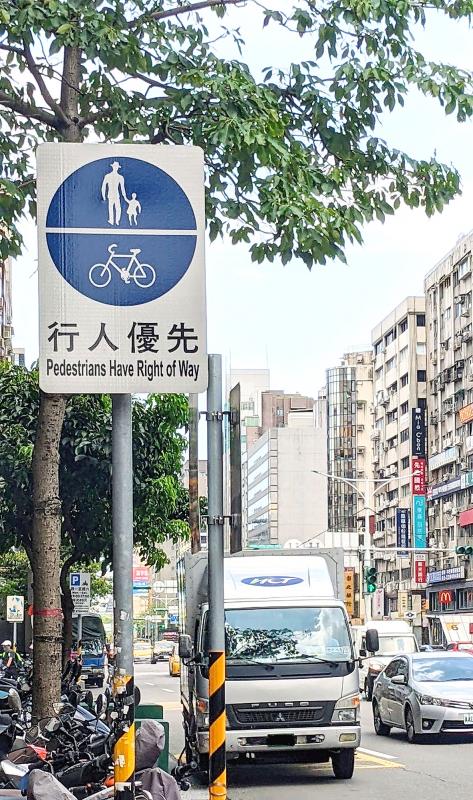
Photo: Han Cheung, Taipei Times
As of June, the transportation ministry says there were more than 8 million registered automobiles and 14 million scooters in Taiwan. The scooter numbers have actually dropped over the past decade, while car ownership is growing.
Yang says he only noticed a lack of awareness toward pedestrian rights when he moved to Australia, where he was surprised to see cars giving him the right-of-way at intersections.
“From a young age, Taiwanese learn by experience that cars won’t yield to [pedestrians],” he says, adding that they’re taught by adults that it’s their responsibility to stay safe while walking on the street. “So naturally, we don’t have any idea of pedestrian rights.”
Lin agrees, adding that society also perceives drivers as having higher social status, and that they should naturally be the dominant force on the road.
“Even if cars are more powerful, in a civilized society, shouldn’t it be the responsibility of the strong to look out for and protect the disadvantaged?” he asks.
Lin stresses that pedestrian-first does not mean anti-driving. In fact, many members of his association are automobile enthusiasts.
“Everyone has the right to choose their mode of transportation. But that is exactly why safety is important, so that everyone’s choice can be supported,” Lin says.
BETTER INFRASTRUCTURE
The only way to change the situation is to pressure the government to overhaul the road infrastructure. Lin says there needs to be sidewalks alongside all buildings. Improving pedestrian crossings at intersections is also crucial.
“Most intersections were built without considering the arc of the car’s turning path,” Lin says. “If you don’t have the proper infrastructure, no amount of public education or policing will work.”
Yang argues that a human-centric city should be so convenient and safe for pedestrians, cyclists or public transport users that people should have little incentive to drive. Then vehicles will decrease, along with congestion and accident numbers.
“It’s not that people love riding scooters … it’s that they lack better options,” Yang writes a in a post.
While Taipei is convenient for non-drivers with its constantly expanding MRT and excellent bike sharing system, things won’t change much as long as it’s not safe to walk.
Lin says that one undesirable effect of the MRT is that it causes housing prices nearby to rise, driving less wealthy people further away and forcing them to use cars to commute. Another issue is the technology parks, where many workers even commute to from other cities, and public transport to places like Taipei’s Neihu District (內湖) must be improved.
SPEAK OUT
Ultimately, Taiwan needs more pedestrians to stand up for their rights. Lin says people should feel comfortable reporting repeated sidewalk violations and perilous conditions to their neighborhood officials and representatives.
“Sometimes people feel uncomfortable fighting for their rights, but we need to be brave. We are a developed country and these are rights that we deserve,” Lin says.
Yang writes that it will take much louder voices and actions for there to be meaningful change.
“Stop yielding to vehicles when crossing the road. Stop worrying that [pedestrians] might affect traffic flow. Be ready to call the cops and stand your ground... Only when the majority of pedestrians do this will drivers finally realize how dangerous their accustomed behavior is.”

Taiwan’s English education system is being pulled apart by three opposing forces. Bilingual Nation 2030 pulls students toward English and global communication. Artificial Intelligence (AI) readiness pulls them toward digital judgment, verification and AI-mediated work. But Taiwan’s old exam culture pulls them back toward memorization, grammar drills, timed reading and correct answers. If the education system keeps using old exams to define success, it risks producing graduates who are neither genuinely bilingual nor genuinely AI-ready, but trained for tasks machines can already perform. The first force is Bilingual Nation 2030. Launched in 2018, the policy aimed to “help Taiwan’s workforce connect
It seems every few days one bumps into one of those “real man” comments in which Taiwan is urged to “face reality” or similar, and “make a deal,” with the speaker implying that soon it will be too late. “Deal” advocates always present themselves as having a superior grip on reality, and the manly ability to make the “hard choice.” Their testosterone-laden language often echoes that of Taiwan sellout advocates. Note that such commentary always specifies a process (“make a deal, work with, make progress”), never the end state of what occupation by a violent authoritarian colonialist state will entail. In

“Taiwan’s Opposition Leader Comes to US With a Message Straight Out of Beijing” read a May 31 headline in the Wall Street Journal. Top US administration officials and members of Congress almost certainly read the WSJ, and if there was a bullet point takeaway that people in Washington should absorb ahead of Chinese Nationalist Party (KMT) Chair Cheng Li-wun’s (鄭麗文) arrival in DC on June 9, that headline is it. The last few columns have discussed this very topic, and the timing is not coincidental. While those top officials likely do not read the Taipei Times, judging by the number
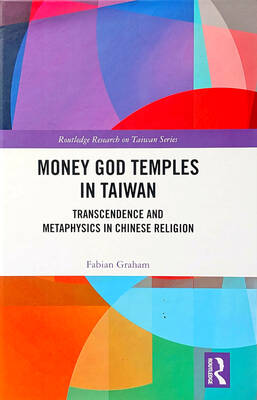
As someone who normally steers clear of books with “transcendence” or “metaphysics” in their subtitles, this reviewer — a casual observer of local belief systems since the 1990s — found Fabian Graham’s Money God Temples in Taiwan a challenging read. Those who’ve only dipped their toes into temple culture will likely need to parse several sections with special care if they’re to keep up with the author, a British ethnographic researcher whose previous books have investigated religious practices among ethnic Chinese in Southeast Asia. This scholarly volume examines a facet of Taiwan’s religious landscape that didn’t exist a century ago, and


 RSS
RSS