


A new international study revealed that spruce trees in an Italian forest can respond to a solar eclipse. To be more specific, they actually anticipate it by synchronizing their bioelectrical signals hours before the event.
To monitor this phenomenon, scientists attached special sensors to the trees to track their electrical activity. They discovered that older trees started changing their signals even before the eclipse occurred. Researchers believe these older trees may store memories of past events and send early warnings to younger ones. This bioelectrical signaling system appears to help the forest avoid problems like drying out during the sudden drop in sunlight.
Scientists say the findings highlight the importance of protecting old trees, which may carry the “memories” that help entire forests stay strong.
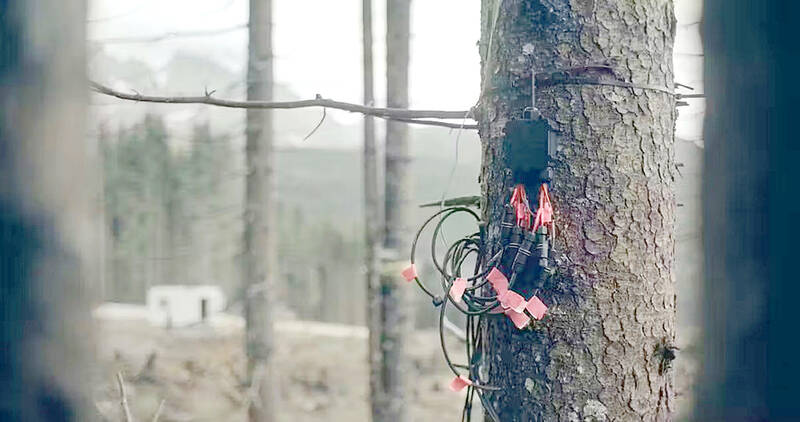
Photo: Ivy English 照片:常春藤解析英語
一份新的國際研究揭露,義大利一座森林裡的雲杉樹會對日食做出反應。更具體地說,它們其實是透過在日食發生的數小時前同步生物電訊號來預期日食的發生。
為了監測這個現象,科學家在樹上安裝特殊感測器以追蹤電活動。他們發現,較老的樹木甚至在日食發生前就會開始改變訊號。研究人員認為,這些較老的樹木可能保有過往事件的記憶,並提前向較年輕樹木發出警訊。這種生物電傳訊系統似乎能幫助整片森林在日照突然減弱時,避免如乾枯等問題。
科學家表示,這些發現凸顯了保護老樹的重要性,它們或許承載著能讓整座森林保持強韌的「記憶」。
What Did You Learn?
1. Why were older spruce trees able to react to a solar eclipse faster than younger trees?
參考答案:
1. They may store memories of past events.
Words in Use
1. reveal vt. 揭露,顯示
The test revealed serious problems with the engine. 這次測試顯示引擎有嚴重的問題。
2. signal n. 訊號,信號 & vi. 發出訊號∕信號(本文第二段為動名詞用法)
A red flag is often used as a signal of danger. 紅旗通常被用作危險的信號。
Sailors use flags to signal to other boats. 水手會用旗幟來向其他船隻打信號。
3. monitor vt. 監測,監控
The local government monitored river levels during the heavy rainstorm. 地方政府在強烈暴風雨期間監測河流的水位。
4. phenomenon n. 現象(單數形) phenomena n. 現象(複數形)
The migration of birds is a seasonal phenomenon. 鳥類遷徙是一種季節性現象。
5. attach vt. 固定,使附著 attach A to B 將 A 固定在∕繫在 B 上
The engineers attached sensors to the bridge to monitor movement. 工程師把感應器裝在橋上以監測震動。
Practical Phrases
1. respond to. . . 對……起反應
Plants respond to sunlight by growing toward it. 植物會對陽光做出反應,朝向陽光生長。
2. to be more specific 更具體地說 = specifically adv.
Technology changes how we live. To be more specific, the internet allows us to shop, study, and even work online.
科技改變了我們的生活方式。更具體地說,網路讓我們能線上購物、學習甚至工作。
聽文章朗讀及講解: https://ivy.pse.is/455bfu
本文出自常春藤解析英語雜誌: www.ivy.com.tw

Every few years, the World Baseball Classic (WBC) offers sports fans a real World Series. At its finest, as in the shocking upset on Tuesday last week of the US team by Italy, the games generate the kind of electricity fans feel at the FIFA World Cup. That’s exactly how Major League Baseball (MLB), which owns the WBC, wants it. The tournament, first played in 2006, was designed to boost the league’s profile beyond North America and help it become a global game. In most respects, it’s done better than expected. Yet as the WBC grows, the structure, timing and staging of

Jane Goodall, the pioneering scientist whose groundbreaking research changed our understanding of chimpanzees and reshaped the study of animal behavior, has died at the age of 91. The Jane Goodall Institute confirmed that she passed away from natural causes in California in October 2025 while on a speaking tour. Born in England, Goodall gained international fame in the 1960s after traveling to Tanzania to study wild chimpanzees under the guidance of anthropologist Louis Leakey. At the time, she had no formal scientific training, yet she lived among the animals and recorded their behavior in remarkable detail. Her discovery that

Dos & Don’ts — 想想看,這句話英語該怎麼說? 1. 她德語說得和她老師一樣流利。 ˇ Her German is as fluent as her teacher’s. ˇ She speaks German as fluently as her teacher (does). χ Her German is as fluent as her teacher. 註︰這裏所比的是「她的德語」和「她老師的德語」,而不是把她的德語和她的老師這個人相比,所以必須說 her teacher’s,即 her teacher’s German。或把「她說德語」和「她老師說德語」比較。 2. 一般認為北部人生活步調和南部人不同。 ˇ The people of the North are generally described as different from those of the South in terms of pace of life. χ The people of the North are generally described as different from the South in terms of pace of life. 註︰所不同者是北部人和南部人,而不是北部人和南部地區的比較,所以應加 those of,those 代替 the people,以免重複。 3. 他的新小說和上一本風格不同。 ˇ The style of his new novel is different from that of his last one. ˇ His new

對話 Dialogue 清清:華華,別忘了這禮拜五晚上,老闆請喝春酒喔! Qīngqing: Huáhua, bié wàngle zhè lǐbàiwǔ wǎnshàng, lǎobǎn qǐng hē chūnjiǔ o! 華華:啊!我差點忘了,謝謝提醒。 Huáhua: À! Wǒ chàdiǎn wàngle, xièxie tíxǐng. 清清:老闆人真好,過年前請我們吃尾牙,過完年又請吃春酒。 Qīngqing: Lǎobǎn rén zhēn hǎo, guònián qián qǐng wǒmen chī Wěiyá, guòwán nián yòu qǐng chī chūnjiǔ. 華華:尾牙是感謝我們過去一年的辛勞,春酒是希望我們今年繼續努力啊! Huáhua: Wěiyá shì gǎnxiè wǒmen guòqù yì nián de xīnláo, chūnjiǔ shì xīwàng wǒmen jīnnián jìxù nǔlì a! 清清:給我加薪,我就努力。 Qīngqing: Gěi wǒ jiāxīn, wǒ jiù nǔlì. 華華:還真是「有錢能使鬼推磨」。 Huáhua: Hái zhēn shì “Yǒu qián néng shǐ guǐ tuī mò.” 清清:那還用說。對了!別只顧著吃,頭牙快到了,農曆二月二是土地公生日,記得跟我去拜拜。 Qīngqing: Nà hái yòng shuō. Duìle! Bié zhǐ gùzhe chī, Tóuyá kuài dàole, nónglì èr yuè èr shì Tǔdìgōng shēngrì, jìdé gēn wǒ qù bàibai. 華華:沒問題,東西我來準備,放心吧!一起發大財! Huáhua: Méi wèntí, dōngxi wǒ lái zhǔnbèi, fàngxīn ba!


 RSS
RSS