


1. 我記得上個月見過他。
ˇ I remember that I met him last month.
χ I remember that I ever met him last month.

Photo: AdobeStock 照片:AdobeStock
註:ever 表示「曾經」,但不能用在肯定直述句中,只用在疑問句、否定句中,或與最高級連用,強調語氣。例如:
Have you ever been to Green Island?
Nothing ever happens in this sleepy town.

Photo: AdobeStock 照片:AdobeStock
This is the worst book I have ever read.
2. 他母親去世已久。
His mother has been dead for many years.
His mother died long ago.
χ His mother has been dead long ago.
註:ago 表示「從現在算起若干時間以前」,而不是指從過去某一時刻到現在的一段時間,例如:an hour ago, a few years ago, long ago 等。凡有 ago 的時間副詞只能與過去時態連用。
3. 我三天前就把那本書借給他了。
ˇ I lent him the book three days ago.
χ I lent him the book three days before.
註:同上例,表示「從現在算起若干時間以前」,應用 ago。只說「以前」,也可以用 before。例如:
I have never seen it before.
I never saw it before.
4. 她兩小時前離開的。
ˇ She left here two hours ago.
χ She left here before two hours.
註:before 作介詞時,與表示一個時刻、日期或年代的詞或詞組連用,例如:before 5 o’clock, the day before yesterday, before 1949,而不能與表示一段時間的詞連用。
5. 我好愛你,真的。
ˇ I love you dearly, true and sincerely.
ˇ I love you very much, true and sincerely.
χ I very love you, true and sincerely.
註:very 不能直接修飾動詞,用以修飾動詞表示程度的副詞是 very much。另 “I love you dearly, true and sincerely” 的出處是 Paul Barnes 於 1902 年創作的流行歌。
Exercises
A. 他弟弟去世己久。
His younger brother __________ long ago.
1. has died 2. has been dead
3. died 4. dies
B. 他半小時前完成報告。
He finished the report __________.
1. before three hours 2. three hours ago.
3. before three hours ago. 4. since three hours.
Answers: A. 3 B. 2
文章由書林出版公司提供:
www.bookman.com.tw
蘇正隆 — 台灣翻譯學學會前理事長、師大翻譯研究所兼任副教授; 編著《走讀自然.花言樹語》,《英語的對與錯》,《世紀病毒:必讀防疫英文知識與詞彙》...等。國家教育研究院中英雙語詞彙審議委員;研究領域為翻譯、術語及詞典編譯,從事植物與人文導覽數十年,亦曾應邀遠赴國外大學做植物人文導覽。

The Lantern Festival, celebrated on the 15th day of the first lunar month, is one of the most important traditional festivals in Chinese culture. The word yuan means “first,” and xiao means “night,” referring to “the first full moon night of the lunar year.” In 2026, the Lantern Festival falls on March 3 in the Gregorian calendar. Also known as the Shangyuan Festival or Festival of Lights, the Lantern Festival marks the festive conclusion of the two-week Lunar New Year period. It symbolizes hopes for brightness, peace and reunion in the year ahead. On this day, people traditionally enjoy lantern displays, riddle-guessing
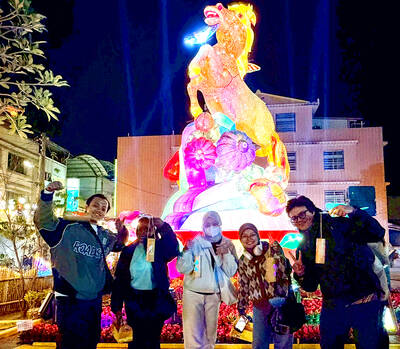
A: Harvard professor Robert Waldinger’s “7-day Happiness Challenge” includes: Day 1: Take stock of your relationships; Day 2: The secret power of an 8-minute phone call; Day 3: Small talk with strangers has big benefits. B: That’s not too hard. What’s next? A: Day 4: Why you should write a “living eulogy;” Day 5: The importance of making work friends; Day 6: Don’t cancel those social plans. B: Good ideas. What’s the final challenge? A: Day 7: Keep happiness going all year long. So, I’m inviting some friends to the Taipei Lantern Festival today to build good relationships. Wanna

A: Happy Lunar New Year. I wish you joy and health in the Year of the Horse. B: Thanks, you too. Actually, the Harvard Study of Adult Development claims that they’ve finally discovered the secret to living a happy life after 85 years of research. A: What is it? Money? Fame? Career? B: Nope, the key is good relationships. Professor Robert Waldinger, the principal investigator, portrays one’s relationships as “social fitness,” and has worked with the New York Times to launch the “7-day Happiness Challenge.” A: I wanna be socially fit. How can I participate in this challenge? A:

Steam curls from a shallow iron pot as thin ribbons of beef turn from ruby to blush. Warishita — a mixture of soy sauce, sugar and mirin — goes in, and the room fills with a salty-sweet aroma. Tofu slips in beside mushrooms and greens, chopsticks hover and voices soften. More than a hot pot, “sukiyaki” is a table-side ritual that invites everyone to cook and enjoy at the same pace. The name is believed to be associated with the iron “suki,” a kind of spade once used by farmers for cooking and later replaced by shallow pots. As cultural taboos


 RSS
RSS