


The content recommendation algorithm that powers the online short video platform TikTok has once again come under the spotlight after the app’s Chinese owner ByteDance signed binding agreements to form a joint venture that will hand control of operations of TikTok’s US app to American and global investors, including cloud computing company Oracle.
Here is what we know so far about its fate, following the establishment of the joint venture.
IS BYTEDANCE CEDING CONTROL?
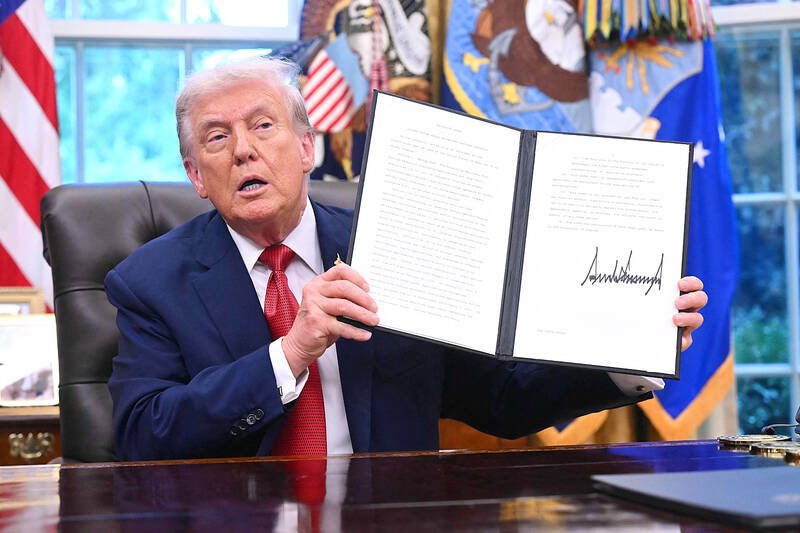
Photo: AFP 照片:法新社
While the creation of this new entity marks a big step toward avoiding a US ban, as well as easing trade and tech-related tensions between Washington and Beijing, there is still uncertainty surrounding the ownership of the recommendation algorithm, considered TikTok’s crown jewel.
Rush Doshi, who served at the National Security Council under former US president Joe Biden, said on X it was unclear whether the algorithm had been transferred, licensed or was still owned and controlled by Beijing, with Oracle merely providing “monitoring.”
The algorithm is deemed core to TikTok’s global success and until a few months ago, ByteDance’s position was that it would rather shut down the app in the US than sell it.

Photo: AFP 照片:法新社
But in September, Reuters reported, citing sources, that ByteDance would maintain ownership of TikTok’s US business operations but cede control of the app’s data, content and algorithm to the joint venture.
The joint venture would serve as the back-end operation to the US company and handle US user data and the algorithm, sources said at the time, adding a separate division that will continue to be wholly owned by ByteDance would control the revenue-generating business operations such as e-commerce and advertising.
Those arrangements formed the deal contour announced on Dec. 18, two sources with knowledge of the matter told Reuters on Dec. 19. The ByteDance-controlled TikTok US entity would be the revenue-generating one, while the new joint venture will receive a portion of the revenue for its technology and data services, said the sources.
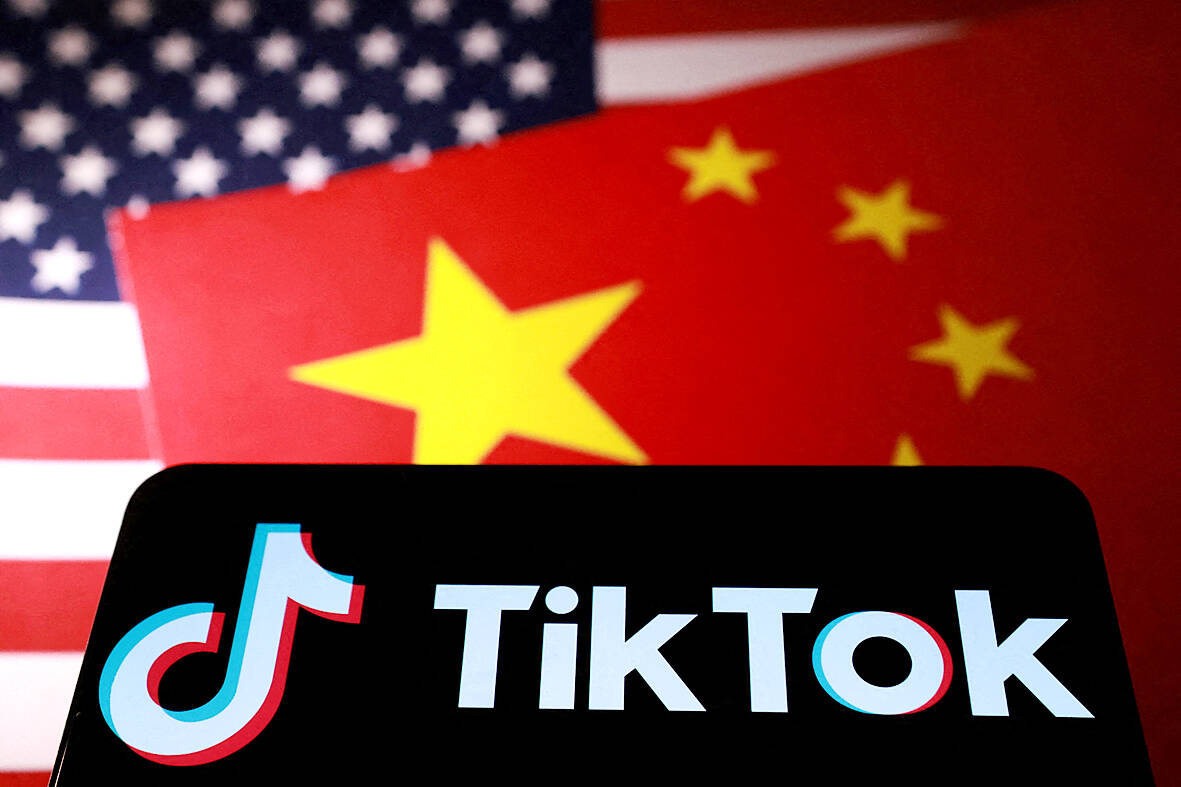
Photo: Reuters 照片:路透
The Chinese government has yet to declare its stance on the signed deal. Beijing made changes to its export laws in 2020 that give it approval rights over any export of algorithms and source codes, adding a layer of complexity to any effort to sell or spin off the US app.
WHAT MAKES THE ALGORITHM POWERFUL?
Analysts have said that it is not just the algorithms, but also how they work with the short-video format, that have made TikTok so successful globally.
But TikTok showed that an algorithm, driven by the understanding of a user’s interest, could be more powerful. Rather than building its algorithm on “social graph” like Meta has, TikTok executives have said that its algorithm is based on “interest signals.”
The short-video format enables TikTok’s algorithm to become much more dynamic and even capable of tracking changes in users’ preferences and interests across time, going as granular as what a user may like during a certain period of time during the day.
And the positioning of TikTok as an app built for mobile devices from the beginning also gave it an advantage over rival platforms that had to adapt their interfaces from computer screens.
TikTok’s early entry into the short-video market also gave the company a big early-mover advantage. Meta’s Instagram did not launch Reels until 2020 while Alphabet’s YouTube launched Shorts in 2021, both of which lag TikTok in years of data and product development experience.
WHAT DOES RESEARCH REVEAL ABOUT THE ALGORITHM?
TikTok also regularly recommends content that falls outside of users’ interests, which the company’s management has repeatedly said is essential to TikTok’s user experience.
A study, which researchers from the US and Germany published last year, found TikTok’s algorithm “exploits user interests in 30 percent to 50 percent of the recommendation videos,” after examining data from 347 TikTok users and five automated bots.
“This finding indicates that the TikTok algorithm opts to recommend a large number of explore videos in an attempt to either infer better the user interests or maximize user retention by recommending many videos that are outside of the user’s (known) interests,” the researchers wrote in the paper titled “TikTok and the Art of Personalization.”
(Reuters)
短影音平台TikTok的中國母公司字節跳動(ByteDance)簽署了一項具法律約束力的協議,將成立一家合資企業,要把TikTok美國版應用程式的營運控制權交給美國及全球投資人(包括雲端運算公司甲骨文〔Oracle〕)。這讓TikTok的內容推薦演算法再度成為關注的焦點。
合資企業成立後,TikTok未來的走向為何?以下是目前我們所知的情況。
字節跳動公司是否將交出控制權?
新公司的成立,被視為避免TikTok在美國遭禁、同時緩解華府與北京之間貿易與科技緊張關係的重要一步,但有關其推薦演算法(被視為TikTok最重要的部分)的所有權問題,仍存在高度不確定性。
曾於拜登政府時期任職於美國國家安全會議(NSC)的杜如松(Rush Doshi)在X(前Twitter)上表示,目前尚不清楚該演算法究竟是已被轉移、授權,還是仍由北京方面持有並實際控制。甲骨文公司所負責的部分僅是「監督」。
這套演算法被視為TikTok在全球成功的核心。直到數月前,字節跳動的立場仍是寧可退出美國市場,也不願出售該應用程式。
然而,路透於9月引述消息人士指出,字節跳動將保有TikTok在美國營運業務的所有權,但會將應用程式的資料、內容與演算法控制權,交由合資企業負責。
消息人士當時指出,該合資企業將作為美國公司的後端營運單位,負責處理美國用戶資料與演算法;同時,另設一個仍由字節跳動全資持有的部門,繼續掌控電商、廣告等創收型業務。
知情人士12月19日向路透表示,這些安排正是12月18日對外公布的交易架構。由字節跳動控制的TikTok美國公司將是主要的營收單位,而新成立的合資企業則因提供技術與資料服務而取得部分收入。
截至目前,中國政府尚未正式表態是否支持這項已簽署的交易。北京在2020年修訂出口管制法規,將演算法與原始碼納入出口審核範圍,使任何出售或分拆TikTok美國業務的行動更加複雜。
TikTok的演算法為何如此強大?
分析人士指出,TikTok的成功不僅來自演算法本身,更在於演算法與短影音形式的結合方式。
TikTok證明了一件事:以對使用者興趣的理解為核心所驅動的演算法,威力可能遠超過傳統模式。與 Meta建立在「社交關係圖譜」(social graph)上的推薦系統不同,TikTok高層曾多次表示,其演算法是基於「興趣訊號」(interest signals)。
短影音形式讓TikTok的演算法變得更即時且靈活,甚至能追蹤使用者偏好與興趣隨時間而變化的細微差異,例如細分使用者在一天中某時段可能偏好的內容。
此外,TikTok從一開始就以行動裝置為核心設計,也使其相較於必須從電腦介面轉型的競爭對手,更具先天優勢。
TikTok很早就進入短影音市場,這也讓公司取得明顯的先行者優勢。Meta旗下的Instagram直到2020年才推出Reels,而Alphabet旗下的YouTube則是在2021年推出Shorts,兩者在資料累積與產品開發經驗上,都落後TikTok數年。
對TikTok演算法的研究有何發現?
TikTok也經常向使用者推薦超出其既有興趣範圍的內容,而公司管理層一再強調,這正是TikTok使用體驗的關鍵之一。
一項由美國與德國研究人員去年發表的研究,在分析347名TikTok使用者及5個自動化機器人帳號的數據後發現,TikTok的演算法在約30%至50% 的推薦影片中,會「利用使用者的興趣而自肥」。
研究人員在題為「TikTok與個人化的藝術」(TikTok and the Art of Personalization)的論文中指出:「研究發現,TikTok的演算法選擇推薦大量探索型影片,目的可能是更精準地推斷使用者興趣,或透過推薦許多超出使用者(已知)興趣範圍的影片,來最大化使用者黏著度」。
(台北時報林俐凱編譯)

Many of us face common health challenges: tired eyes from long screen use, the search for anti-aging support and the need for weight control without resorting to restrictive diets. While no single food is a miracle cure, berries offer targeted, evidence-based nutritional support that’s easy and delicious to add to your daily routine. For overall immunity and healthy skin, vitamin C is essential. Strawberries provide roughly 10 percent more vitamin C than oranges, while blackcurrants deliver three to four times as much. These tasty fruits also contain abundant polyphenols, which help the body manage oxidative stress, support overall

A: Why didn’t you come to work earlier this week? Did you go anywhere for fun? B: I went to Thailand with friends to celebrate the 2026 Water Festival, also known as the Songkran Festival. The three-day annual celebrations ran from April 13 to 15. Everyone was having water fights in the streets. A: I know that “Songkran” is the traditional New Year in Southeast Asia, usually celebrated in mid-April. B: And we also attended the 2026 Siam Songkran Music Festival this time. The EDM shows by Martin Garrix — who has been crowned the World’s No. 1 DJ by “DJ

Handing down a name over generations is a central part of the Japanese traditional theater art of Kabuki, and that ceremony gets celebrated at theaters and special events every few years. Now, the ritual is taking place with the eighth Kikugoro, who is having that honor passed down from his 83-year-old father, the seventh Kikugoro, who in turn got that name from his father. “Taking on the name is about taking on the spirit and responsibility that’s created and getting passed down over generations by those who came before us,” the younger Kikugoro, Kazuyasu Terajima, told reporters recently. Another famous family name in

A: Apart from the Thai Water Festival, Taiwan’s three major Matsu pilgrimages are among Asia’s largest annual folk activities. B: This year, “Baisha-ma” of the Baishatun Gongtian Temple in Miaoli County was the first to kick off her pilgrimage, with the deity departing on April 12 and returning on the 20. A: Then “Dajia-ma” of the Dajia Jenn Lann Temple in Taichung will set off next, departing tonight before midnight and returning on April 26. B: And what about “Beigang-ma” of Yunlin County’s Beigang Chao-tian Temple? When will she launch her procession? A: Typically, “Beigang-ma” begins her procession on the eve of her lunar


 RSS
RSS