


Continued from yesterday(延續自昨日)
https://www.taipeitimes.com/News/lang
Many people attribute the four-leaf clover’s reputation for luck not merely to its rarity but also to the myths and legends that surround it. Here are two such tales that help shed light on how the four-leaf clover came to be seen as a lucky charm.

Photo: AdobeStock I 照片:AdobeStock
The first story originates from the Biblical narrative of Adam and Eve. According to Christian tradition, Adam and Eve, the first humans created by God, resided in the idyllic Garden of Eden. After they were expelled for defying God’s command, Eve is said to have plucked a four-leaf clover as a tangible reminder of paradise. This symbolic gesture endowed the clover with an aura of divine blessing and protection, linking it with the sacredness of Eden.
The four-leaf clover also held significance among the ancient Celts, an ethnolinguistic group that inhabited much of Western Europe prior to Roman expansion. The Celts believed in the existence of mischievous spirits capable of deceiving or abducting the unwary, particularly children. It was thought that those who possessed a four-leaf clover were granted the ability to perceive and evade these malevolent entities. Eventually, it became a talisman used to protect people and ward off supernatural harm.
許多人認為四葉幸運草之所以具有好運的名聲,不只是因為其稀有性,還因為圍繞它的各種神話與傳說。這裡有兩則這樣的故事,有助於闡明四葉幸運草是如何漸漸被視為幸運物的。
第一則故事源於亞當和夏娃的聖經敘事。根據基督教傳統,亞當與夏娃是上帝創造的第一對人類,他們居住在美好的伊甸園中。在他們因違抗上帝的命令而被逐出伊甸園後,據說夏娃拔了一片四葉幸運草,作為能夠提醒天堂存在的實體物。這個象徵性的舉動讓四葉幸運草帶有神聖祝福與庇佑的氛圍,並使其與伊甸園的神聖有所連結。
四葉幸運草在古代凱爾特人之間也具有特殊意義,凱爾特人是羅馬擴張前居住在西歐大部分地區的語族群體。他們相信世上存在頑皮的靈體,這些靈體會欺騙或誘拐毫無防備的人,尤其是孩童。人們認為只要擁有四葉幸運草,就能注意到這些惡靈並避開它們。最終,四葉幸運草變成了護身符,用來保護人們並驅除超自然的傷害。
What Did You Learn?
1. Which phrase in the Day 1 passage means “obtain or acquire something that is often rare or difficult to get?”
(簡答)
答案:come by
2-3 請根據第二天選文內容,從兩則故事中各選出一個單詞,分別填入下列句子空格,並視句型結構需要作適當的字形變化,使句子語意完整、語法正確,且符合全文文意。每格限填一個單詞(word)。(填充)
In the Biblical story, Eve took a four-leaf clover to __2__ herself of the Garden of Eden after being cast out for breaking God’s rule. Since then, it has become a symbol of protection and the sacred. In Celtic belief, the clover protected people from mischievous spirits, especially those that targeted children. It was said to enhance one’s __3__ of hidden dangers, making it a trusted charm.
答案: 2. remind 3. perception
4. From (A) to (F) below, choose the statements that are true for both tales in the Day 2 passage.
(多選題)
(A)Both tales provide tips on how to locate a four-leaf clover.
(B)The stories contain elements of the supernatural or mystical.
(C)Children are mentioned as being in danger or in need of protection.
(D)The legends involve characters who were punished for wrongdoing.
(E)Both stories are set in specific historical times and places in Europe.
(F)The four-leaf clover is described as offering some kind of protection.
答案: B、F
Words in Use
1. attribute vt. 把……歸因於
attribute A to B 將 A 歸因於 B
George attributes his success to hard work.
喬治將他的成功歸因於努力。
2. narrative n. 敘述,記敘
The documentary presents a powerful narrative of survival and hope.
這部紀錄片呈現了一個關於生存與希望的有力敘事。
3. reside vi. 居住
inhabit vt. 居住於
More and more people are choosing to reside in the suburbs.
越來越多人選擇住在郊區。
Only a handful of people inhabit that small village.
只有少數一些人住在那座小村莊裡。
4. expel vt. 驅逐
To expel the roaches from the room, we’ll need something more powerful than this spray.
要將蟑螂趕出房間,我們需要比這噴霧器更有威力的東西。
5. defy vt. 違抗,反抗
The man defied the authorities by assisting the rebel leader.
該男子藉由協助叛軍領袖來違抗當局。
Practical Phrases
1. shed light on. . . 闡明……
A recent study has shed light on the causes of climate change.
最近的一項研究闡明了氣候變遷的成因。
2. originate from. . . 源自……
The rumor seems to have originated from an online forum.
這個謠言似乎來自一個網路論壇。
3. endow A with B 將 B 賦予給 A
endow vt. 賦予
Nature has endowed the island with stunning beauty.
大自然賦予這座島嶼令人驚豔的美景。
4. prior to. . . (時間)在……之前
Prior to the meeting, please read the report carefully.
在會議開始之前,請仔細閱讀報告。
5. ward off. . . / ward. . . off 驅逐……;避開……
In old legends, the villagers used garlic to ward off vampires.
在古老傳說中,村民用大蒜來驅趕吸血鬼。
聽文章朗讀及講解: https://ivy.pse.is/455bfu
本文出自常春藤解析英語雜誌: www.ivy.com.tw

The US-Israeli war with Iran, which began on Feb. 28, has killed thousands of people, destabilized the Middle East and rocked global energy markets by effectively closing the strait. WHAT IS THE STRAIT OF HORMUZ? Lying between Oman and Iran and linking the Gulf north of it with the Gulf of Oman to the south and the Arabian Sea beyond, the strait is 33km wide at its narrowest point, with a shipping lane just 3km wide in either direction. Perhaps the world’s most important energy shipping channel, the waterway is about 167km long. Following through on an old threat, Tehran effectively closed the strait

Have you ever found yourself desperately feeding coins into a claw machine just because you’ve already spent so much trying to win that stuffed animal? Or maybe you’ve continued watching a boring movie simply because you already paid for the ticket? If so, you’ve experienced the “sunk cost fallacy.” A sunk cost refers to time, money or effort that has already been spent and cannot be recovered. This psychological trap is surprisingly common. You might keep playing a video game you no longer enjoy because you’ve invested countless hours in building your character, or maintain a toxic friendship because you’ve known
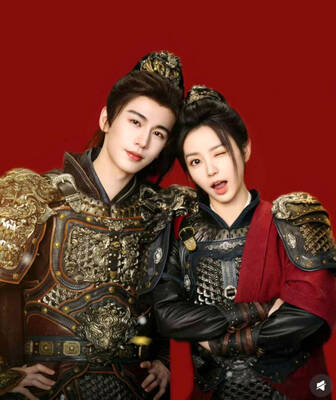
A: Which TV drama series have been global hits so far this year? B: The US drama “Stranger Things 5,” South Korean drama “Can This Love Be Translated?” and Chinese megahit “Pursuit of Jade” are all popular lately. A: Isn’t “Pursuit of Jade” the costume idol drama about the romance between a charming marquis and a pig-slaughterer? Actor Zhang Linghe and actress Tian Xiwei are both so attractive. B: Plus, Netflix’s Korean-Japanese gay romance drama “Soul Mate” — starring Korea’s Ok Taec-yeon and Japan’s Hayato Isomura — is set to premiere in May. A: These hit international dramas

1. 他甚至還自認為是個了不起的領導人。 ˇ He even went so far as to think himself a great leader. ˇ He even went so far as to think of himself as a great leader. χ He even went so far as to think himself as a great leader. 註:認為某人或某事為何等樣人或何等樣事,可用 think+受詞+受詞補語,或 think of ... as ...,正句第一句比第二句普遍些。用了 of,後面用 as;沒有 of,就不可以用 as。又如: I thought him quite a joke. I thought of him as quite a joke. 2. 你不應該打擾他休息。 ˇ You should not intrude upon him during his time off. χ You should not intrude him during his time off. 註:intrude 作「闖進」、「打擾」、「侵入」解時,是不及物動詞,後面跟 upon。 3. 男孩正在玩陀螺。 ˇ The boy is playing with his top. χ


 RSS
RSS