


During a visit to Australia last week, Chinese Premier Li Qiang made a classic goodwill gesture that boded well for relations between the two countries: he offered to send pandas.
The offer comes as ties between Australia and its largest trading partner improve after a diplomatic dispute that lead to China imposing a raft of restrictions on Australian agricultural and mineral exports in 2020.
Native to China, pandas have through the years become “envoys of friendship,” earning China’s outreach to countries it gifts the animals to the name of panda diplomacy.
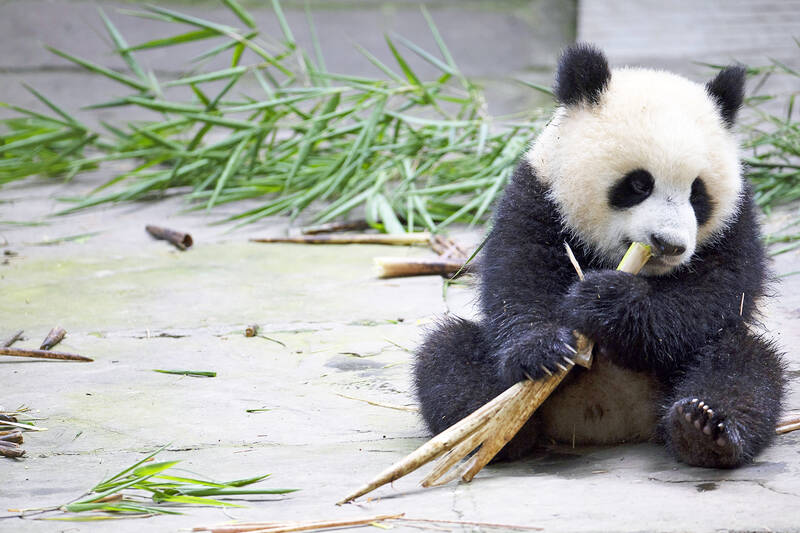
Photo: EPA-EFE 照片:歐新社
They have also been used to show Chinese anger.
WHEN DID PANDA DIPLOMACY START?
Since its founding in 1949, the People’s Republic of China has used panda diplomacy to boost its international image, either by gifting or lending panda to foreign zoos as goodwill animal ambassadors.
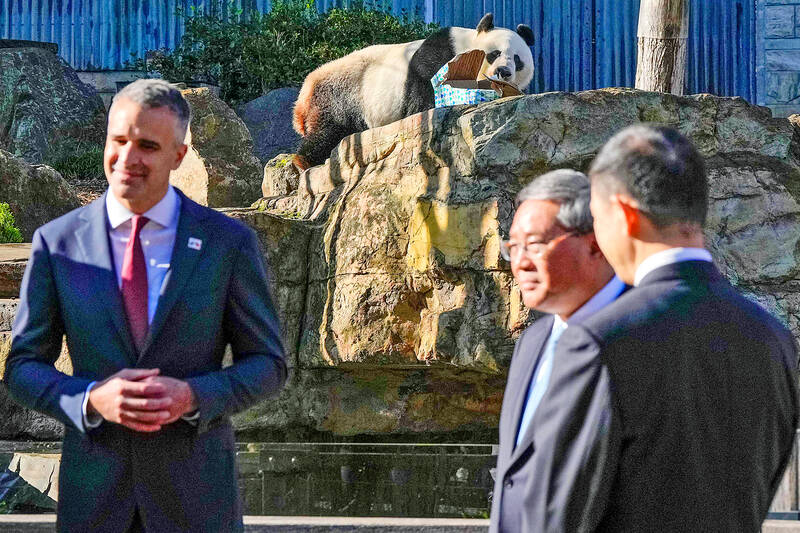
Photo: AFP 照片:法新社
Former Chinese leader Mao Zedong in 1957 gifted a panda, Ping Ping, to the former Soviet Union to celebrate the 40th anniversary of the October Revolution that ushered in the Soviet regime.
To further cement ties with its socialist allies, China dispatched another panda to the Soviet Union in 1959 and five more to North Korea between 1965 and 1980.
In 1972, Beijing gifted two pandas, Ling Ling and Hsing Hsing, to the United States after then US president Richard Nixon’s historic visit, in a sign of normalised China-US relations and marking a pivotal moment for China’s foreign policy.
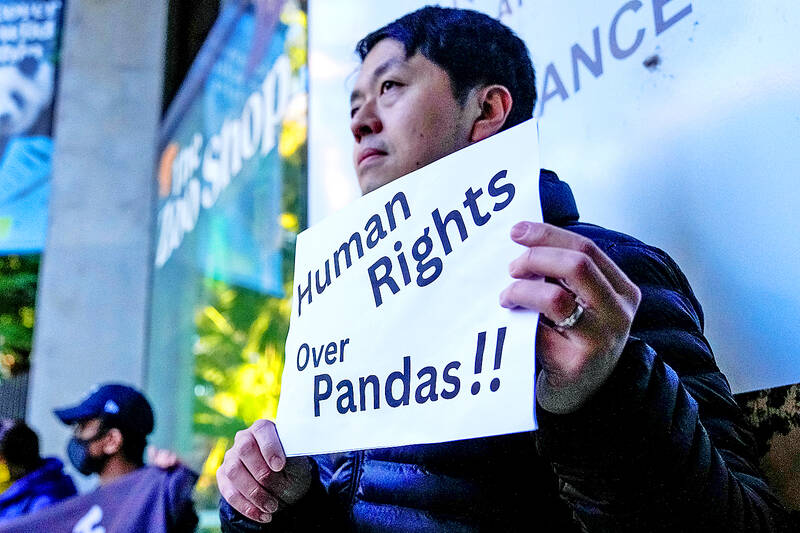
Photo: EPA-EFE 照片:歐新社
Since then, other countries including Japan, France, Britain and Spain have also been given pandas.
WHAT’S THE PANDA DIPLOMACY POLICY?
Since 1984, China stopped gifting pandas due to their dwindling numbers and began loaning them to overseas zoos instead, often in pairs for 10 years, with an annual fee of up to about $1 million.
While keeping pandas can be costly for zoos, they are seen as drawcards for visitors and help generate income.
The pandas typically return home to southwest China after the loan agreement ends. Panda cubs born overseas are no exception, and would be sent home between the age of two and four to join a Chinese breeding program.
HOW DOES IT WORK?
China has a history of using pandas to reward its trading partners. A 2013 Oxford University study said the timing of China’s lease of pandas to Canada, France and Australia “coincided with” uranium deals and contracts with these countries.
The panda agreements with other countries, including Singapore, Malaysia and Thailand, also coincided with the signing of free-trade agreements.
Sometimes, pandas are also used to express China’s displeasure with a nation.
In 2010, China recalled two US-born pandas, Tai Shan and Mei Lan, after Beijing warned Washington against a scheduled meeting between then-US president Barack Obama and the Dalai Lama, who Beijing views as a dangerous separatist.
In a recent downturn in bilateral ties, Ya Ya, on loan to the US for 20 years, was returned in April 2023.
Concerns over her health had also fanned nationalist sentiment on China’s social media, with animal advocates accusing the Memphis Zoo in Tennessee of providing inadequate care to the animal.
In November last year, three other pandas left, leaving only four giant pandas on US soil.
That month, Chinese President Xi Jinping then hinted that he was open to sending more pandas to the US after meeting with US President Joe Biden in California, a gesture seen as Chinese willingness to improve ties.
ARE PANDAS STILL ENDANGERED?
China’s domestic conservation program have seen the status of pandas improve from endangered to vulnerable.
The population of giant pandas in the wild has grown from around 1,100 in the 1980s to 1,900 last year.
There are currently 728 pandas in zoos and breeding centers around the world.
(Reuters)
中國總理李強上週訪問澳洲時,以一個典型的方式表達出善意,讓兩國關係露出曙光:他主動提出贈送貓熊。
李強這項提議的時機,正值澳洲與其最大貿易夥伴中國之關係改善之際。此前兩國歷經一場外交爭端,導致中國在2020年對澳洲出口之農產品及礦產實施一系列限制。
貓熊原產於中國,多年來已成為「友誼使者」,讓中國對貓熊送往的國家進行宣傳,貓熊外交即因此得名。
貓熊也被用來表達中國人的憤怒。
貓熊外交從何時開始?
自1949年成立以來,中華人民共和國一直利用貓熊外交來提升其國際形象,向外國動物園贈送或出借貓熊作為親善動物大使。
1957年,中國前領導人毛澤東送了一隻貓熊「平平」給前蘇聯,以慶祝建立蘇維埃政權的十月革命40週年。
中國為了進一步鞏固與社會主義盟友的關係,而在1959年又送了一隻貓熊給蘇聯,並在1965年至1980年之間向北韓送了5隻貓熊。
1972年,在美國總統理查.尼克森歷史性地訪問中國後,北京向美國贈送了兩隻貓熊──「玲玲」和「興興」,這是中美關係正常化的象徵,標誌著中國外交政策的關鍵時刻。
此後,中國也將貓熊送給日本、法國、英國、西班牙等其他國家。
貓熊外交的政策是什麼?
自1984年以來,由於貓熊數量不斷減少,中國不再贈送貓熊,而是開始將牠們租借給海外動物園,通常成對租借10年,每年費用高達約100萬美元。
雖然飼養貓熊對動物園來說成本高昂,但貓熊被視為吸引遊客的賣點,有助於創造收入。
租借協議到期後,貓熊通常會被送回中國西南部的家園。在海外出生的貓熊幼崽也不例外,在兩歲到四歲之間就會被送回,加入中國的繁殖計畫。
它是如何運作的?
中國有利用貓熊獎勵貿易夥伴的歷史。牛津大學2013年的一項研究稱,中國將熊貓借給加拿大、法國和澳洲的時機,「碰巧」與這些國家的鈾交易及合約訂定同時。
與新加坡、馬來西亞和泰國等其他國家的貓熊協議,也與自由貿易協議的簽署同時發生。
有時,貓熊也被用來表達中國對一個國家的不滿。
2010年,中國召回了兩隻在美國出生的貓熊──泰山和美蘭,北京之前警告華盛頓,要求取消總統巴拉克?歐巴馬與達賴喇嘛的會晤,北京認為達賴喇嘛是危險的分裂分子。
在近期雙邊關係低迷的情況下,借給美國20年的「丫丫」於2023年4月歸還中國。
對丫丫健康狀況的疑慮,也在中國的社群媒體上煽動了民族主義情緒,動物保護人士指責美國田納西州孟菲斯動物園對這隻貓熊照顧不周。
去年11月有3隻貓熊離開,美國境內只剩下4隻貓熊。
同月,中國國家主席習近平在加州與美國總統拜登會面後暗示,他願意送更多貓熊到美國,這一姿態被視為中國願意改善關係。
貓熊仍然瀕臨絕種嗎?
中國國內的保育計畫已使貓熊的地位從瀕危(endangered)變成易危(vulnerable)。
野生貓熊的數量已從1980年代的約1,100隻增加到2023年的1,900隻。
目前世界各地的動物園和繁殖中心共有728隻貓熊。
(台北時報林俐凱編譯)

Every few years, the World Baseball Classic (WBC) offers sports fans a real World Series. At its finest, as in the shocking upset on Tuesday last week of the US team by Italy, the games generate the kind of electricity fans feel at the FIFA World Cup. That’s exactly how Major League Baseball (MLB), which owns the WBC, wants it. The tournament, first played in 2006, was designed to boost the league’s profile beyond North America and help it become a global game. In most respects, it’s done better than expected. Yet as the WBC grows, the structure, timing and staging of
對話 Dialogue 清清:華華,別忘了這禮拜五晚上,老闆請喝春酒喔! Qīngqing: Huáhua, bié wàngle zhè lǐbàiwǔ wǎnshàng, lǎobǎn qǐng hē chūnjiǔ o! 華華:啊!我差點忘了,謝謝提醒。 Huáhua: À! Wǒ chàdiǎn wàngle, xièxie tíxǐng. 清清:老闆人真好,過年前請我們吃尾牙,過完年又請吃春酒。 Qīngqing: Lǎobǎn rén zhēn hǎo, guònián qián qǐng wǒmen chī Wěiyá, guòwán nián yòu qǐng chī chūnjiǔ. 華華:尾牙是感謝我們過去一年的辛勞,春酒是希望我們今年繼續努力啊! Huáhua: Wěiyá shì gǎnxiè wǒmen guòqù yì nián de xīnláo, chūnjiǔ shì xīwàng wǒmen jīnnián jìxù nǔlì a! 清清:給我加薪,我就努力。 Qīngqing: Gěi wǒ jiāxīn, wǒ jiù nǔlì. 華華:還真是「有錢能使鬼推磨」。 Huáhua: Hái zhēn shì “Yǒu qián néng shǐ guǐ tuī mò.” 清清:那還用說。對了!別只顧著吃,頭牙快到了,農曆二月二是土地公生日,記得跟我去拜拜。 Qīngqing: Nà hái yòng shuō. Duìle! Bié zhǐ gùzhe chī, Tóuyá kuài dàole, nónglì èr yuè èr shì Tǔdìgōng shēngrì, jìdé gēn wǒ qù bàibai. 華華:沒問題,東西我來準備,放心吧!一起發大財! Huáhua: Méi wèntí, dōngxi wǒ lái zhǔnbèi, fàngxīn ba!
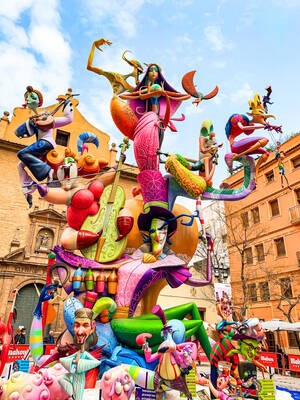
When people think of Spain, they often picture bullfights and flamenco—but there’s another celebration you shouldn’t miss. Every March, Valencia comes alive with “Las Fallas.” Its origins go back centuries to when carpenters burned wooden scraps they no longer needed to welcome spring as winter ended. Over time, the custom evolved from bonfires to giant street sculptures called fallas. This tradition has since developed into a UNESCO-recognized event that attracts millions of visitors. This festival centers on the ritual burning of falla monuments. Each monument is made up of several ninots: giant puppets that are crafted all year by local artists.
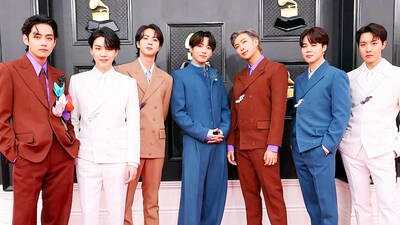
A: South Korean supergroup BTS is finally staging a comeback tomorrow, releasing their new album in nearly four years: “Arirang.” B: And to promote their new album, BTS will hold a comeback concert at the Gwanghwamun Plaza in downtown Seoul this weekend. According to police estimates, the show could attract a crowd of at least 260,000 fans. A: What about their new world tour? When will it start? B: The upcoming world tour will kick off from Gaoyang on April 9, and Kaohsiung will be included this time. A: Really? Hurry up and tell me the dates of the Kaohsiung shows. Maybe we


 RSS
RSS