


Finland became the 31st member of North Atlantic Treaty Organization (NATO), completing a tumultuous process of accession sparked by Russia’s invasion of Ukraine that upended the European security landscape.
Foreign Minister Pekka Haavisto handed Finland’s accession document to US Secretary of State Antony Blinken in Brussels on Tuesday last week, marking its formal entry into the alliance’s fold. NATO foreign ministers celebrated the accession with a flag-raising ceremony later in the day.
The accession of just one of the two Nordic countries — Sweden’s application is pending — will make the alliance’s northern enlargement incomplete as NATO seeks to boost its presence in the Arctic, with the High North area’s significance increasing, as well as to gain more clout in the Baltic Sea.
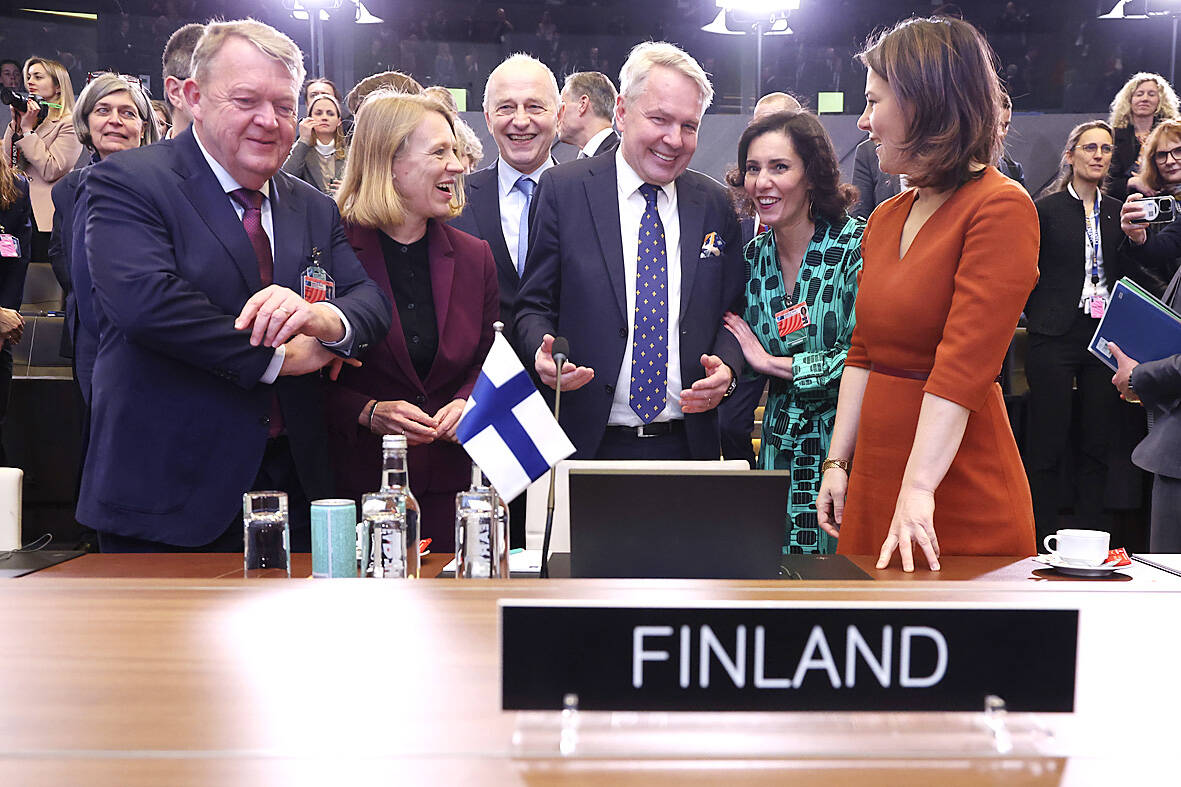
Photo: AP 照片:美聯社
Finland’s addition will bring NATO more than 1,300km of border with Russia, doubling its eastern flank, and a nation that’s already prepared to defend itself in case of an all-out war. For the Finnish military, membership is a culmination of years of ever-closer cooperation, with gear used by the defense forces already compatible with that of the alliance.
The push to join NATO was triggered by Russia’s attack on a neighboring country, Ukraine, leading to a U-turn in public opinion on membership as Finns concluded that could also happen to them.
As a full member, Finland can benefit from Article 5 mutual defense commitments — meaning allies are bound to come to its aid if it’s under attack — and the Nordic country will have to be ready to defend other allies, too.
The Finnish entry is set to enable the bloc to further secure the area around the Baltic Sea in defense of its members Estonia, Latvia and Lithuania, which are often seen as potential targets of Russian aggression. It also brings another Arctic nation into the fold of the alliance, one whose military is trained for cold weather — an important asset at a time when the High North is gaining in strategic importance in light of the increased presence of Russia and China.
Having won independence in 1917 after more than 100 years as a Grand Duchy of the Russian Empire, Finns fought two wars with the Soviet Union, ceding parts of their territory in 1944. Finland then tiptoed through an era of neutrality during the Cold War — by necessity, not by choice — cowering to Moscow while retaining independence in a policy that came to be known as Finlandization.
After the collapse of the Soviet Union, the Nordic country immediately sought entry into the European fold in Sweden’s wake, with the two joining the European Union in 1995. Until last year, Finnish policy makers almost never identified Russia — at least publicly — as the primary military threat.
Geared for survival, the country of 5.5 million people has always remained on alert. It’s able to deploy 280,000 troops in wartime from a trained reserve just short of a million, thanks to a conscription-based system where most men and some women undergo military training lasting from six months to a year.
(Bloomberg)
芬蘭成為北大西洋公約組織第31個成員國,為芬蘭入盟過程的紛紛擾擾畫下句點。俄國入侵烏克蘭讓歐洲安全格局大亂陣腳,芬蘭加入北約之舉亦由此引發。
芬蘭外交部長佩卡‧哈維斯托上週二在布魯塞爾將芬蘭的入盟文件交給美國國務卿安東尼‧布林肯,代表芬蘭正式加入北約。北約外長們在當天稍晚舉行升旗儀式慶祝芬蘭的加入。
芬蘭與瑞典這兩個北歐國家皆申請加入北約,但瑞典仍未獲准加入,這將使北約的向北擴張變得不完整,因為北極圈地區的重要性增加,北約想在北極更具存在感,並在波羅的海更有影響力。
芬蘭的加入將使北約與俄國的邊界逾1,300公里,將其東翼擴大一倍,且若全面開戰,芬蘭已做好自衛的準備。對芬蘭軍方來說,加入北約是多年來密切合作的結果,國防軍使用的裝備已經與北約的裝備相容。
推動加入北約是因俄國攻擊鄰國烏克蘭,而使公眾輿論對於加入北約發生了大轉彎,因為芬蘭人認為這也可能會發生在他們身上。
作為北約正式成員,芬蘭可受益於北約第5條款所承諾的共同防禦——這表示若芬蘭受到攻擊,盟邦必會提供援助——而芬蘭這北歐國家也必須準備好保衛其他盟友。
芬蘭的加入將使北約集團能進一步保護波羅的海周圍地區的安全,以保衛北約成員國愛沙尼亞、拉脫維亞與立陶宛,這些國家常被視為俄國侵略的潛在目標。芬蘭的加入也表示又一北極國家入北約,芬蘭的軍隊受過寒冷天氣的訓練——在俄國與中國影響力增加,北極圈地區的戰略重要性越來越高的情況下,這是一項重要資產。
作為隸屬於俄羅斯帝國的芬蘭大公國一百多年後,芬蘭人於1917年贏得獨立,並與蘇聯打了兩場戰爭,在1944年割讓了部分領土。芬蘭之後在冷戰期間小心翼翼地保持中立——這是迫不得已,而非出於選擇——順從莫斯科而得以保持獨立,這也就是後來被稱為「芬蘭化」的政策。
蘇聯解體後,芬蘭立即跟隨瑞典尋求加入歐洲集團,兩國於1995年加入歐盟。在去年之前,芬蘭的決策者幾乎從未將俄國認定——起碼未公開認定——為主要軍事威脅。
為了生存,這個人口數550萬人的國家始終保持警覺。芬蘭實施徵兵制,大多數男性及部分女性接受為期六個月至一年的軍事訓練,因此戰時能夠在訓練有素、為數近一百萬的預備役中部署28萬名士兵。
(台北時報林俐凱編譯)
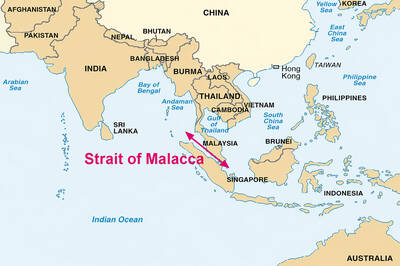
The closure of the Strait of Hormuz has forced policymakers in Asia to face questions over the security of other maritime chokepoints, including the Strait of Malacca, which is the world’s busiest waterway for international trade. WHAT IS THE MALACCA STRAIT? The 900km long Malacca Strait, bounded by Indonesia, Thailand, Malaysia and Singapore, provides the shortest sea route from East Asia to the Middle East and Europe. It carries nearly 22 percent of the world’s maritime trade, according to the Center for Strategic and International Studies (CSIS). This includes oil and gas shipments from the Middle East to the energy-hungry economies of China,
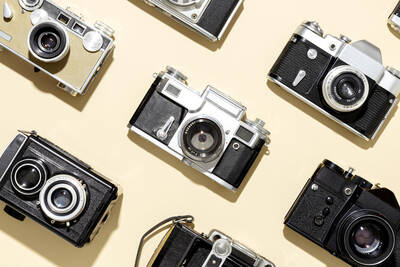
Cameras are everywhere — in our pockets, on our walls and even in space. They capture emotions, preserve history and reflect culture. Through these devices, photography is now essential to modern life, influencing how we perceive ourselves and the world. To understand the root of their power, let’s explore the camera’s remarkable journey. The story begins with the camera obscura, a dark room with a tiny hole. Light passing through the opening projected an inverted image on the opposite wall. Renaissance artists used this principle to paint accurate scenes. However, these images couldn’t be preserved as photographs. That changed

A: This year’s two most anticipated films have finally hit theaters in Taiwan. “Michael” premiered last Wednesday, while “The Devil Wears Prada 2” premiered this Wednesday ahead of its global release. B: Isn’t “Michael” the biopic about the late King of Pop Michael Jackson? A: Yup, it tells the story of Michael’s legendary life, from child star to global icon. And the role is in fact played by his nephew, Jaafar Jackson. B: Michael caused a sensation when touring Taiwan twice in 1993 and 1996. His classic hits, dance moves and music videos reshaped global pop culture at that time. A: I’m gonna
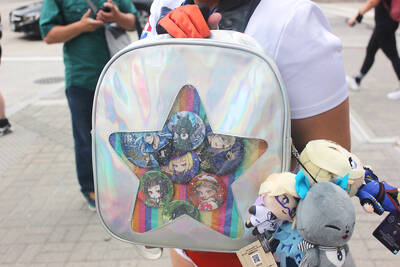
對話 Dialogue 華華:欸,你最近有沒有發現,路上很多人背的包包上還有一個透明的小包包? Huáhua: Èi, nǐ zuìjìn yǒu méiyǒu fāxiàn, lùshàng hěn duō rén bēi de bāobāo shàng hái yǒu yí ge tòumíng de xiǎo bāobāo? 清清:我上次去逛街,也注意到了。我看到好多人把吊飾、照片或娃娃什麼的放進小包裡,掛在包包上。那叫什麼啊? Qīngqīng: Wǒ shàngcì qù guàngjiē, yě zhùyì dào le. Wǒ kàndào hǎo duō rén bǎ diàoshì, zhàopiàn huò wáwa shénme de fàng jìn xiǎo bāo lǐ, guà zài bāobāo shàng. Nà jiào shénme a? 華華:聽說有兩種,一種叫「痛包」,一種叫「娃包」或「曬娃包」。 Huáhua: Tīngshuō yǒu liǎng zhǒng, yì zhǒng jiào “tòngbāo”, yì zhǒng jiào “wábāo” huò “shàiwábāo”. 清清:「痛包」這個說法我聽過,就是在包包上大量展示自己喜歡的東西。但「曬娃包」還是第一次聽到。為什麼叫「曬娃包」? Qīngqīng: “Tòngbāo” zhège shuōfǎ wǒ tīng guò, jiù shì zài bāobāo shàng dàliàng zhǎnshì zìjǐ xǐhuān de dōngxi. Dàn “shàiwábāo” háishì dì yí cì tīng dào. Wèishéme jiào “shàiwábāo”? 華華:因為很多人會把自己喜歡的娃娃放進透明包裡,帶出去拍照,曬給大家看。 Huáhua: Yīnwèi hěn


 RSS
RSS