


Black bears have been appearing more frequently than usual along the Batongguan ancient trail in Yushan National Park. The Yushan National Park Headquarters says that in winter black bears mostly forage for acorns in the Dafen area of the Maravi trail in the eastern part of the park, but in spring they come down to lower altitudes to look for other foods such as berries. They have recently been spotted several times near the Maravi trailhead and photographed by automatic cameras set up by the Forestry Bureau’s Hualien Forest District Office. At least six black bear sightings were reported between April 4 and 18.
To avoid clashes between humans and bears, the Yushan National Park Headquarters advises hikers to carry bear bells and whistles to make noises that discourage bears from coming close. Another point is that black bears have a keen sense of smell, so hikers should keep their food items sealed and take any trash back down the mountain rather than burying it. Anyone who spots a black bear should leave the scene quietly and quickly while avoiding any interaction with the bear. After going down the mountain, they can report the sighting to the nearest visitor center.
(Liberty Times, translated by Julian Clegg)
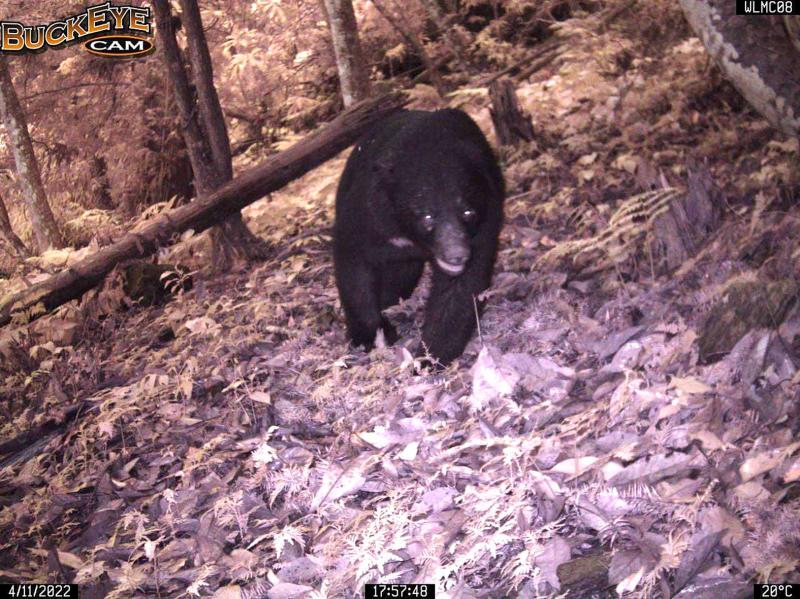
Photo courtesy of the Hualien Forest District Office 照片︰花蓮林區管理處提供
玉山國家公園最近在八通關古道較常有黑熊出沒。玉山國家公園管理處指出,冬天黑熊大多會在東部園區的瓦拉米步道大分地區覓食青剛櫟,春天時節則會下山到低海拔地區找尋漿果等食物。近來在瓦拉米步道登山口附近,就陸續有黑雄出沒,並被林務局花蓮林區管理處的自動相機拍到,整個玉山園區從四月四日至十八日至少已有六起黑熊通報。
為避免人熊衝突,玉管處呼籲山友可帶熊鈴、哨子製造聲響防止熊靠近,另因黑熊嗅覺靈敏,山友食物應密封,垃圾也要帶下山,不可就地掩埋,如發現黑熊應安靜、快速離開,避免與黑熊有互動,下山後則可就近通報各遊客中心。
(自由時報劉濱銓)

Many of us face common health challenges: tired eyes from long screen use, the search for anti-aging support and the need for weight control without resorting to restrictive diets. While no single food is a miracle cure, berries offer targeted, evidence-based nutritional support that’s easy and delicious to add to your daily routine. For overall immunity and healthy skin, vitamin C is essential. Strawberries provide roughly 10 percent more vitamin C than oranges, while blackcurrants deliver three to four times as much. These tasty fruits also contain abundant polyphenols, which help the body manage oxidative stress, support overall

A: Why didn’t you come to work earlier this week? Did you go anywhere for fun? B: I went to Thailand with friends to celebrate the 2026 Water Festival, also known as the Songkran Festival. The three-day annual celebrations ran from April 13 to 15. Everyone was having water fights in the streets. A: I know that “Songkran” is the traditional New Year in Southeast Asia, usually celebrated in mid-April. B: And we also attended the 2026 Siam Songkran Music Festival this time. The EDM shows by Martin Garrix — who has been crowned the World’s No. 1 DJ by “DJ

Handing down a name over generations is a central part of the Japanese traditional theater art of Kabuki, and that ceremony gets celebrated at theaters and special events every few years. Now, the ritual is taking place with the eighth Kikugoro, who is having that honor passed down from his 83-year-old father, the seventh Kikugoro, who in turn got that name from his father. “Taking on the name is about taking on the spirit and responsibility that’s created and getting passed down over generations by those who came before us,” the younger Kikugoro, Kazuyasu Terajima, told reporters recently. Another famous family name in

A: Apart from the Thai Water Festival, Taiwan’s three major Matsu pilgrimages are among Asia’s largest annual folk activities. B: This year, “Baisha-ma” of the Baishatun Gongtian Temple in Miaoli County was the first to kick off her pilgrimage, with the deity departing on April 12 and returning on the 20. A: Then “Dajia-ma” of the Dajia Jenn Lann Temple in Taichung will set off next, departing tonight before midnight and returning on April 26. B: And what about “Beigang-ma” of Yunlin County’s Beigang Chao-tian Temple? When will she launch her procession? A: Typically, “Beigang-ma” begins her procession on the eve of her lunar


 RSS
RSS