


The World Night View Summit took place on Friday last week, hosted by the Yakei Convention and Visitors Bureau in Nagasaki, Japan. With a decade since the previous one, the international summit selects three new spectacular night vistas from around the world. Last Friday’s summit saw the establishment of a new “World Night View Heritage” certification, with the Taiwan Lantern Festival selected as one of 10 heritage night vistas.
The summit was attended by 150 representatives from the tourism industries of 10 countries, including Japan, Taiwan, Spain, Monaco and Hungry.
The “World Night View Heritage” certification was established to recognize places or events with beautiful night views. In addition to the Taiwan Lantern Festival, the certification was also awarded to nine other nightscapes outside of Japan, including Gellert Hill in Hungary and the historic ruins of Ayutthaya in Thailand.
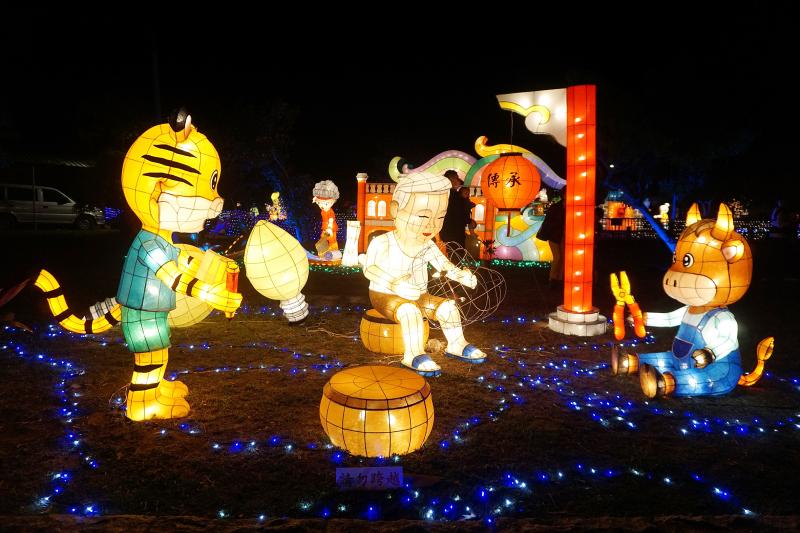
Photo: CNA 照片:中央社
Taiwan Tourism Interchange Association consultant Chiang Ming-ching told attendees of the summit that the Taiwan Lantern Festival is Taiwan’s largest celebratory event. Chiang said that the 2019 Taiwan Lantern Festival, which was held in Pingtung County, featured thousands of brightly-colored decorative lanterns which studded the night-time sky with beautiful illuminations. Chiang explained that the lantern festivals were originally held on the 15th day of the first month of the lunar year to celebrate the end of the Spring Festival. People traditionally let off firecrackers and fireworks to bring good luck and avoid calamity, said Chiang. During the1990s, temples across Taiwan began to combine their individual decorative lanterns displays in a single location, forming lantern festivals. The displays gradually increased in scale and began to feature innovative “main lantern” designs, said Chiang.
(CNA, translated by Edward Jones)
由日本一般社團法人「夜景觀光」主辦的世界夜景峰會上週五在長崎市舉行,時隔十年選出世界新三大夜景,也新設世界夜景遺產,包括台灣燈會在內十處入選。

Photo: CNA 照片:中央社
這場世界夜景高峰會有日本及海外國家包括台灣、西班牙、摩納哥、匈牙利等十國的觀光相關人士約一百五十人出席。
主辦單位特別創設認定夜景美的景點或活動之「世界夜景遺產」,結果台灣燈會、匈牙利布達佩斯的蓋勒特山丘、泰國大城的古蹟遺址夜景等日本以外的十處入選。
台灣旅遊交流協會顧問江明清在世界夜景高峰會上,以屏東的台灣燈會舉例說明指出,台灣燈會是台灣規模最大的慶典活動,有好幾千個色彩豔麗的花燈裝飾,將夜空點綴得璀璨亮麗。原本燈會是在農曆正月十五日滿月、也就是元宵節的慶祝活動,民眾會施放爆竹、煙火趨吉避凶,一九九○年代各寺廟開始將花燈集中於一處,形成燈會,後來燈會規模擴大,主燈設計極富巧思。
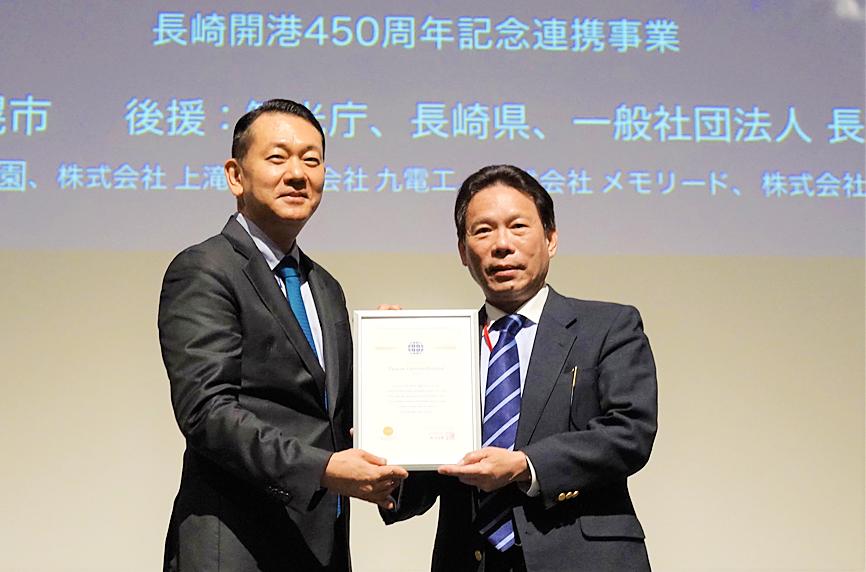
Photo: CNA 照片:中央社
(中央社)
Rice is an essential ingredient in Taiwanese cuisine. Many foods are made of rice, adding more variety to our cooking, such as rice cake, or “gui.” Wagui is made by steaming rice flour batter in a bowl. The term “gui” refers to a type of food made from rice, while “wa” refers to a bowl. The pronunciation of “gui” in Taiwanese Hokkien is similar to the word for “nobility” in Chinese, so it is common for people to prepare various types of gui, including wagui, as offerings to the gods or ancestors,. 米是台灣重要的主食,用米製成的食品十分多元,豐富我們的飲食,如米做成的「粿」。粿的意思是米做成的糕點,碗粿是將在來米漿倒入碗中蒸熟,因而得名。粿因為音同「貴」,因此碗粿等粿食常用作供品祭拜神明和祖先。 nobility (n.) 高貴,高尚;貴族 offering (n.) 供品 While Taiwan may not be

Drive-through (or drive-thru) restaurants provide people with the immense convenience of being able to purchase and pick up meals without needing to leave their vehicles. These restaurants have been around for decades, and their success has spawned a number of equally handy services. The drive-through concept originated with the drive-in restaurant, the first of which was established in the US in 1921. Patrons would order and eat the food that was delivered to their cars by workers called “carhops.” Ten years later, a drive-through service was introduced, but it was not until 1947 that the first exclusively drive-through restaurant opened its
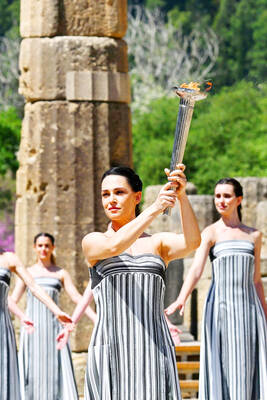
On Tuesday last week, the flame for this summer’s Paris Olympics was lit at the birthplace of the ancient Olympic Games in southern Greece in a meticulously choreographed ceremony. It will then be carried through Greece for more than 5,000km before being handed over to French organizers at the Athens venue used for the first modern Olympics in 1896. The pageantry at Olympia has been an essential part of every Olympics for nearly 90 years since the Games in Berlin. It’s meant to provide an ineluctable link between the modern event and the ancient Greek original on which it was initially modelled. Once

A: “Forbes” magazine just revealed Hollywood’s top 10 highest-paid stars of 2023. B: How much did those superstars make last year? A: Denzel Washington was at No. 10, having made US$24 million, which is about NT$771 million. B: That’s an astronomical figure to me. A: No. 9 to No. 6 were: Ben Affleck with US$38 million, Jason Statham with US$41 million, Leonardo DiCaprio with US$41 million, and Jennifer Aniston with US$42 million. A: 《富比世》最近公布了好萊塢去年的片酬排行榜。 B: 大明星的片酬到底有多高? A: 第10名是丹佐華盛頓、片酬2400萬美元,大約7.7億台幣。 B: 天啊這根本是天文數字! A: 第9到6名是︰班艾佛列克、3800萬美元,傑森史塔森、4100萬美元,李奧納多狄卡皮歐、4100萬美元,珍妮佛安妮斯頓、4200萬美元。 (By Eddy Chang, Taipei Times/台北時報張聖恩)


 RSS
RSS