


A n invasion of Southeast Asian dwarf honey bees, suspected to have entered the country via cargo or passenger ship, and initially detected not far from Kaohsiung Harbor, is causing problems in the city. Since the bees prefer to build their hives on branches, poles or other long cylindrical objects found on balconies, their presence often causes a big shock to residents. In the first half of this year alone, Kaohsiung public health officials have removed more than 500 beehives — a clear indication that the bee population is gradually expanding through the city. In an effort to deal with the increasing number of beehives and bee reproduction in metropolitan areas, the Kaohsiung City Government has set aside a budget of NT$5.25 million to capture the bees.
Suspecting that the influx of Southeast Asian bees came via cargo or passenger ship, the Council of Agriculture and Kaohsiung City Government Agriculture Bureau have launched an investigation. Dwarf honey bees are small — just half the size of a normal bee — and are a species of wild honey bee endemic to South and East Asia. The bee population, initially discovered in close proximity to Kaohsiung Harbor, spread into Cianjhen and Siaogang districts, then expanded into other areas of the city. The highest bee population density was found in areas surrounding Kaohsiung International Airport in Siaogang District. While the authorities suspect that the bees came via cargo or passenger ship, they have been unable to confirm the cause of the outbreak and continue to investigate.
For public officials, the most concerning aspect of the situation is that dwarf honey bees favor establishing their hives on walls and balconies in residential areas and particularly love using the branches of bushes, shrubs and trees. A medium-sized beehive will be about 20cm long and will wrap around or sit upon a branch, pole or similar-shaped cylindrical object. A bee colony will contain anything from several hundred up to over 10,000 bees, presenting a danger in residential areas.
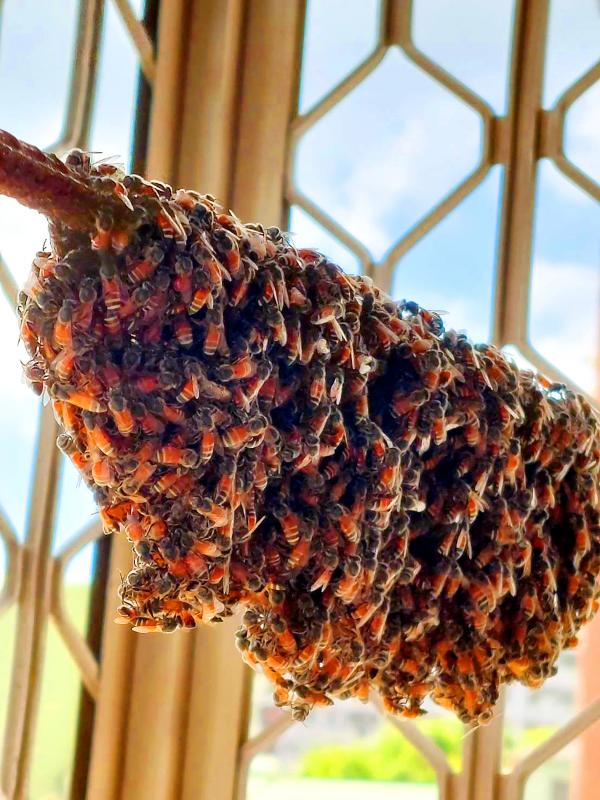
Photo: Chen Wen-chan, Liberty Times 照片:自由時報陳文嬋
(Liberty Times, translated by Edward Jones)
東南亞小蜜蜂入侵,最早出現在高雄港附近,懷疑因貨運或航運入境,偏好到住家陽台內的樹枝或桿條築巢,經常讓民眾大吃一驚。高雄市今年上半年清除五百多件,凸顯族群逐年擴大,且在都會城市中築巢、繁殖,市府今年編列五百二十五萬元捕蜂。
疑似從貨運或航運入境,農委會與高雄市政府農業局調查,小蜜蜂體型嬌小,僅一般蜜蜂一半,是分布於南亞、東南亞的小型野蜜蜂之一,最早出現在高雄港附近,包括前鎮、小港一帶,而今族群再擴大到其它區域,以小港機場周邊密度最高,懷疑因貨運或航運入境,但真正原因仍調查中。
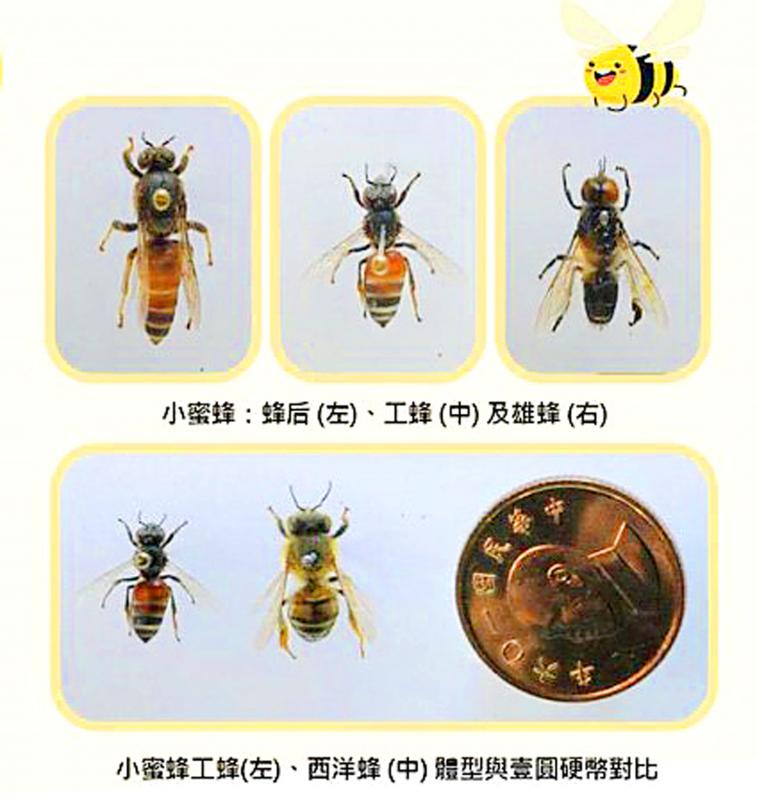
Photo courtesy of the Council of Agriculture 照片:農業委員會提供
最令人擔憂的是,小蜜蜂偏好在住家附近圍牆或陽台等處,及灌木或小喬木枝條上築巢,中等蜂巢尺寸約二十公分,包裹或固定於樹枝或桿狀物,蜂群數百隻至上萬隻不等,形成住家風險。
(自由時報陳文嬋)
Many consumers are guilty of filling drawers or closets with old laptops, cellphones, fitness trackers and other electronic devices once they are no longer needed. It’s hard to know where to recycle such items, or it seems costly and inconvenient to do so. The world generates millions of tons of electronic waste — also called e-waste — each year. According to the UN’s most recent estimate, people worldwide produced 62 million metric tons of e-waste in 2022, and only about 22 percent of it was properly recycled. The US’ Environmental Protection Agency estimates that less than a quarter of e-waste is
You’re sitting in class when a classmate asks to borrow a pencil. It seems like a small favor, so you agree without hesitation. The following week, the same classmate asks to share your notes. Later, they request help with a group project. You agree each time — after all, you helped out the first time — but before you know it, it has become automatic. This scenario demonstrates the “foot-in-the-door technique,” a psychological concept that shows how agreeing to small, acceptable demands makes it easier to accept larger ones later on. The name for this strategy comes from door-to-door

A: The four-day Tomb Sweeping Day long weekend begins Friday and will run until Monday. Are you going to sweep your ancestors’ tombs? B: I did in advance last weekend, so I can go to Kaohsiung to see the musical “The Phantom of the Opera.” A: Wow, is “Phantom” touring Taiwan again? It debuted in 1986, so this year marks the 40th anniversary of the show. B: And it’s not just touring Kaohsiung starting March 31, but also Taipei starting April 21 and Taichung starting May 26. A: “Phantom” is one of the world’s Four Major Musicals. I’ve seen all of them, except “Les

Dos & Don’ts — 想想看,這句話英語該怎麼說? 1. 我們很早到達電影院。 ˇ We arrived at the theater very early. χ We arrived the theater very early. 註︰arrive 為不及物動詞,後面如果有受詞要用 at 或 in。例如:They arrived in Taipei yesterday.。一般大地方,如國家、省、大城市等前面用 in,凡小地方城鎮、學校等則用 at。 2. 開車半小時以後,我們到達了海灘。 ˇ After half an hour’s drive, we got to the beach. χ After half an hour’s drive, we got the beach. 註︰come, go, get(來、去、到達)某地時,在表示地點的名詞前面應該用 to,如 go to school, go to Taipei, come to Shanghai 等。如果這些動詞後面所跟的是 here, there, home 等副詞,則不用 to。 3. 明天我會回辦公室。 ˇ I will be back in the office tomorrow. χ I will be back to office tomorrow. 註︰to be back 一語裡的 back 是副詞,不是介詞,所以後面要用 at (the market) 或 in (the office)。 假如假期結束,要回學校上課了則可說: ? Kids will be back


 RSS
RSS