


San Francisco may have become the first major American city to hit herd immunity to the coronavirus, experts say.
San Francisco is still recording a small number of coronavirus cases, about 13.7 per day, said Dr George Rutherford, professor of epidemiology at University of California San Francisco, but they don’t appear to be gaining enough of a foothold in the population to trigger wider outbreaks.
“That is what herd immunity looks like,” Rutherford said. “You’re going to have single cases, but they’re not going to propagate out.” Health officials still lack agreement on exactly what percentage of the population must be immune to COVID-19 to achieve the much-vaunted status of “herd immunity,” when so many people have antibodies against the virus that it can no longer spread widely through the community.

Photo: Pixabay 照片:Pixabay
Throughout the pandemic, the vaccination goals to hit herd immunity have been a moving target, a briefing from Yale School of Medicine notes, with experts initially estimating that the virus would have difficulty spreading if 60 to 70 percent of the population was immune. With several variants in circulation, some of which are more contagious, the estimates have been climbing. Many experts now estimate that herd immunity will be achieved when 80 to 90 percent of residents have been vaccinated.
San Francisco has been close to that target. Nearly 80 percent of San Francisco residents eligible to receive the coronavirus vaccine have received at least one shot, according to data from the city’s health department, and 68 percent are fully vaccinated.
(The Guardian)
專家表示,舊金山可能已成為美國第一個達到對冠狀病毒群體免疫的主要城市。
加州大學舊金山分校流行病學教授喬治‧盧瑟福醫師說,舊金山仍有少量冠狀病毒病例出現,大約每天十三點七例,但這些病例似乎並不足以在人群中引爆更大的疫情。
「這就是群體免疫的樣子」,盧瑟福說,「會有零星的病例,但它們不會蔓延出去」。
對COVID-19免疫的人要到底要達到人口中多少比例,才能達到備受吹捧的「群體免疫」狀態──即許多人對該病毒具有抗體,而讓病毒無法繼續在社區大肆傳播──衛生官員仍未有一致的意見。
耶魯大學醫學院的一份簡報指出,對於要達到群體免疫所需接種疫苗的目標數量,因應疫情而始終在變動。專家最初估計,若百分之六十至七十的人口免疫,病毒將難以傳播。現已有數種變種病毒,有些傳染力更強,因此估算出來,應達到的目標一直在提高。許多專家現在估計,當百分之八十至九十的居民接種了疫苗後,就會達到群體免疫。
舊金山已接近了這個目標。根據該市衛生部門的數據,有資格接種冠狀病毒疫苗的舊金山居民中,近百分之八十至少接種了一劑疫苗,百分之六十八的人已完整接種了疫苗。
(台北時報林俐凱編譯)
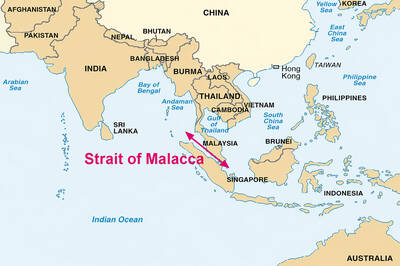
The closure of the Strait of Hormuz has forced policymakers in Asia to face questions over the security of other maritime chokepoints, including the Strait of Malacca, which is the world’s busiest waterway for international trade. WHAT IS THE MALACCA STRAIT? The 900km long Malacca Strait, bounded by Indonesia, Thailand, Malaysia and Singapore, provides the shortest sea route from East Asia to the Middle East and Europe. It carries nearly 22 percent of the world’s maritime trade, according to the Center for Strategic and International Studies (CSIS). This includes oil and gas shipments from the Middle East to the energy-hungry economies of China,

One reason pistachios have taken the food world by storm compared to other nuts is their soft, green color. When ground down into a cream or butter, the green hue __6__ nicely with golden pastries or dark-brown chocolate, making it perfect for Instagram photos and TikTok videos. Their labor-intensive cultivation and __7__ also contribute to their image as a premium ingredient. Thus, buying a pistachio-based product often feels like a __8__ treat. Pistachios also stand out for their distinct flavor and health __9__. They have a subtle, sweet, earthy flavor that goes well with both sweet desserts and

Cameras are everywhere — in our pockets, on our walls and even in space. They capture emotions, preserve history and reflect culture. Through these devices, photography is now essential to modern life, influencing how we perceive ourselves and the world. To understand the root of their power, let’s explore the camera’s remarkable journey. The story begins with the camera obscura, a dark room with a tiny hole. Light passing through the opening projected an inverted image on the opposite wall. Renaissance artists used this principle to paint accurate scenes. However, these images couldn’t be preserved as photographs. That changed

A: This year’s two most anticipated films have finally hit theaters in Taiwan. “Michael” premiered last Wednesday, while “The Devil Wears Prada 2” premiered this Wednesday ahead of its global release. B: Isn’t “Michael” the biopic about the late King of Pop Michael Jackson? A: Yup, it tells the story of Michael’s legendary life, from child star to global icon. And the role is in fact played by his nephew, Jaafar Jackson. B: Michael caused a sensation when touring Taiwan twice in 1993 and 1996. His classic hits, dance moves and music videos reshaped global pop culture at that time. A: I’m gonna


 RSS
RSS