


France’s environment minister has announced a gradual ban on using wild animals in traveling circuses, on keeping dolphins and killer whales in captivity in marine parks and on raising mink on fur farms.
Barbara Pompili, France’s minister of ecological transition, said in a news conference on Tuesday last week that bears, tigers, lions, elephants and other wild animals will no longer be allowed in traveling circuses “in the coming years.” In addition, she said that starting immediately, France’s three marine parks will no longer be able to bring in or breed dolphins and killer whales.
“It is time to open a new era in our relationship with these (wild) animals,” she said, arguing that animal welfare is a priority.

Photo: EPA-EFE 照片:歐新社
Pompili said the measures will also bring an end to mink farming, in which animals are raised for their fur, within the next five years. The ban does not apply to wild animals in other permanent shows and in zoos.
The French government will provide an aid package of more than 8 million euros (US$9.36 million) to help animal shows transition to a new business model.
Around 20 European countries have already banned or limited the presence of wild animals in circuses. In France, many cities already do not allow circuses with wild animal shows to pitch their tents.
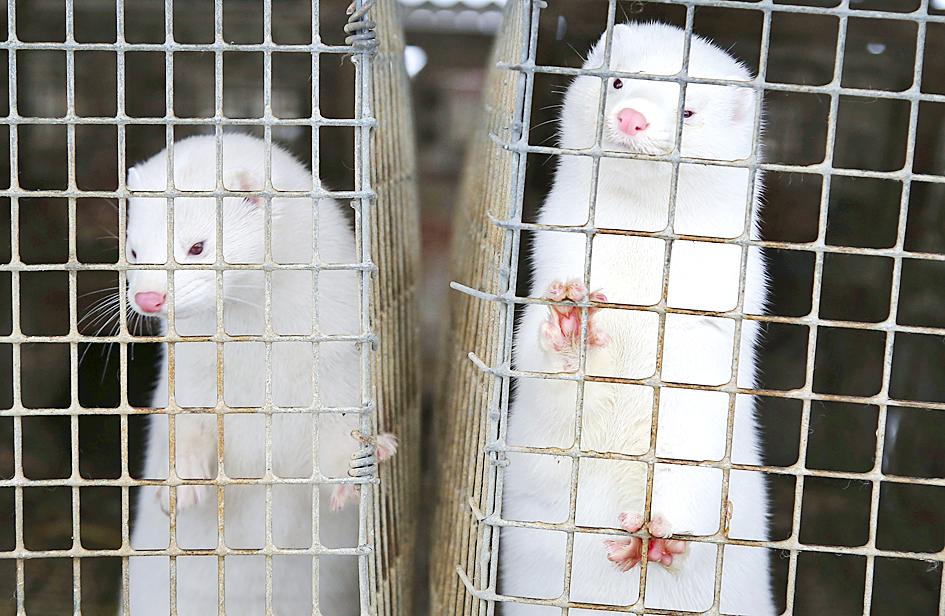
Photo: AP 照片:美聯社
(AP with staff writer)
法國環境部長宣布,將逐步禁止巡迴馬戲團以野生動物進行表演、在海洋公園內圈養海豚和虎鯨,以及在皮草養殖場飼養水貂。
法國生態轉型部部長巴巴拉‧彭皮里上週二在記者會中表示,「未來數年後」馬戲團將不能再有熊、老虎、獅子、大象及其他野生動物。此外,自即日起,法國的三個海洋公園不能再引進或繁殖海豚及虎鯨。
她說:「現在該是為我們與這些(野生)動物的關係開啟新時代的時候了」,她說,動物福利應優先考慮。
彭皮里說,這些措施還包括在未來五年內禁絕水貂養殖──這種養殖場的目的是取貂皮。該禁令並不適用其他常態演出及動物園中之野生動物。
法國政府將提供逾八百萬歐元(合九百三十六萬美元)的支援計劃,以幫助動物表演轉型為新的商業模式。
歐洲約有二十個國家已禁止或限制野生動物在馬戲團出場。在法國,許多城市已不准有野生動物表演的馬戲團前來搭篷。
(台北時報林俐凱編譯)
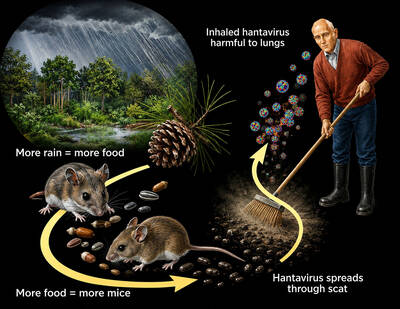
An outbreak aboard a cruise ship of a rare rodent-borne illness called hantavirus has left three passengers dead and sickened others, but global health officials say the risk to the general public remains low because the germ does not easily spread between people. “This is not the next COVID, but it is a serious infectious disease,” said Maria Van Kerkhove, director of epidemic and pandemic preparedness at the World Health Organization (WHO). “Most people will never be exposed to this.” The virus usually spreads when people inhale contaminated residue of rodent droppings. Hantaviruses have been around for centuries and are thought to
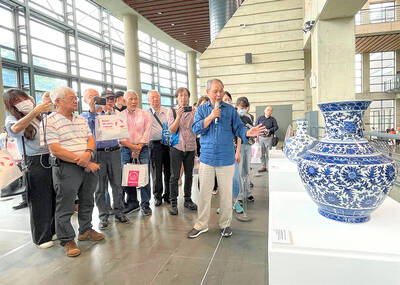
A: Apart from the Danjiang Bridge in New Taipei City, the MRT Sanying Line (Light Blue Line) will open in June. B: Is that the new line leading to Yingge District, the ceramic town? A: Yup, the line will connect the Yingge Ceramics Museum and the Old Streets in Sanxia and Yingge Districts. B: The eastward extension of the Tamsui-Xinyi Line (Red Line) that goes through Taipei’s Xinyi District will also open in June. A: Plus, Taoyuan’s Aerotropolis Line (Green Line) will partially open by the end of the year. In the future, it will connect the

1. 他病了三天。 ˇ He has been sick for three days. χ He has been sick since three days. 註︰這裡現在完成時態 have / has been 表示從過去某一時日到現在的一段時間存在的行為或狀態,與它連用的時間副詞應為 「for +若干時」,如 for a year, for three hours 等,意思是歷時多少。 2. 他自從星期三以來都很忙。 ˇ He has been busy since Wednesday. χ He has been busy from Wednesday. 註︰「自從……以來」,該用 since。說從某一天(某一時刻)到某一天(某一時刻)才用 from,如 from Monday till Friday。 3. 房間角落裡散放著一些零星物件。 ˇ There were some odds and ends lying in the corner of the room. χ There were some odds and ends lying at the corner of the room. 註︰「在房間角落裡」該用介詞 in。例如: He stood in the corner. There is a lamp in the corner of the room. at the corner 指房子外部的拐角。例如: A little boy

A growing green movement allows hotel guests to fund tree planting projects simply by opting out of daily room cleans. This approach turns an ordinary hotel stay into a direct contribution to nature. Founded in the Netherlands, the nonprofit “Hotels for Trees” operates on the principle that one skipped cleaning equals one new tree. It has planted more than 750,000 trees since 2021. Similarly, Sarnia Hotels in Guernsey donates £2 per refused clean. Since 2024, over 3,300 services have been cancelled, raising sufficient money to plant 1,100 native trees and hedgerows. Simplicity has been central to this success.


 RSS
RSS