


From Confederate monuments in the United States to statues of British slave traders, memorials erected in honor of historical figures have become a focus of protests around the world. The death of George Floyd, a black man who died after a white Minneapolis police officer pressed a knee to his neck on May 25, has sparked a reexamination of rigid injustices and inequalities over the centuries underpinning many countries’ histories that often were exalted in stone or bronze.
The rapidly unfolding movement to pull down Confederate monuments around the US has extended to statues of slave traders, imperialists, conquerors and explorers around the world, including Christopher Columbus, Cecil Rhodes and Belgium’s King Leopold II.
Scholars are divided over whether the campaign amounts to erasing history or updating it.
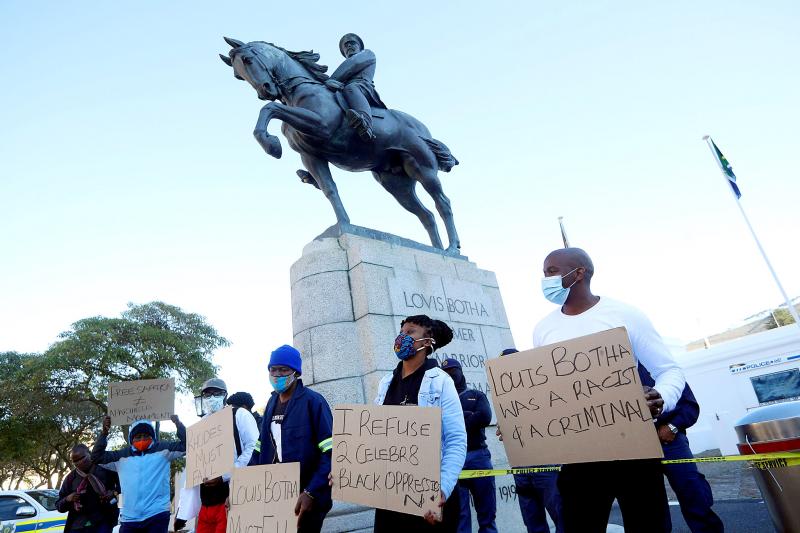
Photo: Reuters 照片:路透
Authorities in London and many other UK cities have announced plans to review all statues, street names and other monuments to see whether they reflect modern values and the country’s current diversity. This is sure to lead to fiery debate.
New Zealand’s fourth-largest city removed a bronze statue of the British naval officer Capt. John Hamilton, the city’s namesake, on June 12, a day after a Maori tribe asked for the statue be taken down and one Maori elder threatened to tear it down himself. The city of Hamilton said it was clear the statue of the man accused of killing indigenous Maori people in the 1860s would be vandalized. The city has no plans to change its name.
Across Belgium, statues of Leopold II have been defaced in half a dozen cities because of the king’s brutal rule over the Congo, where more than a century ago he forced multitudes into slavery to extract rubber, ivory and other resources for his own profit. Experts say he left as many as 10 million dead.
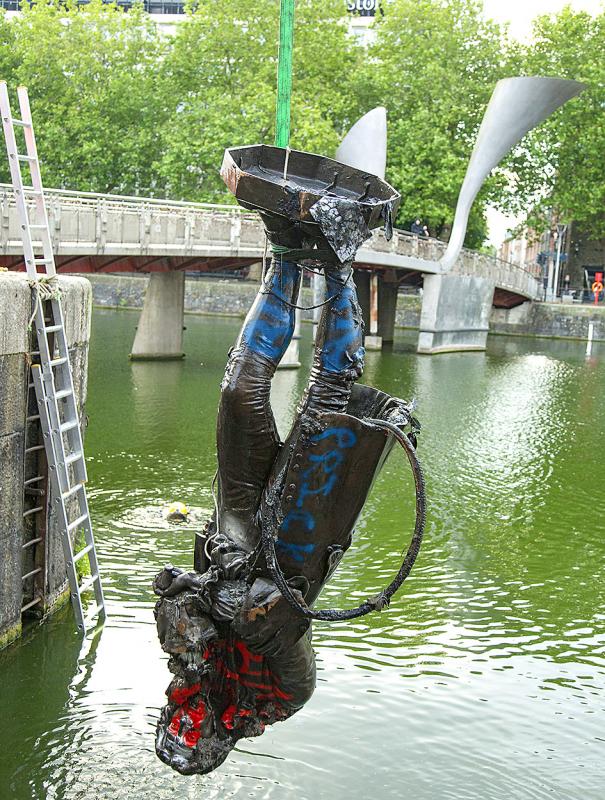
Photo: AP 照片:美聯社
“The Germans would not get it into their head to erect statues of Hitler and cheer them,” said Mireille-Tsheusi Robert, an activist in Congo who wants Leopold statues removed from Belgian cities. “For us, Leopold has committed a genocide.”
In the US, the death of Floyd has led to an all-out effort to remove symbols of the Confederacy and slavery.
On the night of June 10, protesters pulled down a century-old statue of Confederate president Jefferson Davis in Richmond, Virginia, the former capital of the Confederacy.
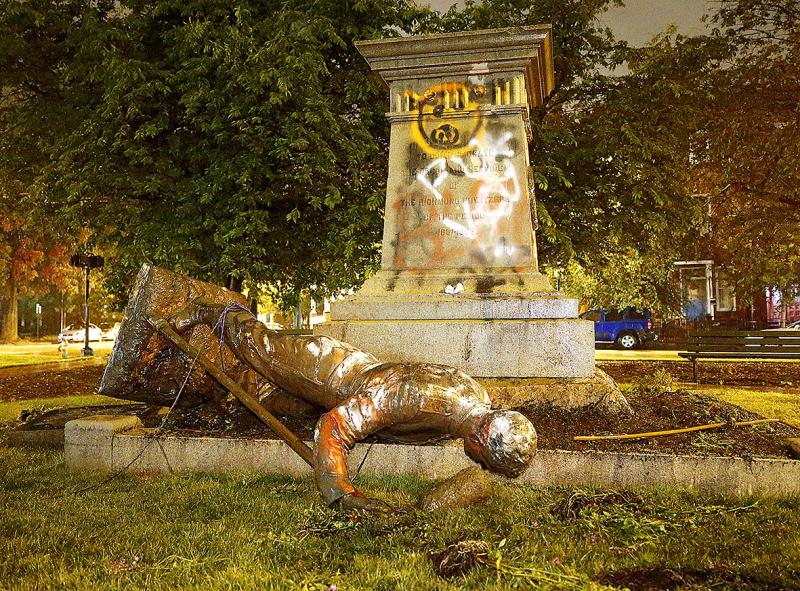
Photo: AP 照片:美聯社
In Washington, House Speaker Nancy Pelosi said it is time to remove statues of Confederate figures from the US Capitol and take their names off military bases such as Fort Bragg, Fort Benning and Fort Hood.
Supporters of Confederate monuments have argued that they are important reminders of history; opponents contend they glorify those who went to war against the US to preserve slavery.
The Davis monument and many others across the south were erected decades after the Civil War during the Jim Crow era, when states imposed tough new segregation laws, and during the Lost Cause movement, in which historians and others sought to recast the south’s rebellion as a noble undertaking, fought to defend not slavery but states’ rights.
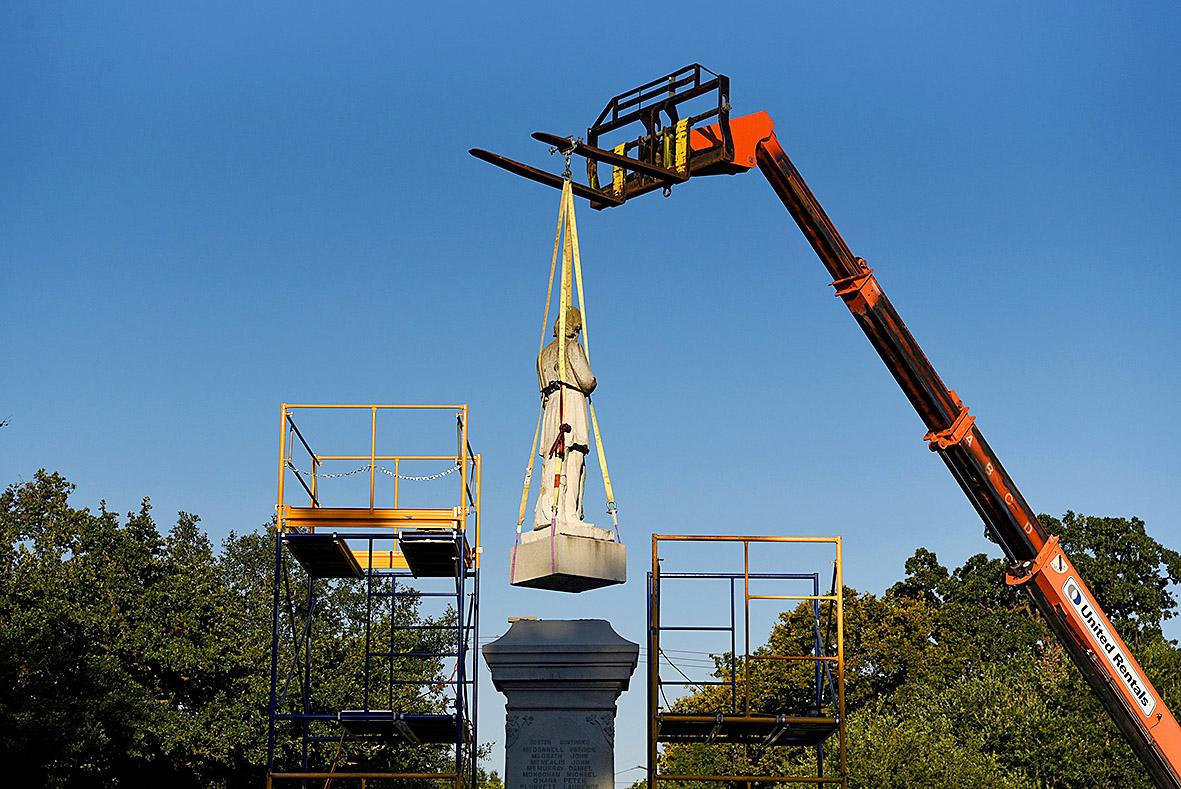
Photo: Reuters 照片:路透
(AP)
從美國的南方聯盟紀念像到英國販奴者之雕像,尊崇歷史人物的紀念物已成為全世界抗議活動的焦點。五月二十五日,美國一位黑人喬治‧弗洛伊德被明尼阿波利斯市的白人警官以膝蓋壓制頸部致死,引發了對數百年來根深柢固之不公不義的重新審視──在許多國家這些不公不義鞏固了其歷史,而這些歷史常以石雕或青銅雕塑來頌揚。
席捲美國各地的南方聯盟紀念物拆除行動已擴及各國奴隸販子、帝國主義者、征服者與探險家之雕像,包括克里斯多福‧哥倫布、塞西爾‧羅德斯和比利時國王利奧波德二世。
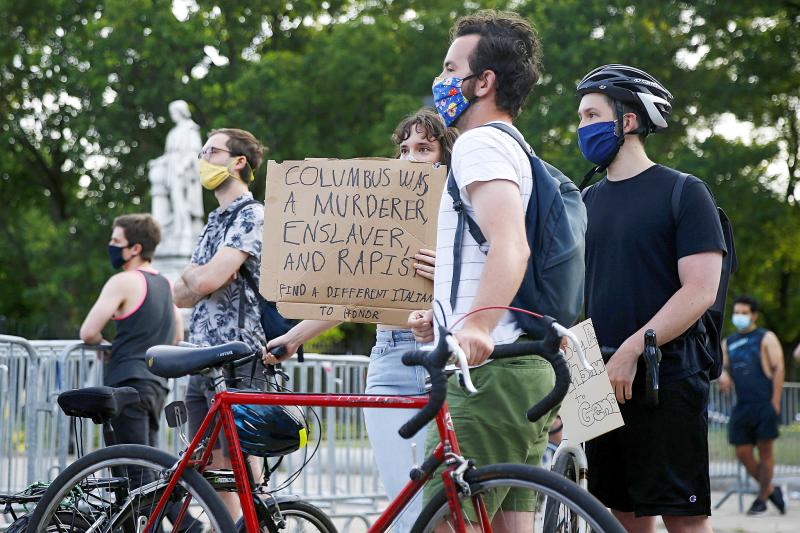
Photo: AP 照片:美聯社
此運動究竟是抹除歷史抑或糾正歷史,學者們意見分歧。
倫敦和英國許多城市的政府已宣布計畫要檢討所有雕像、街道名稱和其他紀念物,以檢視它們是否反映現代價值及英國現今之多樣性。這肯定會引起激烈的辯論。
紐西蘭第四大城漢密頓市在六月十二日拆除了英國海軍軍官約翰‧漢密頓上校之銅像,這是在毛利部落要求拆除雕像,且一位毛利長老揚言要自行拆除後之次日。漢密爾頓市表示,被控在一八六?年代殺戮毛利原住民的漢密爾頓,其雕像顯然將被破壞。漢密頓市並無更名之計畫。
比利時國王利奧波德二世之雕像在六個城市遭到污損,因他對剛果的殘酷統治。一個多世紀前,利奧波德二世為求一己之利益,在剛果強迫民眾奴役,以榨取橡膠、象牙及其他資源。專家說他造成多達一千萬人死亡。
剛果活動人士米海耶-楚西‧侯貝說:「德國人不會想要樹立希特勒的雕像來鼓舞他們」,她希望比利時的城市拆除利奧波德雕像,「對我們而言,利奧波德犯下了種族滅絕的罪行」。
在美國,弗洛伊德之死導致人們力圖全面去除南方聯盟及奴隸制的象徵。
在過去的南方聯盟首府維吉尼亞州里奇蒙市,抗議人士於六月十日晚間推倒了一座有百年歷史的南方聯盟總統杰佛遜‧戴維斯雕像。
美國眾議院議長南希‧裴洛西在華盛頓表示,現在是撤除美國國會大廈中南方聯盟人物雕像的時候了,也該讓軍事基地與這些名字脫鉤了,例如布雷格堡、本寧堡及胡德堡。
南方聯盟紀念物的支持者認為,它們是提示歷史記憶的重要記號。反對者則堅決主張,這些紀念物美化了那些為維護奴隸制而與美國作戰的人。
戴維斯雕像及美國南方許多紀念雕像,是在美國南北戰爭後數十年樹立的,當時南方各州實施新的、嚴格的隔離法——吉姆‧克勞法。在「敗局命定」(Lost Cause)的文學書寫運動中,歷史學家和其他人試圖將南方的叛亂改寫為崇高的事業,是為捍衛州的權利,而非為捍衛奴隸制而戰鬥。
(台北時報林俐凱編譯)
FOLLOW UP 讀後練習
Questions
1. Name several countries that are involved in this wave of reassessing their historical figures and the injustices and inequalities such figures represent.
2. Why do some people honor slave traders, imperialists, conquerors and explorers as heroes, while others condemn them as killers?
3. Look up a brief history of the American Civil War (1861-1865) and use it to explain racial tensions in the US today.
4. In many countries, statues, road names and other monuments are named after certain historical figures. Provide some examples from your country. Is there a case for removing statues or renaming roads?
(Lin Lee-kai, Taipei Times)
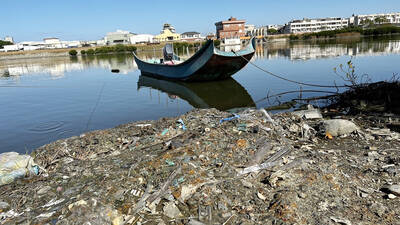
Many consumers are guilty of filling drawers or closets with old laptops, cellphones, fitness trackers and other electronic devices once they are no longer needed. It’s hard to know where to recycle such items, or it seems costly and inconvenient to do so. The world generates millions of tons of electronic waste — also called e-waste — each year. According to the UN’s most recent estimate, people worldwide produced 62 million metric tons of e-waste in 2022, and only about 22 percent of it was properly recycled. The US’ Environmental Protection Agency estimates that less than a quarter of e-waste is

You’re sitting in class when a classmate asks to borrow a pencil. It seems like a small favor, so you agree without hesitation. The following week, the same classmate asks to share your notes. Later, they request help with a group project. You agree each time — after all, you helped out the first time — but before you know it, it has become automatic. This scenario demonstrates the “foot-in-the-door technique,” a psychological concept that shows how agreeing to small, acceptable demands makes it easier to accept larger ones later on. The name for this strategy comes from door-to-door

A: The four-day Tomb Sweeping Day long weekend begins Friday and will run until Monday. Are you going to sweep your ancestors’ tombs? B: I did in advance last weekend, so I can go to Kaohsiung to see the musical “The Phantom of the Opera.” A: Wow, is “Phantom” touring Taiwan again? It debuted in 1986, so this year marks the 40th anniversary of the show. B: And it’s not just touring Kaohsiung starting March 31, but also Taipei starting April 21 and Taichung starting May 26. A: “Phantom” is one of the world’s Four Major Musicals. I’ve seen all of them, except “Les

Dos & Don’ts — 想想看,這句話英語該怎麼說? 1. 我們很早到達電影院。 ˇ We arrived at the theater very early. χ We arrived the theater very early. 註︰arrive 為不及物動詞,後面如果有受詞要用 at 或 in。例如:They arrived in Taipei yesterday.。一般大地方,如國家、省、大城市等前面用 in,凡小地方城鎮、學校等則用 at。 2. 開車半小時以後,我們到達了海灘。 ˇ After half an hour’s drive, we got to the beach. χ After half an hour’s drive, we got the beach. 註︰come, go, get(來、去、到達)某地時,在表示地點的名詞前面應該用 to,如 go to school, go to Taipei, come to Shanghai 等。如果這些動詞後面所跟的是 here, there, home 等副詞,則不用 to。 3. 明天我會回辦公室。 ˇ I will be back in the office tomorrow. χ I will be back to office tomorrow. 註︰to be back 一語裡的 back 是副詞,不是介詞,所以後面要用 at (the market) 或 in (the office)。 假如假期結束,要回學校上課了則可說: ? Kids will be back


 RSS
RSS