


The end of an era has finally come for the world’s oldest, biggest — and arguably most famous — fish market.
On Oct. 6, Japan’s Tsukiji fish market began the move from its current spot near the upmarket Tokyo shopping area of Ginza to a location that used to house a gasworks close to Tokyo Bay, a move that had been under discussion since 2001. The new market opened its doors on Oct. 11.
On a typical day, about 1,628 tons of seafood passed through Tsukiji, with a value of about 1.6 billion yen (US$14 million). The bustling inner-city market carried about 480 types of seafood and 270 types of other produce.
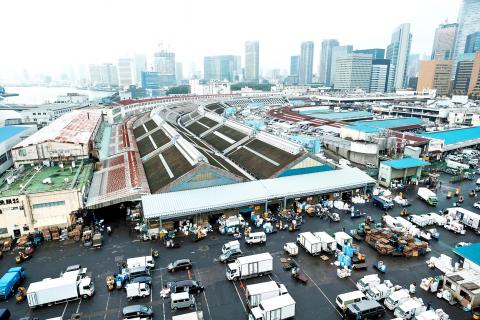
Photo: AFP
照片:法新社
The history of the Tsukiji area could be traced back to 1657, when the government reclaimed land along Tokyo Bay and named it “Tsukiji” — literally translated as “constructed land.” In 1923 the Great Kanto Earthquake destroyed much of central Tokyo, along with the Nihonbashi fish market. In 1935 the market was relocated to its recent site near Ginza, where it transformed the Tsukiji area into a bustling town.
The market was one of the top tourist destinations in Tokyo, attracting as many as 42,000 visitors a day. Each year the symbolic New Year auction often attracted media attention, as buyers battled to outbid each other. Bidders used hand signals to dictate their price, with the fish usually selling within seconds.
Kiyomura Corp., whose owner Kiyoshi Kimura runs the Sushi Zanmai restaurant chain, was frequently the highest bidder. The most expensive tuna sold at the market went to Kiyomura in 2013 for 155.4 million yen (US$1.36 million).
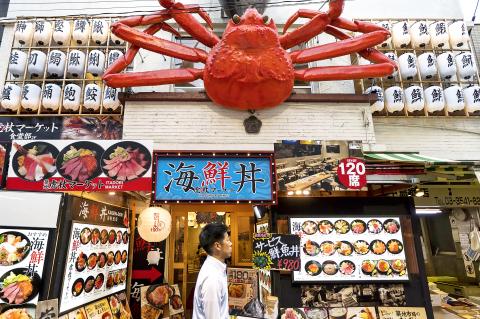
Photo: Bloomberg
照片:彭博社
In August 2017, a fire broke out at Tsukiji, burning for 15 hours before it was extinguished, according to media reports. Safety concerns were cited as a key reason to push through the move to a new location.
Moving the market proved no easy task. Tokyo Metropolitan Government first decided on the relocation to Tokyo Bay in 2001, but concerns over tainted soil at the new site and the cost of the move led to more than a decade and a half of delays.
Tsukiji wasn’t just a place to buy fish. The outer market shops and vendors sold everything from dried foods to kitchenware. Visitors wandered in search of soba and ramen noodle restaurants, and could satisfy a sweet tooth with Japanese confectionery.
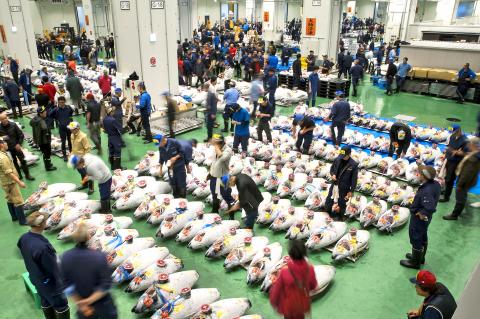
Photo: Bloomberg
照片:彭博社
Not everyone was happy about the move to Toyosu. While some shop owners decided to relocate to the new site, others chose to close down.
(Bloomberg)
世界上最古老、最大──且可說是最著名的魚貨市場,終於面臨其時代的終結。
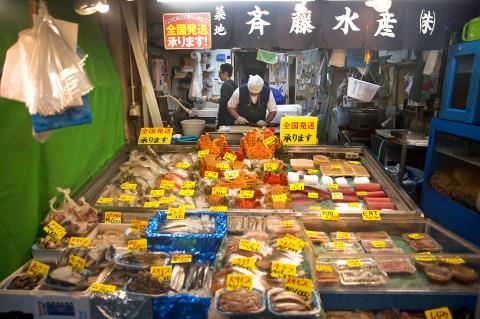
Photo: Bloomberg
照片:彭博社
十月六日,日本的築地市場由東京銀座高檔購物區附近的舊址,搬遷到東京灣附近原為瓦斯廠的新址。築地市場的搬遷,早在二○○一年便已開始研議。市場新址已於十月十一日開張。
一般來說,築地市場每天經手約一千六百二十八噸、價值約十六億日元(一千四百萬美元)的海產。這個位於市中心的熱鬧市場,販售約四百八十種海產,以及其他兩百七十種產品。
築地地區的歷史可追溯到西元一六五七年,當時政府在東京灣沿岸填海造地,並將之命名為「築地」──字面翻譯為「建造土地」。一九二三年關東大地震摧毀了東京市中心很多地方,包括位於日本橋的魚貨市場。一九三五年,魚市場搬遷到銀座附近的築地,將築地變成了熱鬧的地區。
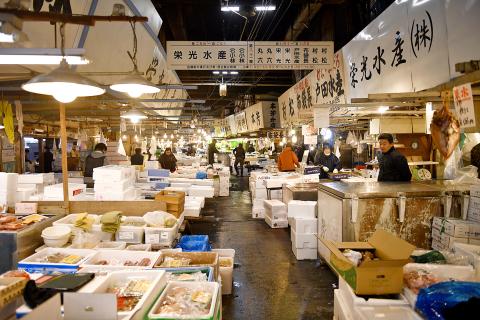
Photo: EPA
照片:歐新社
築地市場是東京最熱門的旅遊景點之一,每天吸引多達四萬兩千名遊客。每年最具象徵意義的新年拍賣會上,買家爭相競標的盛況,常引起媒體關注。競標者用手勢來表示所出的價,魚通常在幾秒內就賣出。
出最高價的人常是木村清,他是喜代村株式會社的老闆,經營「三昧壽司」連鎖餐廳。築地市場所賣出的最高價鮪魚,是在二○一三年以一億五千五百四十萬日元(一百三十六萬美元)的價格,賣給了喜代村株式會社。
二○一七年八月,築地市場發生了火災,據媒體報導,大火延燒了十五小時才被撲滅。安全問題是促成築地市場搬遷的關鍵原因。
事實證明,市場的搬遷並非易事。東京都政府原在二○○一年已決定把魚市場搬遷到東京灣,但對新址土壤汙染和搬遷成本的疑慮,使得搬遷計畫延宕逾十五年。
築地不僅僅是買魚的地方。場外市場的店鋪和小販所賣的,從乾貨到廚具,應有盡有。遊客漫步其中,可找到蕎麥麵及拉麵餐廳,愛吃甜食的人,也可以買得到日式糖果糕點。
不是每個人都樂意搬到豐洲。有些店主決定搬遷到新的魚市場,但也有些店家選擇結束營業。
(台北時報林俐凱編譯)
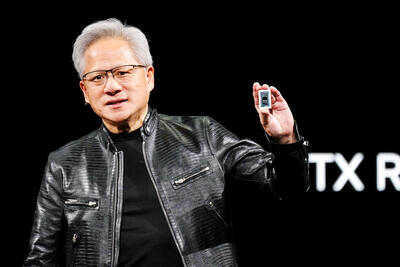
Laptop chipmakers such as Intel and AMD should be worried about their new rival Nvidia, experts say, after the US hardware titan announced on June 1 a push into the personal computer market. But despite Nvidia boss Jensen Huang’s assertion that homes will soon contain AI supercomputers, the race is still on to develop an ubiquitous, one-size-fits-all intelligent device. Huang vowed to “reinvent the PC” with Nvidia’s powerful chip for Windows machines, calling it “as big of a deal as the reinvention of the phone into what we now know as the smartphone.” Su Lian-jye, a chief analyst at Omdia,

Sometimes the most revolutionary inventions emerge from apparent failures. The Post-it Note, now found in offices and homes worldwide, originated from a “failed” adhesive developed by a 3M scientist, Spencer Silver, in 1968. While attempting to create an ultra-strong glue, Silver instead produced an unusual adhesive that stuck lightly to surfaces and could be peeled off without leaving marks. For years, this seemingly useless invention sat unused, with colleagues questioning whether it had any practical purpose and dismissing it as a laboratory curiosity. The breakthrough came in 1974 when Silver’s colleague, Art Fry, experienced a frustrating moment during choir practice. His
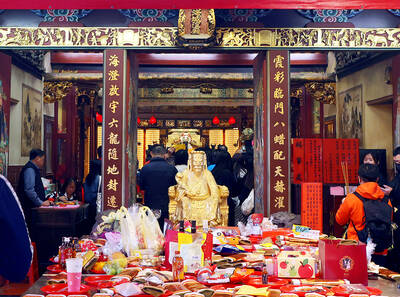
A: The Taipei Xiahai City God Temple’s cultural festival runs from Saturday to early July. Do you want to go? B: In addition to the City God and his wife, the temple worships dozens of deities — including the Matchmaker God,“Yuexia Laoren” (“Yue Lao.”), literally “old man under the moon.” So are you going to pray for a match? A: You got it. The Matchmaker God matches people together, just like a Chinese Cupid. My friend went to worship the matchmaker and met “Mr. Right” that very same day. B: It’s that effective? Can my gay friends pray to

1. 部長由總統任命,直接對總統負責。 ˇ The Secretary serves at the pleasure of the President and is responsible directly to the President. χ The Secretary serves at the pleasure of the President and is responsible directly for the President. 註:「對人負責」,用 to be responsible to;說「對事負責」,用 to be responsible for。例如: The government is responsible to the people. The government is responsible for the welfare of the people. 合起來,可以說 The government is responsible to the people for their welfare.。serve at the pleasure of 也可以說 is appointed by。 2. 有家教老師輔導,露西考上好大學。 ˇ With the help of a tutor, Lucie got into a good college. χ Under the help of a tutor, Lucie got into a


 RSS
RSS