


The Taoyuan Agriculture Expo opened on April 22 and will run until Sunday next week as a trial run ahead of next year’s official opening. Vice President Chen Chien-jen and former vice president Annette Lu both attended the opening ceremony. Chen applauded the expo for showing off Taiwan’s “circular economy,” green energy and elevating the agricultural industry to the next level. Chen also warmly praised the expo’s eight special exhibition areas, saying one visit is not enough and the expo merits a repeat visit.
The expo’s exhibition space comprises approximately 30 hectares and is located in Taoyuan’s Sinwu District. There are eight main areas within the expo: Landscaping, Recycling, Aboriginal Shelter, Smiley Ranch, Rural Regeneration, Rice Culture, Education Zone and Hakka Craftwork which exhibit the expo’s four main themes: the “circular economy,” landscape art, green living and technological agriculture.
Chen says Taoyuan has already begun a new era as a science and technology city by setting up office space to create an “Asian Silicon Valley” and carrying out research and development into new ideas for the tech industry. Hosting the Taoyuan Agriculture Expo — with its focus on the “circular economy” and green energy — will undoubtedly play an important role in President Tsai Ing-wen’s plan to develop the nation’s creative industries, adds Chen.
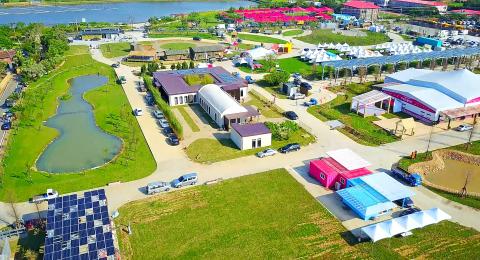
Photo: Chou Min-hung, Liberty Times
照片:自由時報記者周敏鴻
(Liberty Times, translated by Edward Jones)
桃園農業博覽會從四月二十二日起到五月十四日試營運,明年正式營運。副總統陳建仁、前副總統呂秀蓮皆受邀參加開幕典禮。陳建仁盛讚農業博覽會展現循環經濟與綠色能源,把台灣農業帶到更高層次,並誇獎桃園農業博覽會八大展區都很有特色,來一次不夠,建議民眾多來幾次。
博覽會展區位於桃園的新屋區,約卅公頃,八大展區包括植物地景、環保再生、原民造屋、微笑牧場、農村再生、米食文化、教育專區、客家工藝,展現循環經濟、地景藝術、綠色生活與科技農業的四大特色。
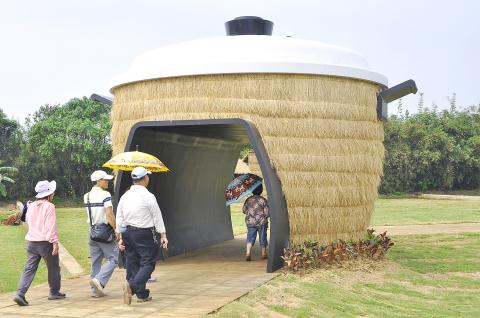
Photo: Lee Jung-Ping, Liberty Times
照片:自由時報記者李容萍
陳建仁說,桃園市已進入科技城的時代,從設置亞洲矽谷辦公室、研發科技工業創新元素、舉辦農業博覽會展現循環經濟與綠色能源,未來在蔡英文總統的創新產業擘畫中,絕對會扮演重要的角色。
(自由時報記者周敏鴻)

A: Wow, US climber Alex Honnold has announced that he’s going to free-climb Taipei 101 on Jan. 24. And the challenge, titled “Skyscraper Live,” will be broadcast worldwide live on Netflix at 9am. B: Oh my goodness, Taipei 101 is the world’s tallest green building. Is he crazy? A: Honnold is actually the climber in the 2019 film “Free Solo” that won an Oscar for best documentary, and was directed by Taiwanese-American Jimmy Chin and his wife. He’s a legendary climber. B: Didn’t Alain Robert, “the French Spiderman,” also attempt to scale Taipei 101 in 2004? A: Yes, but
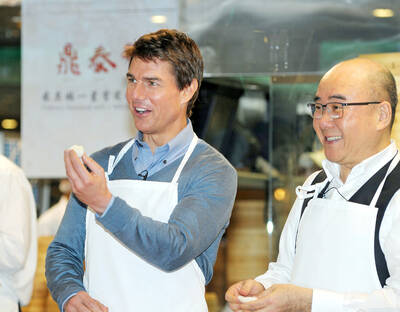
A: There are always adventurers who want to conquer Taipei 101 as a world-class landmark. Didn’t someone once parachute from the top of it? B: Yeah, that’s right. Austrian extreme sportsman Felix Baumgartner once parachuted from the rooftop observation deck in 2007 without permission. He died earlier last year in a powered paragliding crash at the age of 56. A: Hollywood superstar Tom Cruise also almost jumped off Taipei 101 for “Mission Impossible 3.” B: What? But I didn’t see the building in the movie. A: The news says that the film’s producers applied to the Taipei City
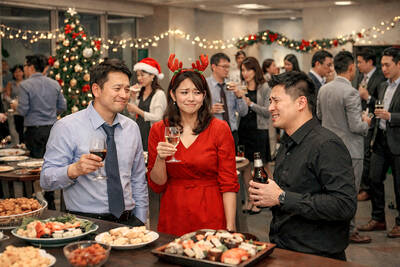
For many introverts, shy individuals and people with social anxiety, mingling at parties is often draining or arouses uncomfortable emotions. The internal debate about whether or not to attend large get-togethers can get especially intense during the holiday season, a time when many workplaces celebrate with cocktail hours, gift exchanges and other forms of organized fun. “Some people are just not party people,” City University of New York social work professor Laura MacLeod said. “With a workplace holiday party, there’s a pressure to be very happy and excited. It’s the end of the year, it’s the holidays, we’re all feeling grand.
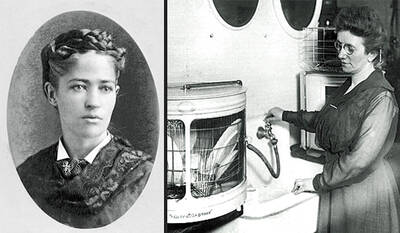
Twelve dinner guests have just left your house, and now a tower of greasy plates stares back at you mockingly. Your hands are already wrinkling as you think about scrubbing each dish by hand. This nightmare bothered households for centuries until inventors in the 19th century tried to solve the problem. The first mechanical dishwashers, created in the 1850s, were wooden machines with hand cranks that splashed water over dishes. Unfortunately, these early devices were unreliable and often damaged delicate items. The real breakthrough came in the 1880s thanks to Josephine Cochrane, a wealthy American socialite. According to her own account,


 RSS
RSS