


No longer will you have to spend time focusing shots. Researchers at National Taiwan University and National Tsing Hua University have spent the last two years developing a light-field camera chip that can record all the light in the scene at the moment of capture, and the photographer can then adjust the focus and the depth of field as they please in post production. In the future, this could also be used in mobile devices like phones, so that everyone can be an expert photographer.
National Taiwan University vice president and engineering professor Chen Liang-gee and National Tsing Hua University assistant professor Huang Chao-tsung formed a research team together and spent two years researching light field chips in depth, successfully developing 5D light-field imaging to capture depth within the scene. Huang says that the chip processor can record 25 angles simultaneously, “just like the compound eye of a fly” and, using computer calculations, attain the same effect as the human eye.
Chen believes that the light-field chip overcomes the shortcomings of cameras only being able to record at a single plane of focus with a set depth of field. By recording all of the light at one time, the photographer can take their time adjusting the focus and depth of field as they want back home. In addition, the chip reduces the need for other camera components, saving at least a half to a third of space, so that in the future digital cameras and smart phones can be even slimmer. Even though changeable focus lenses are still being developed, Taiwan is a global leader in chip processor technology, and this has already created a buzz in Silicon Valley in the US. In the future, it will spark a new photographic revolution.
(Liberty Times, translated by Paul Cooper)
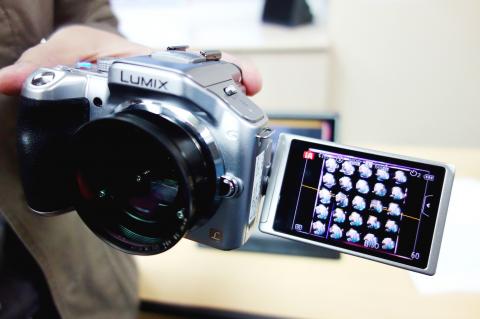
Photo: Wu Po-hsuan, Liberty Times
照片:自由時報記者吳柏軒
以後拍照不用對焦對半天了。台灣大學與清華大學花兩年研發「光場相機晶片」,能在拍照當下紀錄現場所有光線,攝影師後製便可任意調整照片的焦距及景深等,未來能運用到手機等行動裝置,讓人人都可化身攝影高手。
台大副校長暨電機系教授陳良基與清華大學助理教授黃朝宗共組的研究團隊,花兩年時間深入研究光場晶片,成功研發出以五視角光場視訊,取得場景深度,黃朝宗說:「就像是蒼蠅的複眼一樣」晶片處理器能同時記錄二十五個角度,並以電腦運算達到與人眼同樣功能。
陳良基認為,光場晶片突破以前相機僅能記錄單一焦段、景深的缺點,一次錄下所有光線效果,攝影者回家可以慢慢調整想要的焦點或景深,且晶片壓縮了其他相機元件,至少省下一半到三分之一的空間,可讓未來數位相機、智慧型手機等更輕薄,雖改變焦段的鏡頭已有研發,但晶片處理器的技術台灣領先全球,已引起美國矽谷熱切關注,未來將引爆攝影新革命。
(自由時報記者吳柏軒)

The debate surrounding Taipower’s recent corporate identity reboot has gone well beyond the design community. The controversy began after Taipower replaced the familiar “Taiwan Power Company” wording — widely regarded as the calligraphy of Yu You-ren (1879-1964), former Control Yuan president and master calligrapher — with a modern logotype by designer Aaron Nieh’s team, Aaron Nieh Workshop. Taipower said the change was not a wholesale replacement of old signage, but an “optimization of its identity system,” aimed at meeting the needs of digital media, electronic bills, apps, social media graphics and various small-format applications. Existing physical markings, such as building

Since 2005, the third Monday in January has come to be known as “Blue Monday.” In other words, that day is believed to be the most depressing day of the year. This concept seems logical at first. After all, Monday marks the start of the school or workweek after two days of rest and fun. Also, blue is a color that is often associated with sadness. Furthermore, in many parts of the world, January is a time when the weather is cold, rainy, and gloomy. But is there any scientific proof that this January day is truly sadder than any of

Continued from yesterday(延續自昨日) https://www.taipeitimes.com/News/lang For the most part, the idea of “Blue Monday” has been rejected as a myth. Some mental health experts also say there is a danger in labeling a certain day as the most depressing time of the entire year. Some argue that if people expect to feel sadder on the third Monday in January, this belief alone may increase their anxiety. One group that is worried about the negative effect of believing in Blue Monday is Samaritans. A mental health charity based in the UK, Samaritans is working to turn Blue Monday into “Brew Monday.” In this
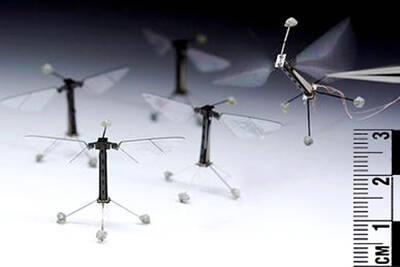
As bee populations around the world continue to decline at an alarming rate, scientists are developing an innovative solution: robotic bees. Recent advances at research institutions like Massachusetts Institute of Technology (MIT) in the US have produced tiny flying robots capable of performing pollination tasks similar to those of real bees. These tiny machines represent an impressive technological achievement. MIT’s latest models can hover in the air for over 1,000 seconds and perform complex movements, demonstrating the agility needed for successful pollination. The robots are designed to mimic the flight patterns of natural bees, offering potential support to agriculture


 RSS
RSS