


A gorilla has died in Prague Zoo after accidentally hanging himself with a climbing rope, zoo officials said on July 27. The zoo said in a statement that 5-year-old Tatu was found hanging with a rope around his neck Friday morning in a sleeping room. Spokesman Michal Stastny said all attempts to revive Tatu failed. He said there were no cameras in the room and it is not clear exactly what happened.
Mammals curator Pavel Brandl said Tatu likely unbraided one of the dozens of ropes the gorillas use in their pavilion for climbing and put a strand around his neck before hanging himself. “It was an accident,” Brandl said.
Brandl said another gorilla, Kamba, appeared to be trying to help Tatu when zookeepers arrived but, “it is hard to say what exactly she was doing.” Director Miroslav Bobek said the death was the most tragic event at the zoo since flooding in 2002 killed more than 100 animals.
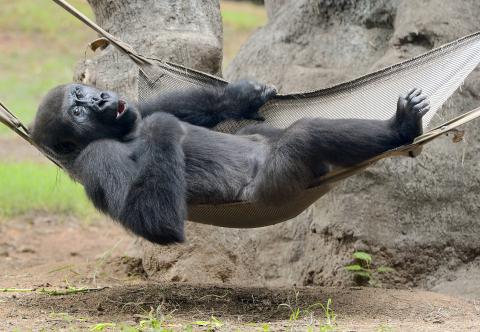
Photo: EPA
照片:歐新社
The zoo still has six gorillas, and they are among the most popular animals there. Tens of thousands of people watched Tatu’s birth online on May 30, 2007.
(AP)
動物園官員七月二十七日表示,布拉格動物園一隻大猩猩意外以攀爬繩吊死自己。園方在聲明中表示,五歲大的「塔圖」七月二十七日上午被發現在一間臥室上吊死亡。發言人史塔斯特尼說,所有挽救塔圖的嘗試都失敗。他說,房間裡沒有攝影機,不清楚事情如何發生。
哺乳類館館長布蘭德爾說,塔圖可能是解開數十條攀爬繩的其中一條,繞在頸部吊死自己。布蘭德說:「這是意外。」
他說,當動物管理員趕到時,另一隻大猩猩「康巴」似乎有試著幫塔圖,不過「很難說她到底在做什麼」。動物園園長柏貝克說,這是二○○二年的洪水淹死這座動物園一百多隻動物後,園內發生的最悲慘事件。
布拉格動物園還有六隻大猩猩,牠們是園區人氣最高的動物之一。塔圖二○○七年五月三十日出生時,有數以萬計的人透過網路觀看實況。
(美聯社/翻譯:自由時報國際新聞中心)

Have you ever found yourself desperately feeding coins into a claw machine just because you’ve already spent so much trying to win that stuffed animal? Or maybe you’ve continued watching a boring movie simply because you already paid for the ticket? If so, you’ve experienced the “sunk cost fallacy.” A sunk cost refers to time, money or effort that has already been spent and cannot be recovered. This psychological trap is surprisingly common. You might keep playing a video game you no longer enjoy because you’ve invested countless hours in building your character, or maintain a toxic friendship because you’ve known

A: Which TV drama series have been global hits so far this year? B: The US drama “Stranger Things 5,” South Korean drama “Can This Love Be Translated?” and Chinese megahit “Pursuit of Jade” are all popular lately. A: Isn’t “Pursuit of Jade” the costume idol drama about the romance between a charming marquis and a pig-slaughterer? Actor Zhang Linghe and actress Tian Xiwei are both so attractive. B: Plus, Netflix’s Korean-Japanese gay romance drama “Soul Mate” — starring Korea’s Ok Taec-yeon and Japan’s Hayato Isomura — is set to premiere in May. A: These hit international dramas
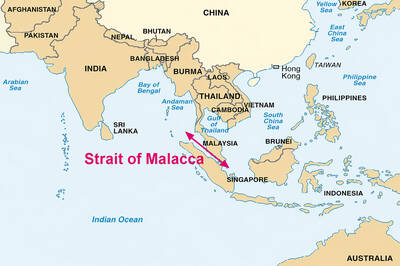
The closure of the Strait of Hormuz has forced policymakers in Asia to face questions over the security of other maritime chokepoints, including the Strait of Malacca, which is the world’s busiest waterway for international trade. WHAT IS THE MALACCA STRAIT? The 900km long Malacca Strait, bounded by Indonesia, Thailand, Malaysia and Singapore, provides the shortest sea route from East Asia to the Middle East and Europe. It carries nearly 22 percent of the world’s maritime trade, according to the Center for Strategic and International Studies (CSIS). This includes oil and gas shipments from the Middle East to the energy-hungry economies of China,

It seems like every year, new foods or drinks start trending and suddenly show up everywhere. A decade ago, avocado __1__ restaurant menus, while oat milk became the must-have addition to your coffee in cafes around five years back. The latest trend to hit this list is the pistachio. This flavorful green nut now features in everything from chocolate bars to Indian curries. While pistachios have long played a central role in certain regional cuisines, their recent global __2__ can be traced to Dubai. There, a specialty chocolate shop went __3__ on TikTok for one of its chocolate bars


 RSS
RSS