


The modern person demands everything to be as quick as possible. People are using machines to make tea because they are more concerned about quantity and efficiency than the traditional process of making it. The traditional process, however, possesses its own special rhythm and aroma, but is slowly disappearing from modern life. This year Meimen Qigong Culture Center’s Meimen Tea Cafe in Taipei has invited Li Chao-chieh, a renowned tea expert, to give lessons on the traditional art of making tea. It is hoping to raise the level of growing, making and drinking tea to that of wine tasting in Europe.
Liang Ya-chung, president of the Dashu Association, took part in this year’s tea-making events to gain a better understanding of the meticulous process of tea-making. He says that Li, who has 30 years of experience in making tea, follows traditional tea-making methods very closely, which are very time consuming and require a lot of effort, for example, understanding how to cultivate Camellia sinensis bushes, as well as the plucking, withering, oxidation, disruption, fixation, bruising, rolling, and sweltering of tealeaves, all of which are carried out in scrupulous detail.
With traditional tea-making processes, the daily weather — including humidity and temperature — must be taken into account during every step of the process. Sight, smell, and touch are also used during the process to determine the tealeaves’ level of oxidization and when to proceed to the next step, which is how you get rid of weed-like odors, and unwanted flavors, and ensure that the fragrant aromas and abundant nutrients of the tealeaves are preserved.
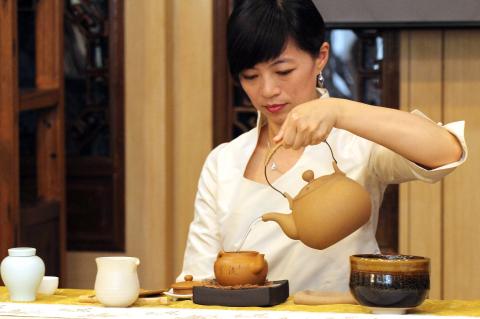
Photo: Weng Yu-huang, Liberty Times
照片:自由時報記者翁聿煌
Tea aficionados will usually tell you that really great tea will not keep you up at night or cause an upset stomach, and that it can be brewed several times without losing its flavor.
Liang says Asians have been drinking tea for thousands of years, and that the history of tea drinking culture in Asia is just as rich as that of the wine drinking culture of the West. On the other hand, the West has developed a wine tasting culture that respects the cultivation and harvesting of grapes, the wine-making process, the characteristics of wine produced in different regions and years, and even have a system for critiquing and comparing them. The similarly meticulous processes involved in the art of tea, however, have yet to receive the proper respect they deserve, Liang says.
In today’s industrialized and commercialized societies everything is so fast-paced, and tea-making processes now require the efficiency of mechanical mass production. Young people typically drink the bottled teas that are found in convenience store refrigerators, which is lamentable because it makes preserving the values of traditional tea-drinking cultures extremely difficult.
(Liberty Times, Translated by Kyle Jeffcoat)
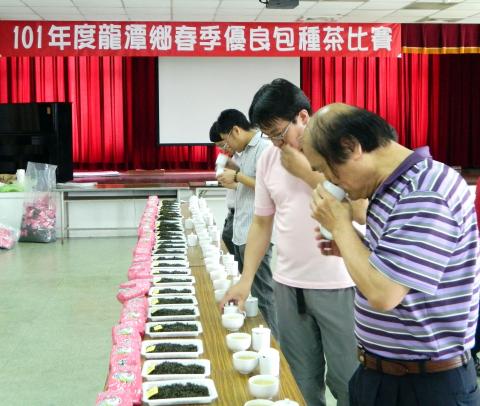
Photo: Shen Chi-chang, Liberty Times
照片:自由時報記者沈繼昌
現代人凡事求快,連製茶也使用機器講究大量與效率,但是就漸漸少了傳統工序製作的韻味與香氣。台北市梅門一氣流行養生學苑的「梅門飲居」今年邀請國內的製茶達人李兆杰,傳授手製茶的技藝,也希望將種茶、製茶與喝茶的品味,能提升至歐洲人品酒的層次。
大樹協會理事長梁亞忠今年參加梅門飲居的手製茶之旅,對傳統茶的嚴謹製作態度有更深的認識。他指出,擁有卅年製茶經驗的李兆杰師傅,謹守的傳統製茶技藝耗時費工,從茶樹的栽培、茶菁採摘,到日光萎凋、室內靜置、浪菁、大浪、殺菁、揉捻、烘焙,依循正統一絲不苟。
傳統製茶工序中,每道工序都得依當時的天氣濕度及氣溫條件,在過程中隨時以視覺、嗅覺、觸覺來判斷茶葉發酵的狀況,決定何時進行下一階段的工序,才能確保在製茶過程中去除掉茶葉的臭菁味和雜味,保留茶葉蘊含的花果香及豐富養分。
所以懂茶的人會說,真正的好茶葉,不會讓人喝了睡不著覺,或是引起腸胃不適,而且禁得住多次再泡,卻不致淡而無味。
梁亞忠感嘆,東方人喝茶已有幾千年的歷史,飲茶文化不比西方人喝葡萄酒的歷史短,但是西方人卻可以發展出品酒文化,尊重葡萄樹的生長、結果和釀酒的工序,不同產區、年份的葡萄酒的特色也能被評論比較,但是同樣需要慢工出細活的茶道,卻沒受到應有的重視。
尤其現在工商社會一切求快,茶葉製程強調機器大量生產的時效,年輕人只喜歡喝超商冰箱裡的瓶裝茶,不由得令人感嘆,傳統茶道文化的價值保存不易。
(自由時報記者翁聿煌)

Many of us face common health challenges: tired eyes from long screen use, the search for anti-aging support and the need for weight control without resorting to restrictive diets. While no single food is a miracle cure, berries offer targeted, evidence-based nutritional support that’s easy and delicious to add to your daily routine. For overall immunity and healthy skin, vitamin C is essential. Strawberries provide roughly 10 percent more vitamin C than oranges, while blackcurrants deliver three to four times as much. These tasty fruits also contain abundant polyphenols, which help the body manage oxidative stress, support overall

A: Why didn’t you come to work earlier this week? Did you go anywhere for fun? B: I went to Thailand with friends to celebrate the 2026 Water Festival, also known as the Songkran Festival. The three-day annual celebrations ran from April 13 to 15. Everyone was having water fights in the streets. A: I know that “Songkran” is the traditional New Year in Southeast Asia, usually celebrated in mid-April. B: And we also attended the 2026 Siam Songkran Music Festival this time. The EDM shows by Martin Garrix — who has been crowned the World’s No. 1 DJ by “DJ

Handing down a name over generations is a central part of the Japanese traditional theater art of Kabuki, and that ceremony gets celebrated at theaters and special events every few years. Now, the ritual is taking place with the eighth Kikugoro, who is having that honor passed down from his 83-year-old father, the seventh Kikugoro, who in turn got that name from his father. “Taking on the name is about taking on the spirit and responsibility that’s created and getting passed down over generations by those who came before us,” the younger Kikugoro, Kazuyasu Terajima, told reporters recently. Another famous family name in

A: Apart from the Thai Water Festival, Taiwan’s three major Matsu pilgrimages are among Asia’s largest annual folk activities. B: This year, “Baisha-ma” of the Baishatun Gongtian Temple in Miaoli County was the first to kick off her pilgrimage, with the deity departing on April 12 and returning on the 20. A: Then “Dajia-ma” of the Dajia Jenn Lann Temple in Taichung will set off next, departing tonight before midnight and returning on April 26. B: And what about “Beigang-ma” of Yunlin County’s Beigang Chao-tian Temple? When will she launch her procession? A: Typically, “Beigang-ma” begins her procession on the eve of her lunar


 RSS
RSS