


Long renowned for pioneering extreme sports such as bungee-jumping and heli-skiing, New Zealanders are now pushing culinary boundaries by serving up shots of horse semen to iron-stomached food lovers.
The equine delicacy will be on the menu at the annual Wildfoods Festival in the South Island town of Hokitika next month, along with other gastronomic delights such as raw scorpions, chocolate-covered beetles and deep-fried grubs.
“The idea is you’ll have as much zizz as a stallion for a week afterwards,” Christchurch racehorse breeder Lindsay Kerslake, who came up with the semen surprise, told Fairfax Media.
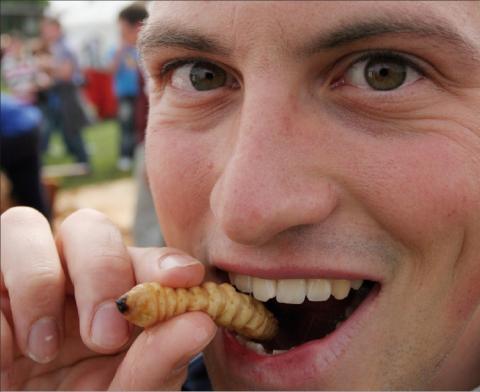
Photo: AFP 照片:法新社
She said the shots being sold at this year’s festival on March 12 would taste like a milkshake and be washed down with an energy drink chaser.
Organizer Mike Keenan said he expected many festival patrons would sample the shots as a dare, and he was prepared to put his own stomach on the line.
“Yeah, I’ll give it a go,” he told AFP.
Keenan said the festival began 22 years ago as a way of allowing city slickers to “get out of their comfort zone” and sample bush tucker.
While much of the fare such as venison and wild boar is relatively unchallenging for mainstream tastes, Keenan said organizers liked to spice up the menu with more unusual offerings.
In the past, these have included rams’ testicles and bulls’ penises, although Keenan admitted Kerslake may have set a new benchmark.
“He thought these flavored horse semen shots would be something different,” Keenan said. “He’s working on a number of flavors, from vanilla, right through to strawberry and chocolate.”
(AFP)
長期以帶頭從事高空彈跳與直升機高空滑雪等極限運動而聞名的紐西蘭人,這回要挑戰吃的極限,這些胃如鐵打的饕客,飲用的是馬的精液。
這道來自馬兒的飲品,連同生蠍子、巧克力包覆甲蟲、炸幼蟲等烹飪,將在下個月於南島城市霍基蒂卡舉辦的年度野味美食節供饕客祭五臟廟。
想出令人驚訝的精液飲品是基督城賽馬飼養員琳賽‧克斯萊克,她告訴費爾法克斯傳媒說,「用意是讓飲用者在喝下後,就能像種馬般一整週都精力充沛。」
她說這個飲品將在今年三月十二日的美食節上販賣,口感像奶昔且可以搭配能量飲料接著喝。
主辦人麥可‧其南說他期待美食節的主顧有膽嘗試此一飲品,他的胃已準備在當天品嚐。
他告訴法新社說,「好的,我將試試看。」
其南說這個美食節始於二十二年前,當時是為了讓城市佬「踏出他們的舒適地帶」,並品嚐叢林美食。
當鹿肉與野豬為主的美食節已不再能夠挑戰主流口味後,其南說主辦單位喜愛讓菜單加入更多獨到的風味。
雖然其南承認克斯萊克的創意料理可能(在飲食挑戰上)建立一個新的里程碑,以往的菜色也不遜色,包含公羊的睪丸與公牛的陰莖。
其南說,「他猜調味馬精液飲品可標新立異。」他說,「他正在研發一些口味,從香草到草莓與巧克力。」
(法新社╱翻譯:林亞蒂)
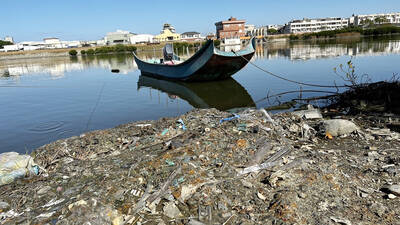
Many consumers are guilty of filling drawers or closets with old laptops, cellphones, fitness trackers and other electronic devices once they are no longer needed. It’s hard to know where to recycle such items, or it seems costly and inconvenient to do so. The world generates millions of tons of electronic waste — also called e-waste — each year. According to the UN’s most recent estimate, people worldwide produced 62 million metric tons of e-waste in 2022, and only about 22 percent of it was properly recycled. The US’ Environmental Protection Agency estimates that less than a quarter of e-waste is
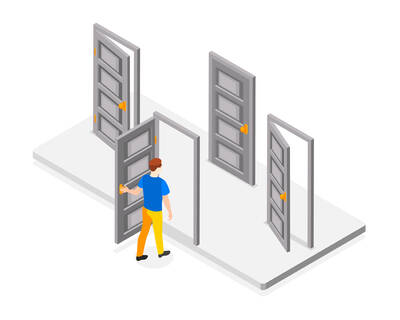
You’re sitting in class when a classmate asks to borrow a pencil. It seems like a small favor, so you agree without hesitation. The following week, the same classmate asks to share your notes. Later, they request help with a group project. You agree each time — after all, you helped out the first time — but before you know it, it has become automatic. This scenario demonstrates the “foot-in-the-door technique,” a psychological concept that shows how agreeing to small, acceptable demands makes it easier to accept larger ones later on. The name for this strategy comes from door-to-door

A: The four-day Tomb Sweeping Day long weekend begins Friday and will run until Monday. Are you going to sweep your ancestors’ tombs? B: I did in advance last weekend, so I can go to Kaohsiung to see the musical “The Phantom of the Opera.” A: Wow, is “Phantom” touring Taiwan again? It debuted in 1986, so this year marks the 40th anniversary of the show. B: And it’s not just touring Kaohsiung starting March 31, but also Taipei starting April 21 and Taichung starting May 26. A: “Phantom” is one of the world’s Four Major Musicals. I’ve seen all of them, except “Les

Dos & Don’ts — 想想看,這句話英語該怎麼說? 1. 我們很早到達電影院。 ˇ We arrived at the theater very early. χ We arrived the theater very early. 註︰arrive 為不及物動詞,後面如果有受詞要用 at 或 in。例如:They arrived in Taipei yesterday.。一般大地方,如國家、省、大城市等前面用 in,凡小地方城鎮、學校等則用 at。 2. 開車半小時以後,我們到達了海灘。 ˇ After half an hour’s drive, we got to the beach. χ After half an hour’s drive, we got the beach. 註︰come, go, get(來、去、到達)某地時,在表示地點的名詞前面應該用 to,如 go to school, go to Taipei, come to Shanghai 等。如果這些動詞後面所跟的是 here, there, home 等副詞,則不用 to。 3. 明天我會回辦公室。 ˇ I will be back in the office tomorrow. χ I will be back to office tomorrow. 註︰to be back 一語裡的 back 是副詞,不是介詞,所以後面要用 at (the market) 或 in (the office)。 假如假期結束,要回學校上課了則可說: ? Kids will be back


 RSS
RSS