


1. 我不夠快。
ˇ I wasn’t fast enough.
χ I wasn’t enough fast.

Photo: AdobeStock l 照片:AdobeStock
註:enough用作副詞時,一般放在它修飾的形容詞或其他副詞後面。例如:
The tea is hot enough.(茶是夠熱。)
He did not work hard enough.(他不夠用功。)

Photo: AdobeStock l 照片:AdobeStock
但enough用作形容詞時,前置或後置都可以。例如:
There is enough food (/food enough) for us.
2. 今晚七時我們將開董事會。
ˇ We are having a board meeting at seven o’clock this evening.
ˇ We are having a board meeting this evening, at seven o’clock.
χ We are having a board meeting this evening at seven o’clock.
註:如果有多個時間副詞,一般單位大的放在單位小的後面。例如:
I was born in May 1939.
The meeting was held at five o’clock yesterday afternoon.
但如果大的單位是說話者強調的重點,則可以放在前面,但後面要有逗號,表示停頓。例如:
He arrived yesterday afternoon, at about five o’clock.
3. 我生於麻州波士頓。
ˇ I was born in Boston, Massachusetts.
χ I was born in Massachusetts, Boston.
註:一般而言,地點副詞的位置,範圍大的放在範圍小的後面。例如:
Before 1969 I lived in a small village in Keelung.
但不是絕對,例如:
I teach in the English Department at University of Toronto.
有時為了強調,範圍小的也可以放在後面。例如:
They spent the summer holidays in Keelung in a large house near the beach.
4. 他是一位著名的中國作家。
ˇ He is a famous Chinese writer.
χ He is a Chinese famous writer.
註:一個名詞若有幾個修飾詞時,在句中的順序應遵從習慣。Chinese
靠近名詞,China’s離名詞最遠,如China’s first emperor、ancient Chinese history,又如 a distinguished Japanese writer(一個日本優秀作家)、不說*a Japanese distinguished writer。
5. 我明白了,原來如此。
ˇ (Oh,) I see.
ˇ So I see.
χ I see so.
註:可以說:I believe so.
但不說:*I see (/notice) so. 應改作So I see.
Exercises
A. 路易斯不夠用功。
Lewis did not ____________________ .
1. enough study hard 2. study enough hard
3. study hard enough 4. studied enough hard
B. 林教授是一位中國古代史專家。
Prof. Lin is a specialist in ____________________ .
1. Chinese ancient history 2. ancient Chinese history
3. Chinese history ancient 4. ancient China’s history
Answers: A. 3 B. 2
文章由書林出版公司提供:
www.bookman.com.tw
蘇正隆 — 台灣翻譯學學會前理事長、師大翻譯研究所兼任副教授; 編著《走讀自然.花言樹語》,《英語的對與錯》,《世紀病毒:必讀防疫英文知識與詞彙》...等。國家教育研究院中英雙語詞彙審議委員;研究領域為翻譯、術語及詞典編譯,從事植物與人文導覽數十年,亦曾應邀遠赴國外大學做植物人文導覽。
The debate surrounding Taipower’s recent corporate identity reboot has gone well beyond the design community. The controversy began after Taipower replaced the familiar “Taiwan Power Company” wording — widely regarded as the calligraphy of Yu You-ren (1879-1964), former Control Yuan president and master calligrapher — with a modern logotype by designer Aaron Nieh’s team, Aaron Nieh Workshop. Taipower said the change was not a wholesale replacement of old signage, but an “optimization of its identity system,” aimed at meeting the needs of digital media, electronic bills, apps, social media graphics and various small-format applications. Existing physical markings, such as building

Since 2005, the third Monday in January has come to be known as “Blue Monday.” In other words, that day is believed to be the most depressing day of the year. This concept seems logical at first. After all, Monday marks the start of the school or workweek after two days of rest and fun. Also, blue is a color that is often associated with sadness. Furthermore, in many parts of the world, January is a time when the weather is cold, rainy, and gloomy. But is there any scientific proof that this January day is truly sadder than any of
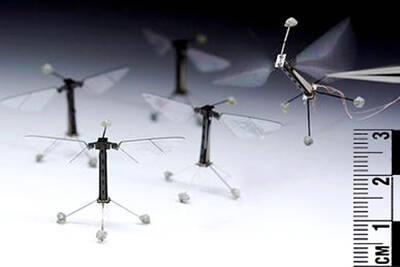
As bee populations around the world continue to decline at an alarming rate, scientists are developing an innovative solution: robotic bees. Recent advances at research institutions like Massachusetts Institute of Technology (MIT) in the US have produced tiny flying robots capable of performing pollination tasks similar to those of real bees. These tiny machines represent an impressive technological achievement. MIT’s latest models can hover in the air for over 1,000 seconds and perform complex movements, demonstrating the agility needed for successful pollination. The robots are designed to mimic the flight patterns of natural bees, offering potential support to agriculture

Continued from yesterday(延續自昨日) https://www.taipeitimes.com/News/lang For the most part, the idea of “Blue Monday” has been rejected as a myth. Some mental health experts also say there is a danger in labeling a certain day as the most depressing time of the entire year. Some argue that if people expect to feel sadder on the third Monday in January, this belief alone may increase their anxiety. One group that is worried about the negative effect of believing in Blue Monday is Samaritans. A mental health charity based in the UK, Samaritans is working to turn Blue Monday into “Brew Monday.” In this


 RSS
RSS