


A Hualien County matriarch who has given birth to an astonishing 14 children has achieved a possibly unique feat, with each of her surviving 12 children all born under different signs of the Chinese zodiac. The eldest child, 54 year-old Li Chiu-lien, was born in the year of the monkey and the youngest, Li Chun-lin, in the year of the snake with every other sign represented by one of her offspring.
Tsai Pei-hua, 73, from Hualien County’s Ruisui Township, married Li Hong-chuan when he was 22 years old, and fell pregnant the following year. She continued to become pregnant in almost every subsequent year until she had her 14th child. The old woman acknowledged that she thought the feat was incredible.
She told the Liberty Times, the Taipei Times sister publication, that her parents-in-law believed it was immoral for married couples not to have children, and that they had a strong preference for boys. She says that her in-laws “made sure” that she became pregnant, and the year after the wedding she gave birth to a girl. In total she gave birth to 13 more kids, at the rate of almost one a year. It never occurred to her that the 12 surviving children were each born under a different zodiac sign.
Wei Yo-chi, a gynecologist from the Buddhist Tzu Chi General Hospital, says that giving birth to a dozen children poses no health risks as long as the woman is young enough. He adds that in the past rural families gave little thought to contraception so it was common to see 10 or more children in a family. He was surprised to learn of a couple having 12 children born under different zodiac signs, but attributed it to pure luck.
Tsai says that she and her husband originally worried that they wouldn’t have the financial resources to support and school such a large family, so she obtained contraception from the local public health center. However, her body reacted to the contraception and she had it removed at the suggestion of her parents.
Following its removal, she went on to have a baby almost annually, eventually giving birth to nine girls and five boys, making them the most populous family in Ruisui Township.
Li Chun-lin, her 14th and youngest child, says, “For as long as I can remember, family members were always talking about my mother’s pregnancies,” and adds that his father was a shy and modest man who passed away in 1997. The size of the family was often the subject of village conversations, to which he would reply, “In the countryside, the most interesting thing to do in the evening is to make babies!”
After years of hardship in the village, the children of the family have all left in pursuit of work or marriage, so they no longer have to eek out an existence as a street vendor. Some of them now sell ghost money and have put their hard times behind them.
(LIBERTY TIMES, TRANSLATED BY TAIJING WU)
花蓮縣一名老婦婚後接連生了十四個孩子,雖然有兩位不幸往生,但剩下的十二個竟然湊齊十二生肖。老大是五十四歲屬猴的黎秋蓮,老么是三十三歲屬蛇的黎駿霖。
家住花蓮瑞穗鄉,七十三歲的蔡佩樺當年嫁給二十二歲的黎鴻泉。隔年開始每年都懷孕生孩子,直到生了第十四胎為止。蔡老太太也直呼不可思議。
她告訴記者,因公婆有「無後為大」的觀念,加上當年重男輕女的環境,在長輩的「監督」下,結婚翌年順利產下一女。隨後差不多一年一胎,共生了十四名兒女,她從沒注意到自己竟然生齊了十二生肖。
慈濟醫院婦產科主任魏佑吉說,只要女性夠年輕,要生十幾個孩子不成問題。早年農村社會沒有避孕觀念,生十多個孩子的家庭不在少數,這對夫妻能生齊十二生肖,幸運成分居多,他聽到時也很驚訝!
老太太說,她和丈夫一度也為子女眾多苦惱,擔心經濟能力及教養問題,因此她也曾在衛生所人員協助下裝置「避孕器」,但因體質關係無法適應,後來在長輩勸導下放棄。
順其自然的結果,兒女一個接著一個出生,以差不多一年一個的速度生下九女五男,是瑞穗鄉最多產的家庭。
排行十四的么子黎駿霖說:「從我懂事,就常聽長輩描述媽媽大肚子的景象!」他印象中的父親性格靦腆、為人謙遜,一九九七年離開人世。左鄰右舍茶餘飯後常拿黎家兒女眾多當話題,他只好開玩笑代爸爸媽媽回答:「鄉下人晚間閒來無事,總要應付男人需求!」
經過多年的辛勞,黎家子女長大後紛紛嫁娶及外出謀職,家境獲得改善,黎家也開始擺脫擺攤的生活,改成在家販售香燭金紙,生活安定許多,嘗到苦盡甘來的滋味。
(自由時報記者游太郎)
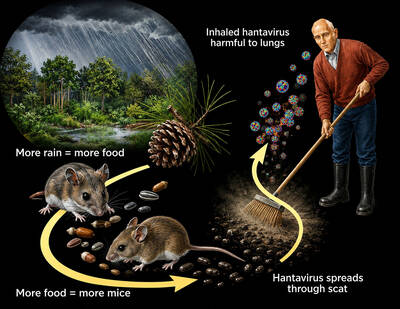
An outbreak aboard a cruise ship of a rare rodent-borne illness called hantavirus has left three passengers dead and sickened others, but global health officials say the risk to the general public remains low because the germ does not easily spread between people. “This is not the next COVID, but it is a serious infectious disease,” said Maria Van Kerkhove, director of epidemic and pandemic preparedness at the World Health Organization (WHO). “Most people will never be exposed to this.” The virus usually spreads when people inhale contaminated residue of rodent droppings. Hantaviruses have been around for centuries and are thought to
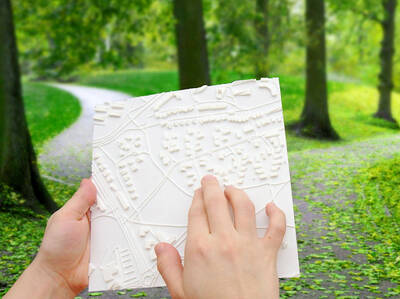
Have you ever wondered how people navigate the world when they can’t see a map? For individuals with visual impairments, conventional maps are nearly impossible to use. This is where tactile maps come in — essential tools that allow people to “see” the world through touch. A tactile map is specially designed with raised lines, textures, and symbols to represent geographical features such as roads, rivers, and buildings. Users explore it with their fingertips. However, these maps are not exclusively for people with visual disabilities. They serve as valuable multisensory learning tools that enhance spatial understanding for everyone, making

1. 他病了三天。 ˇ He has been sick for three days. χ He has been sick since three days. 註︰這裡現在完成時態 have / has been 表示從過去某一時日到現在的一段時間存在的行為或狀態,與它連用的時間副詞應為 「for +若干時」,如 for a year, for three hours 等,意思是歷時多少。 2. 他自從星期三以來都很忙。 ˇ He has been busy since Wednesday. χ He has been busy from Wednesday. 註︰「自從……以來」,該用 since。說從某一天(某一時刻)到某一天(某一時刻)才用 from,如 from Monday till Friday。 3. 房間角落裡散放著一些零星物件。 ˇ There were some odds and ends lying in the corner of the room. χ There were some odds and ends lying at the corner of the room. 註︰「在房間角落裡」該用介詞 in。例如: He stood in the corner. There is a lamp in the corner of the room. at the corner 指房子外部的拐角。例如: A little boy

A growing green movement allows hotel guests to fund tree planting projects simply by opting out of daily room cleans. This approach turns an ordinary hotel stay into a direct contribution to nature. Founded in the Netherlands, the nonprofit “Hotels for Trees” operates on the principle that one skipped cleaning equals one new tree. It has planted more than 750,000 trees since 2021. Similarly, Sarnia Hotels in Guernsey donates £2 per refused clean. Since 2024, over 3,300 services have been cancelled, raising sufficient money to plant 1,100 native trees and hedgerows. Simplicity has been central to this success.


 RSS
RSS