


★ Bilingual Story is a fictionalized account. 雙語故事部分內容純屬虛構。
Uneasy voices started to ripple through the lines of anxious students outside the school gate. “No signal?” “VPN’s down too.” “Wait — is this a cyberattack?” Nothing loaded on Jun’s phone either. Not his AI tutor, Echo. Not any app. Not even the Internet.
Jun stood shoulder to shoulder with hundreds of other students outside the school gate. It was national exam day and the early July air was thick with heat and now charged with anxiety. The scene of everyone’s head hunched over their phones, cramming vocab, reviewing formulas, or whispering last-minute questions to AI — had fractured. Students fidgeted, looked up from their screens, refreshed again and again. Whispers spread.
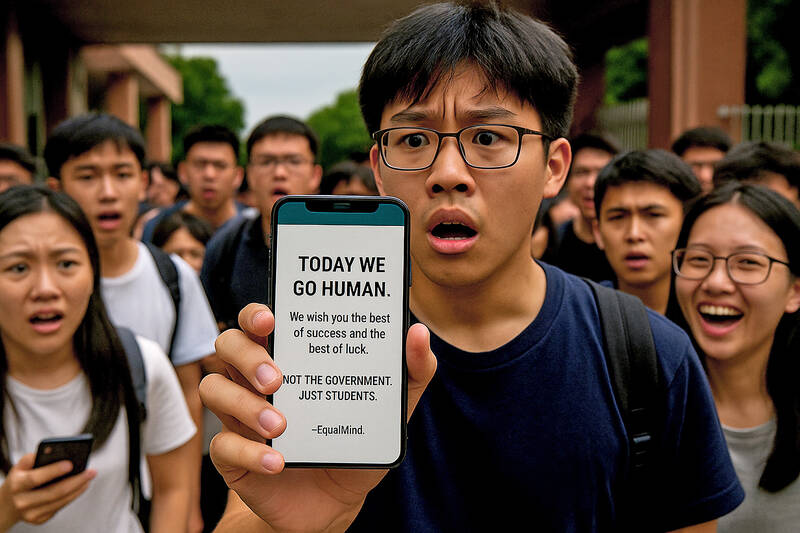
Photo: AI 照片:人工智慧
Some had been hoping for one last boost of confidence. Others were rattled for a different reason. Jun already knew who had planned to cheat. The boy in front of him wore smart glasses that could discreetly livestream exam questions. A girl two rows over held a pencil that doubled as a scanner. Every year the cheating tech improved. The proctors were always two steps behind.
Jun wasn’t one of those cheaters. He had Echo. For seven months, Echo had been his tireless AI tutor. It offered grammar drills, essay edits, progress tracking, even daily reminders to drink water and sleep. Echo had seen him through frustration and doubt, through every practice test and midnight study sprint.
This morning, Jun had planned one final check-in. Just a checklist. Maybe a few calming words. But now: silence.
Then, without warning, a message flashed on his screen: “Today we go human. We wish you the best of success and the best of luck.” Another line appeared: “Not the government. Just students — EqualMind.”
The murmurs swelled. There were curses. There were cheers. The cheaters looked at their phones in disbelief. Jun stared at his quiet screen. Echo was gone. He slipped the phone into the exam pouch, took a breath and stepped into the exam room. . . .
校門外,不安的聲音從焦慮的學生隊伍中蔓延開來。「沒訊號?」「VPN也掛了。」「等等——這是網路攻擊嗎?」小俊的手機也面臨同樣的狀況,什麼都跑不動。他的人工智慧(AI)家教Echo、各個應用程式,甚至連網路都沒有任何反應。
小俊和數百名學生肩並著肩,一同擠在校門外。這天是全國考試的日子,七月初的空氣本就悶熱難耐,如今又多了一層焦慮的氣氛。原本大家埋首在手機前,臨時抱佛腳地背著單字、複習公式,或對著AI小聲地做最後提問的景象,現在已完全瓦解。學生們開始坐立不安,紛紛從螢幕前抬起頭,一次又一次地重新整理畫面。竊竊私語聲開始擴散。
有些人本來希望能藉由AI獲得最後一刻的信心加持。其他人則因為不同的理由而心煩意亂。小俊早就知道誰打算作弊。他前面那個男生戴著智慧型眼鏡,可以偷偷直播考題。隔了兩排的一個女生拿著一支兼具掃描器功能的鉛筆。每年的作弊技術都在進步,而監考老師卻總是慢半拍。
小俊不是那種會作弊的學生。他有Echo陪著他。這七個月來,Echo一直是他孜孜不倦的AI家教。它提供文法練習、文章修改、學習進度追蹤,甚至每天提醒他要喝水和睡覺。Echo陪他度過了挫折和自我懷疑,陪他完成了每一次的模擬考和深夜的最後衝刺。
今天早上,小俊本來計畫要做考前最後的確認,請Echo列一個簡單的清單,也許再聽幾句安撫人心的話。但現在本該密密麻麻的畫面,只剩下一片寂靜。
接著毫無預警地,他的螢幕上閃過一則訊息:「今天,靠自己。祝福考的全都會,矇的全都對!」接著又出現一行字:「不是政府搞的。而是出自學生之舉—EqualMind。」
議論聲更大了。有人咒罵,也有人歡呼。那些準備作弊的學生們難以置信地看著自己的手機。小俊凝視著他靜悄悄的螢幕。Echo不在了。他把手機滑入考試專用袋,深吸一口氣,走進了考場……。
Epilogue
This story is inspired by real events during China’s gaokao national exams in June 2025. In past years, authorities have deployed metal detectors, signal jammers, facial recognition cameras, drones and even AI-powered patrol systems to catch whispering, peeking, and phone use in exam rooms.
In response to new AI-enabled threats, like photo recognition apps, livestream glasses, scanner pens, and offline LLMs, major platforms including Doubao, Yuanbao, Qwen, DeepSeek, and Kimi voluntarily disabled their photo upload and answer search features during exam hours. One upset Weibo user complained: “I can’t use DeepSeek to upload pictures… I hope you all go to community college.”
In this story, it is the students themselves who shut it all down — not to sabotage learning, but to stop unfair advantage. As AI becomes part of how students learn, the line between support and substitution has become a subject of intense debate. Tools like Echo can be powerful study partners because they can explain texts, offer feedback, and quiz vocabulary. But when they are used to generate answers or bypass actual thinking, they become study thieves.
Jun’s story reminds us that AI doesn’t have to replace preparation, but it can sharpen it. On test day, what matters isn’t what the AI can do. It’s what the student has truly learned to do for themselves.
故事討論
這則故事的靈感,來自2025年6月中國高考期間發生的真實事件。過去幾年,中國官方已經動用金屬探測器、訊號干擾器、人臉辨識攝影機、無人機,甚至人工智慧(AI)巡邏系統來抓考場內的竊竊私語、偷看和偷用手機等行為。
為了應對由AI帶來的新威脅,例如照片辨識應用程式、直播眼鏡、掃描筆和離線大型語言模型,包含豆包(Doubao)、騰訊元寶(Yuanbao)、通義千問(Qwen)、深度求索(DeepSeek)和 Kimi在內的主要平台,都在考試期間自願關閉了他們的圖片上傳和答案搜尋功能。一位不滿的微博用戶抱怨道:「我不能用DeepSeek上傳圖片了—祝你們全部都只考上社區大學。」
在這個故事裡,是學生自己將AI關閉—目的不是為了破壞學習,而是為了遏止作弊所帶來的不當優勢。隨著AI成為學生學習的一部分,「輔助」與「替代」之間的界線,也成了激烈爭論的焦點。像Echo這類的工具可以是強大的學習夥伴,因為它們能解釋文本、提供回饋、進行單字測驗。但當它們被用來生成答案或取代實際思考時,就成了學習過程中的小偷。
小俊的故事提醒我們,AI不必然會取代準備過程,但它能讓準備更有效率。到了考試當天,重點不在於AI能做什麼,而在於學生自己真正學到了什麼。
Vocabulary 單字片語
1. national exam 全國/國家考試
2. AI tutor 人工智慧家教
3. grammar drill 文法練習
4. essay edit 文章修改
5. progress tracking 進度追蹤
6. practice test 模擬考
7. cheating 作弊
8. anxious 焦慮的
9. curse 咒罵
10. cheer 歡呼
11. proctor 監考老師、監考人、(試場)監督
12. metal detector 金屬探測器
13. refresh (a screen) 重新整理(畫面)
Idioms 相關成語
1. disbelief 難以置信 (Chinese idiom)
2. cramming 臨時抱佛腳; (Chinese idiom) 把……塞進、擠滿、填滿
3. level the playing field 創造公平競爭環境、公平賽場 (English idiom)(不享有特別優惠的競爭局面)
playing field 操場、球場、賽場、遊戲場
Nigel P. Daly is a writer with a language learning newsletter called Chin-glish bilingual lab (https://ndaly.substack.com).
Cynthia Chen is a translator and writer specializing in blogs, scripts and articles.

A: In addition to the biopic “Michael,” comedy “The Devil Wears Prada 2” is finally in theaters. I can’t believe it’s been 20 years since the 2006 debut of the original film. B: Does the sequel still revolve around the fashion industry? A: This time, “Miranda,” the fashion magazine editor-in-chief played by Meryl Streep, will team up with her former assistant “Andy,” played by Anne Hathaway, to fight against Emily, her other ex-assistant played by Emily Blunt. B: Isn’t the role of “Miranda” based on then US “Vogue” editor-in-chief Anna Wintour? A: Yup, it established Anna’s fashion status, influenced pop culture
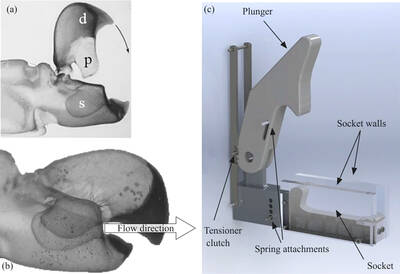
Few sea creatures of their size have as much destructive power as pistol shrimp. These small animals, usually measuring around four centimeters long, produce shock waves that can stun or even kill their prey. The attack begins when the shrimp opens its specialized claw, allowing water to fill a chamber inside. Then the claw closes rapidly. A bump on the claw strikes the chamber, forcing the trapped water out through a narrow opening at a high speed of about 25 meters per second. The rapid movement forms a bubble in the water that collapses almost instantly under the pressure of the

★ Bilingual Story is a fictionalized account. 雙語故事部分內容純屬虛構。 Rain hammered the roof in hard, uneven bursts. “Hold him still!” Baosheng pressed one hand against the stranger’s brow as the man twisted on the wooden bed. His left eye was swollen shut. The right one burned red like a coal. “It feels like fire,” the man gasped. “Like something is clawing inside.” Thunder rolled across the mountain. Baosheng leaned closer. The man’s skin was cold, but heat rose from his face. A strange smell hung in the air. He began the four methods of diagnosis: looking, listening/smelling,

Continued from yesterday(延續自昨日) https://www.taipeitimes.com/News/lang One way to monitor marine biodiversity is to send divers down to take photos and notes; however, this method is expensive, time-consuming, and sometimes risky. On coral reefs, noise is an indicator of a healthy seabed. This is largely thanks to pistol shrimp, which often live inside sea sponges on coral reefs. The healthier the reef, the more pistol shrimp it hosts. This makes them perfect biological indicators. However, counting them visually is tricky because they often stay hidden. To address this, scientists turn to sound. Pistol shrimp snaps are loud, short, and rich in energy. They stand out


 RSS
RSS