


Foreign spies are fitting turtles and fish with sensors to create underwater maps of China’s coastline, Beijing warned yesterday, in apparent reference to its Western competitors.
In a social media post titled “Under the deep blue, undercurrents are surging,” the Chinese Ministry of State Security said international spy agencies are using “new types of espionage equipment” to steal sensitive marine data.
“Relatively large marine animals with sensors attached have been discovered in certain waters of China,” the ministry said in a section titled “spy turtles, spy fish.”
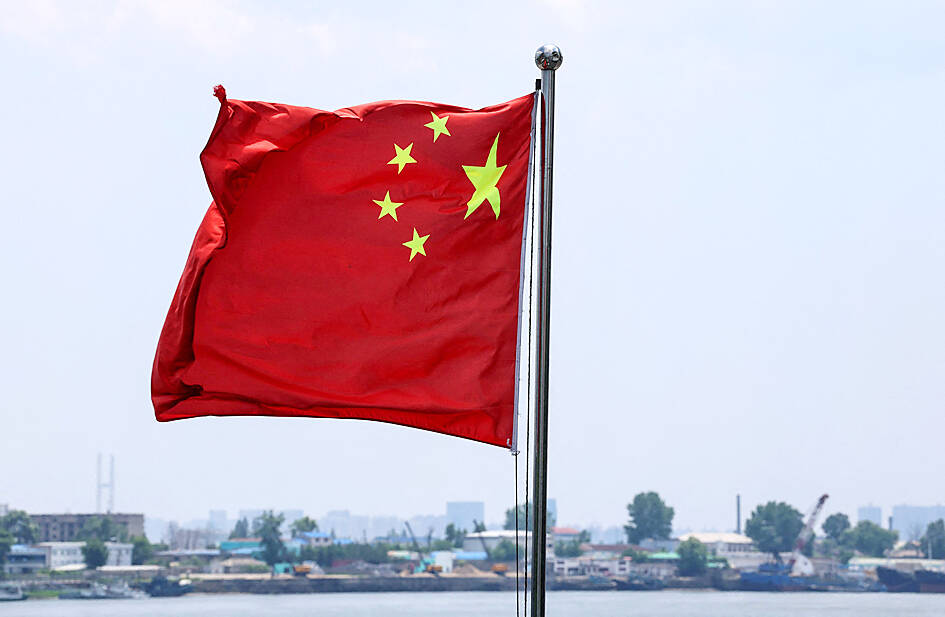
Photo: Reuters
The clandestine creatures were found “swimming in a specific area, collecting sensitive data about the marine environment such as water temperature, salinity and ocean current, transmitting it overseas via satellite,” it said.
Foreign groups also used solar-powered wave gliders, buoys with high-precision sensors and devices loaded onto cargo ships capable of capturing “port dynamics” in real time, it added, without naming a particular agency.
The data collected would be used to create “underwater maps” that can “identify weak points in China’s coastal defenses, posing a serious threat to China’s national security,” the ministry said.
It urged proper security checks on equipment received from abroad, and called on fishers to report any suspicious-looking buoys or devices found at sea.
Beijing and Western governments have long traded accusations of espionage.
Last year Beijing warned government workers to remain vigilant of “honeytrap” schemes, after a public servant was lured by the “seductive beauty” of a foreign agent.
This month, the Five Eyes alliance of Western security agencies said Chinese spies were posing as job recruiters online to seek sensitive information.
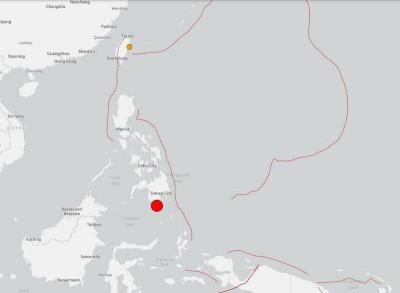
A magnitude 7.8 earthquake struck off the southern coast of Mindanao in the Philippines at 7:38am today, prompting the US Tsunami Warning System to issue an alert for neighboring countries, including Taiwan. The system issued a purple alert indicating a "tsunami threat." The potential threat zone includes Taiwan, the Philippines, Papua New Guinea, Yap and Palau. Philippine authorities were assessing the damage from the quake, with the office of civil defense seeking to verifying initial reports that 15 people had been killed and 129 injured in the region, mostly from falling debris. Arlene Hollero, disaster chief of Maasim town in the Philippines' Sarangani Province,
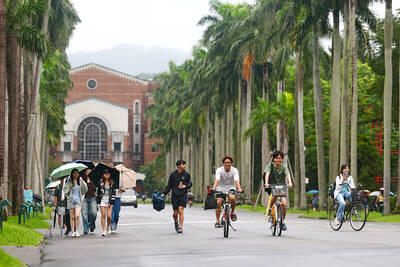
National Taiwan University (NTU) yesterday said it disqualified a person from an entrance examination for using AI smart glasses to cheat, along with two others for making untruthful statements in their curriculum vitae. The three applicants were given null scores, Taiwan’s highest-ranked university said, calling on prospective students to be honest in the admissions process. NTU registrar Lee Hung-sen (李宏森) said that the cheating applicant wore a hat and thick-rimmed glasses to the second written exam for medical school, claiming that they felt cold. Suspicions were aroused when the applicant stared oddly at the test for long stretches while steadily bringing the paper
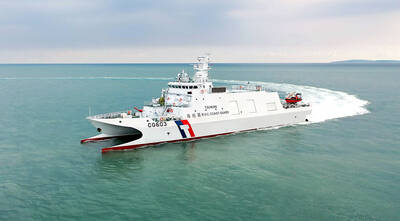
‘GRAY ZONE’ PRESSURE: Beijing’s activities are intended to create the deceitful impression that China has jurisdiction over the area around Taiwan, the CGA said Taiwan’s rights over its territorial waters and exclusive economic zone must not be violated by any country, the Mainland Affairs Council said yesterday, adding that it will not accept any unprovoked actions. The council issued the remarks in response to the China Coast Guard conducting maritime enforcement drills near eastern Taiwan and claiming to fully exercise China’s maritime administrative law enforcement authority. The Coast Guard Administration (CGA) has been closely monitoring the situation and is taking concrete steps to defend the nation’s sovereignty and secure its waters, the council said. China has no sovereign rights over the waters off eastern
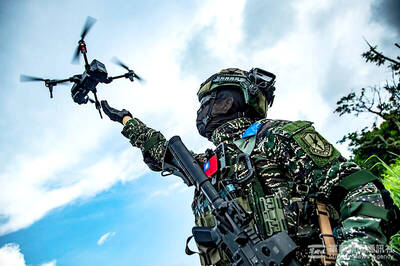
RESILIENCE: Taiwan plays a key role in semiconductors, energy, information infrastructure and advanced manufacturing, AIT Director Raymond Greene said Taiwan’s continued investment in deterrence and resilience remains vital, especially in uncrewed systems and other emerging technologies, American Institute in Taiwan (AIT) Director Raymond Greene said yesterday. Greene made the remarks at the annual National Strategic Summit on Supply Chain Resilience held by the Research Institute for Democracy, Society and Emerging Technology (DSET), a government-backed think tank. As Taiwan last year became the US’ fourth-largest trading partner and supply chain security is becoming more important, cooperation in emerging technologies continues to deepen between the two countries, he said. The US is committed to accelerating innovation, building key infrastructure, strengthening cooperation


 RSS
RSS