


US and Iranian officials yesterday began separate talks with Pakistan’s prime minister amid a ceasefire made fragile by deep disagreements and unabated fighting in Lebanon.
A delegation led by US Vice President J.D. Vance and a delegation led by Iranian Parliament Speaker Mohammad Bagher Qalibaf each met with Pakistani Prime Minister Shehbaz Sharif, his office said.
No direct US-Iran talks had been announced as of press time last night.
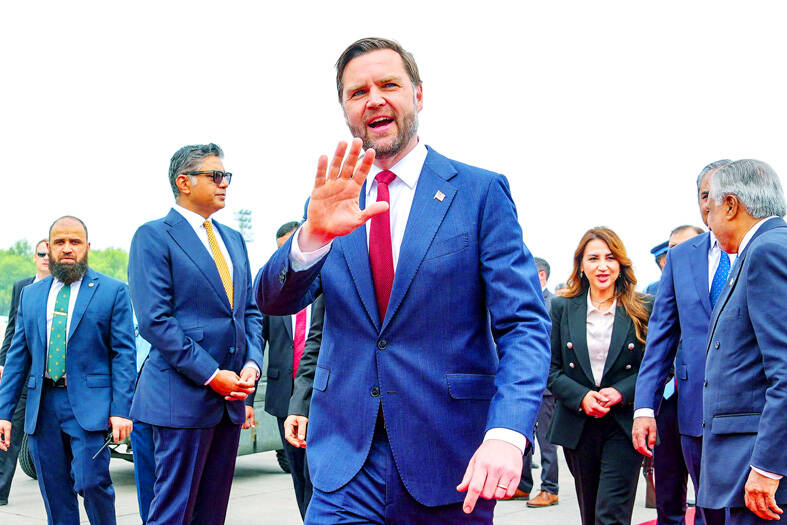
Photo: AFP
Iran doubled down on parts of its earlier proposal, with its delegation telling Iranian state television it had presented some of the plan’s ideas as red lines in meetings with Sharif.
Meanwhile, Israel pressed ahead with strikes in Lebanon, even as Iran conditioned ceasefire talks on a pause in fighting there.
The Lebanese state-run news agency reported that Israeli strikes yesterday killed at least three people.
In Tehran, residents said they were skeptical yet hopeful about the talks after weeks of airstrikes carved a path of destruction across their country.
Even if one is reached, the path to recovery would be long, some said.
“Peace alone is not enough for our country, because we’ve been hit very hard, there have been huge costs, and the people have to pay for that,” 62-year-old Amir Razzai Far said in downtown Tehran.
US and Iranian officials claimed leverage, and issued new demands and preconditions as talks approached.
US President Donald Trump said Iranian officials “have no cards” to negotiate with, adding that “the only reason they are alive today is to negotiate!”
He said Iran was using the Strait of Hormuz for extortion, and that it would be opened “with or without them.”
Vance said the US was optimistic about the talks, but warned: “If they’re going to try and play us, then they’re going to find that the negotiating team is not that receptive.”
Iranian Minister of Foreign Affairs Abbas Araghchi said Tehran was entering negotiations with “deep distrust” stemming from prior strikes on Iran during previous rounds of talks.
His country was prepared to retaliate if it was attacked again, said Araghchi, who is part of the Iranian delegation.
Iran and the US outlined competing proposals ahead of the weekend talks reflecting the wide gulf between the two sides on key issues.
Iran published a 10-point proposal, which called for a guaranteed end to the war and no future attacks. It demanded an end to economic sanctions and sought control over the Strait of Hormuz. It also included ending fighting against Iran’s “regional allies,” explicitly calling for a halt to Israeli strikes on Hezbollah.
The US submitted a 15-point proposal that includes restricting Iran’s nuclear program and reopening the strait.

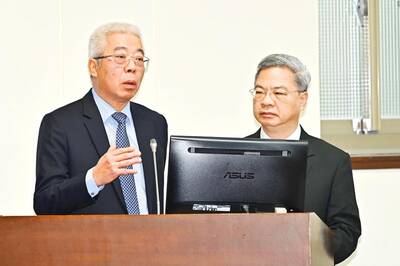
Taiwan has arranged for about 8 million barrels of crude oil, or about one-third of its monthly needs, to be shipped from the Red Sea this month to bypass the Strait of Hormuz and ease domestic supply pressures, CPC Corp, Taiwan (CPC, 台灣中油) said yesterday. The state-run oil company has worked with Middle Eastern suppliers to secure routes other than the Strait of Hormuz, through which about 20 percent of the world’s oil and liquefied natural gas typically passes, CPC chairman Fang Jeng-zen (方振仁) said at a meeting of the legislature’s Economics Committee in Taipei. Suppliers in Saudi Arabia have indicated they
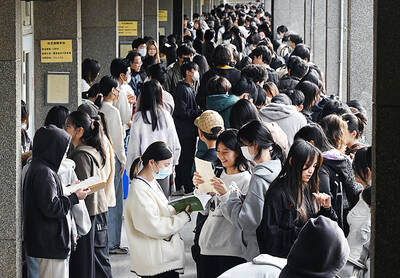
A global survey showed that 60 percent of Taiwanese had attained higher education, second only to Canada, the Ministry of the Interior said. Taiwan easily surpassed the global average of 43 percent and ranked ahead of major economies, including Japan, South Korea and the US, data from the Organisation for Economic Co-operation and Development (OECD) for 2024 showed. Taiwan has a high literacy rate, data released by the ministry showed. As of the end of last year, Taiwan had 20.617 million people aged 15 or older, accounting for 88.5 percent of the total population, with a literacy rate of 99.4 percent, the data

CCP ‘PAWN’? Beijing could use the KMT chairwoman’s visit to signal to the world that many people in Taiwan support the ‘one China’ principle, an academic said Chinese Nationalist Party (KMT) Chairwoman Cheng Li-wun (鄭麗文) yesterday arrived in China for a “peace” mission and potential meeting with Chinese President Xi Jinping (習近平), while a Taiwanese minister detailed the number of Chinese warships currently deployed around the nation. Cheng is visiting at a time of increased Chinese military pressure on Taiwan, as the opposition-dominated Legislative Yuan stalls a government plan for US$40 billion in extra defense spending. Speaking to reporters before going to the airport, Cheng said she was going on a “historic journey for peace,” but added that some people felt uneasy about her trip. “If you truly love Taiwan,

NEW LOW: The council in 2024 based predictions on a pessimistic estimate for the nation’s total fertility rate of 0.84, but last year that rate was 0.69, 17 percent lower An expected National Development Council (NDC) report expects the nation’s population to drop below 12 million by 2065, with the old-age dependency ratio to top 100 percent sooner than 2070, sources said yesterday. The council is slated to release its latest population projections in August, using an ultra-low fertility model, the sources said. The previous report projected that Taiwan’s population would fall to 14.37 million by 2070, but based on a new estimate of the total fertility rate (TFR) — the average number of children born to a woman over her lifetime — the population is expected to reach 12 million by


 RSS
RSS